EN
EN
 Stunning views
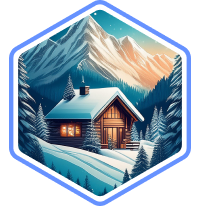 Classic mountain charm
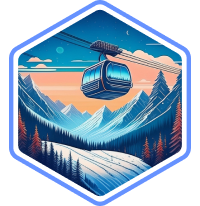 Best amenitiesStunning viewsClassic mountain charmBest amenitiesStunning viewsClassic mountain charmBest amenitiesStunning viewsClassic mountain charmBest amenities
Set at the foot of the 3,000-metre Northern Japanese Alps, Hakuba Valley is a collection of 10 ski resorts spread across nearly 30 kilometres of dramatic mountain terrain. This is the valley that hosted the 1998 Winter Olympics and put Japanese skiing on the world stage, and it's been drawing international visitors ever since. A single Hakuba Valley lift pass covers all 10 resorts, connected by a shuttle bus network, so you can base yourself in one spot and ski a different mountain each day, matching the conditions and your mood to the terrain.
Across the valley, 119 runs are served by 94 lifts, with terrain ranging from gentle beginner slopes to some of the most celebrated powder skiing on earth. Happo-one is the flagship: the biggest resort in the valley, with steep technical faces, long cruising runs, and a summit that opens up views of the entire Northern Alps. Hakuba 47 and Goryu are linked at the top and offer a satisfying mix of groomed reds, tree runs, and freestyle terrain. At the northern end, Cortina is where powder hunters head after a storm, with legendary snowfall and easy-access backcountry. With an average of 10 metres of snow per year, conditions are reliably exceptional, particularly through January and February when Hakuba's famous dry powder is at its best. The season typically runs from early December through to early May at higher elevations.
Beyond the slopes, Hakuba is a destination in its own right. The valley's natural hot springs are a highlight: soaking in an outdoor onsen after a powder day, with snow falling around you and peaks glowing in the fading light, is perhaps one of skiing's great experiences. Its dining scene blends traditional izakaya, ramen shops, and soba noodle houses with international restaurants and cosy mountain bars, and Echoland and Happo Village form the social heart of the valley. The Shinkansen bullet train connects Nagano to Tokyo in 90 minutes, making Hakuba one of the most accessible mountain destinations in Asia.
Set at the foot of the 3,000-metre Northern Japanese Alps, Hakuba Valley is a collection of 10 ski resorts spread across nearly 30 kilometres of dramatic mountain terrain. This is the valley that hosted the 1998 Winter Olympics and put Japanese skiing on the world stage, and it's been drawing international visitors ever since. A single Hakuba Valley lift pass covers all 10 resorts, connected by a shuttle bus network, so you can base yourself in one spot and ski a different mountain each day, matching the conditions and your mood to the terrain.
Across the valley, 119 runs are served by 94 lifts, with terrain ranging from gentle beginner slopes to some of the most celebrated powder skiing on earth. Happo-one is the flagship: the biggest resort in the valley, with steep technical faces, long cruising runs, and a summit that opens up views of the entire Northern Alps. Hakuba 47 and Goryu are linked at the top and offer a satisfying mix of groomed reds, tree runs, and freestyle terrain. At the northern end, Cortina is where powder hunters head after a storm, with legendary snowfall and easy-access backcountry. With an average of 10 metres of snow per year, conditions are reliably exceptional, particularly through January and February when Hakuba's famous dry powder is at its best. The season typically runs from early December through to early May at higher elevations.
Beyond the slopes, Hakuba is a destination in its own right. The valley's natural hot springs are a highlight: soaking in an outdoor onsen after a powder day, with snow falling around you and peaks glowing in the fading light, is perhaps one of skiing's great experiences. Its dining scene blends traditional izakaya, ramen shops, and soba noodle houses with international restaurants and cosy mountain bars, and Echoland and Happo Village form the social heart of the valley. The Shinkansen bullet train connects Nagano to Tokyo in 90 minutes, making Hakuba one of the most accessible mountain destinations in Asia.
When skiing and snowboarding in Hakuba, rather than one big interconnected ski area, you have access to 10 distinct mountains. Each of these has its own character: Happo-One is the flagship, steep, open, and demanding, with the longest run stretching 8km; Goryu and Hakuba 47 are linked and rider-friendly; Tsugaike is wide and forgiving; and Cortina at the northern end of the valley, gets the heaviest snow and some of the best tree skiing in Japan.
That variety is the real draw. On a clear day you can head to Iwatake for its panoramic views of the Northern Japanese Alps. When a storm rolls in, Cortina's sheltered trees come into their own. And on a rest-day morning, the quieter southern resorts like Kashimayari and Sanosaka let you cruise without crowds. A shuttle bus runs between resorts, making the whole valley feel like one enormous ski area (just with a bus ride between courses rather than a chairlift).
Hakuba has plenty of space for those just finding their ski legs. Several resorts in the area have separated learner areas away from fast traffic, so you can build confidence at your own pace. Tsugaike is the standout choice, with wide, gentle slopes that give you room to practise turns without feeling rushed. The lower sections of Goryu (particularly the Iimori area) and Iwatake also have dedicated beginner zones with easy-gradient runs and magic carpet lifts.
The atmosphere is encouraging. Japanese ski culture tends towards patience and courtesy on the slopes, which makes a big difference when you're starting out. For those who want guided instruction, English-speaking lessons (with a group or private) are widely available across the valley, with many schools catering specifically to international visitors.
WeSki insider tip: Tsugaike's wide, groomed runs are perfect for building confidence, and the resort is typically less crowded than Happo-Onea, with a calmer environment to find your feet.
Intermediates will find Hakuba Valley difficult to exhaust. Happo-One's mid-mountain runs are a brilliant mix of cruisy reds and blues with genuine variety, and you can spend days here without repeating yourself. Iwatake is another favourite for confident intermediates, with rolling terrain and views that make every run feel like an event. Over at Goryu, the Alps-daira section adds longer descents with enough pitch to keep things interesting.
The beauty of the valley setup is that you can step up the challenge gradually. Ride the Happo gondola to the upper runs for steep terrain when you're ready, or hop to Hakuba 47 for a change of scenery and fun natural features.
WeSki insider tip: The Happo Banks area in Happo-One is a great place to experiment with slightly steeper terrain. It's varied, interesting, and never too far from an easier run if you want to ease off.
Hakuba has serious credentials for advanced skiers. Happo-One hosted the Olympic downhill for good reason: the upper mountain is steep, exposed, and demanding. Terrain above the Kurobishi chairlift delivers sustained pitches and variable snow conditions that test your ability to read the mountain. Hakuba 47's north-facing slopes hold snow well into spring and hide some properly steep lines.
Off-piste is where Hakuba truly excels. Cortina's tree skiing is legendary among powder enthusiasts, and the resort takes a relatively relaxed approach to sidecountry access. When snow is falling, the gladed runs through deep forest are exceptional. For those prepared to hike, the backcountry above the valley is world-class, though a qualified guide is essential.
WeSki insider tip: After a big snowfall, head straight to Cortina for first tracks in the trees. This resort sits at the northern end of the valley where snowfall is heaviest, and the gladed terrain shelters the powder from wind and sun.
Hakuba is a strong pick for snowboarders. The variety of resorts means you can switch between park laps, powder runs, and groomed carving depending on conditions and energy. The link between Hakuba 47 and Goryu is a resort pairing that's particularly rider-friendly, with the valley's best terrain park at Hakuba 47 featuring kickers, rails, and a well-maintained halfpipe. Powder riding is exceptional across the valley, Cortina and Tsugaike are favourites for natural terrain on storm days.
Hakuba's backcountry is one of the main reasons advanced skiers travel here. The Northern Japanese Alps provide access to serious alpine terrain, steep couloirs, and vast areas of untracked snow after storms. Cortina is the most accessible entry point for sidecountry tree skiing, while guided backcountry tours from Happo-One and other resorts take you into terrain that feels truly remote. Always hire a guide and carry avalanche safety equipment, several English-speaking guiding companies operate in the valley.
Multiple ski schools operate across the valley, with several offering instruction in English. Hakuba Ski Concierge, Evergreen International Ski School, and the resort-run schools at Happo-One, Goryu, and Cortina all provide lessons, from first-timers to advanced technique clinics.
In total, the valley has four terrain parks across its resorts. Hakuba 47 is the valley's terrain park hub, with a well-designed park featuring kickers, rails, boxes, and a halfpipe that attracts riders of all levels. Goryu and Tsugaike also maintain parks during the season, and Iwatake has a fun park area suited to those progressing from beginner to intermediate park skills.
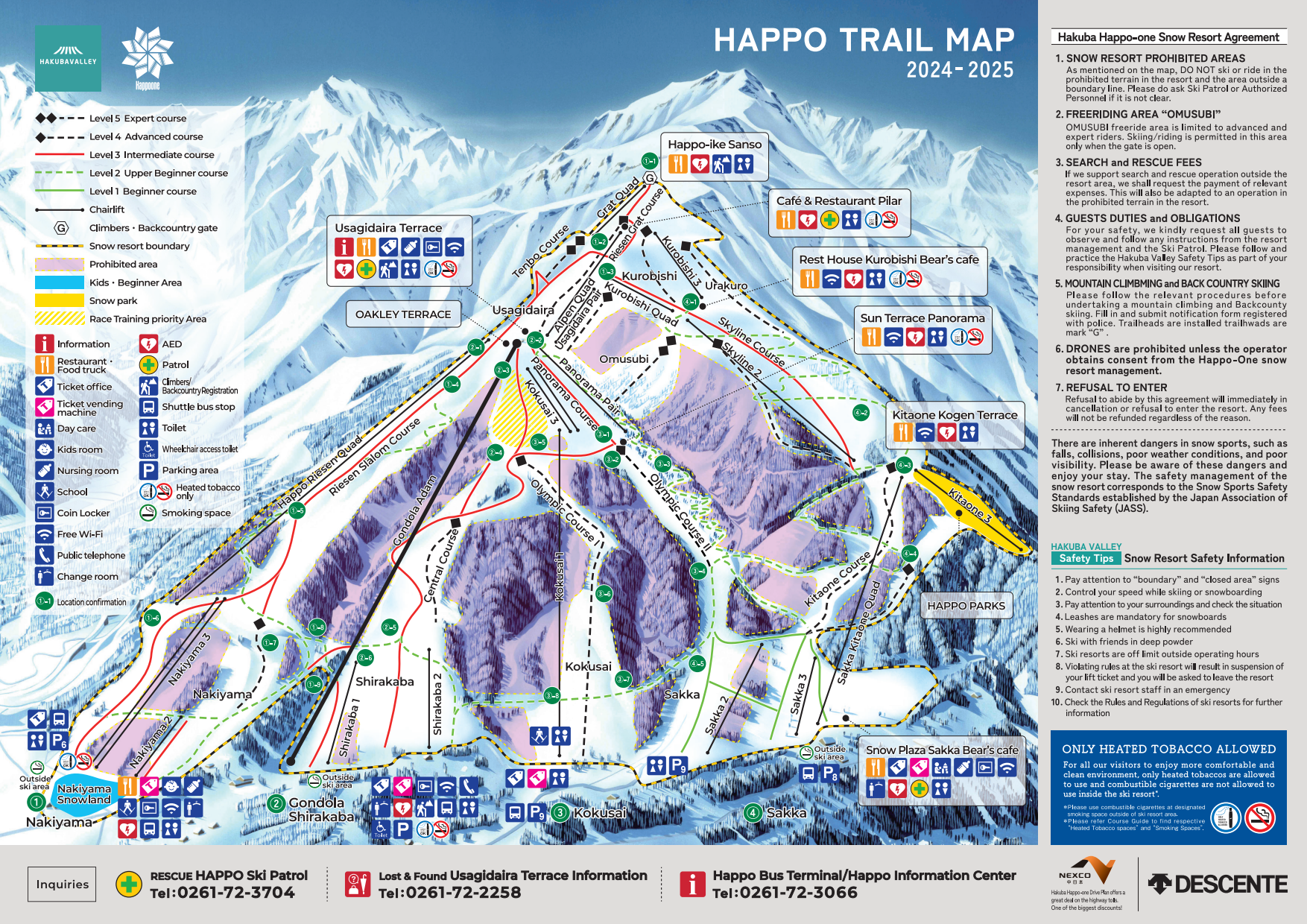
Hakuba works well for families, partly because of the variety, but also because the valley's infrastructure makes life easy. The shuttle bus network means you can reach any of the 10 resorts without a car, and the Japanese attention to detail shows in everything from immaculately groomed slopes to heated base lodges with changing facilities and family rest areas. You don't all need to be at the same level to enjoy the same holiday: while one parent heads to Happo-one for steep terrain, the other can take younger children to beginner zones, where gentle slopes and snow play zones make for a relaxed morning.
Cortina runs a Pokémon Snow Adventure area with snow tubing and escalator lifts designed for young children, a thoughtful touch that makes the first day on snow more fun. Older children and teenagers are well catered for throughout the valley: the terrain parks at Hakuba 47 give teens something to aspire to, tree runs across the upper mountains add adventure, and the freedom of skiing a different resort each day keeps the week from feeling repetitive.
Non-skiing activities like snowshoeing, sledding, and a day trip to the Jigokudani Snow Monkey Park (about 90 minutes away) add something memorable beyond the slopes. Dining with the family is straightforward throughout the valley: most Japanese restaurants offer children's set meals, the food truck area at Happo-one's Sakka Base serves everything from ramen to burgers, and the variety of izakaya and noodle houses makes eating out an experience rather than a chore. The onsen experience, while it requires a brief lesson in etiquette, is something the whole family can enjoy together and one of the things children remember longest.
Hakuba rewards rest days just as much as ski days. The valley's combination of natural hot springs, an interesting dining scene, and spectacular alpine scenery means that you'll have plenty to enjoy off the slopes. The culture is a big part of the draw in Japan, and even a simple lunch of handmade soba noodles or an afternoon onsen session feels like a memorable experience. With shuttle buses connecting the different villages, exploring is easy.
Beyond skiing and snowboarding, Hakuba has a strong range of winter activities that make the most of its alpine setting and reliable snow cover:
For days when you want to give your legs a rest, Hakuba has plenty to offer within the resorts and in the surrounding valley area. Onsen culture alone could fill a rest day, and a trip to the snow monkeys makes for one of the most memorable experiences in Japan:
Hakuba's dining scene is one of its biggest surprises. The valley has well over 100 restaurants, and the mix of traditional Japanese cuisine with international options means you could eat easily somewhere different every night for a week. From fine dining to a steaming bowl of ramen after a powder day, there's something for every mood and budget.
WeSki insider tip: Nagano's handmade soba noodles are a must-try. The buckwheat is grown locally and the noodles have a delicate flavour you won't find anywhere else. Pair them with a cold glass of local sake for the full experience.
Hakuba's après-ski scene has grown into something lively and unique. The international community that lives and works in the valley has brought a mix of Australian, European, and North American bar culture that blends well with Japanese hospitality. Throughout the valley, you have the choice between a buzzy, social scene (notably in Happo and Echoland), or a more laid-back evening soaking in an onsen with a cold beer.
Happo Village is the centre of the action, with slope-side bars that fill up from mid-afternoon onward. Echoland has the highest concentration of bars within walking distance of each other and tends to be where the late-night crowd ends up. Whether you want cocktails, craft beer, live music, or a quiet sake, the valley covers all bases.
Après-ski spots to know:
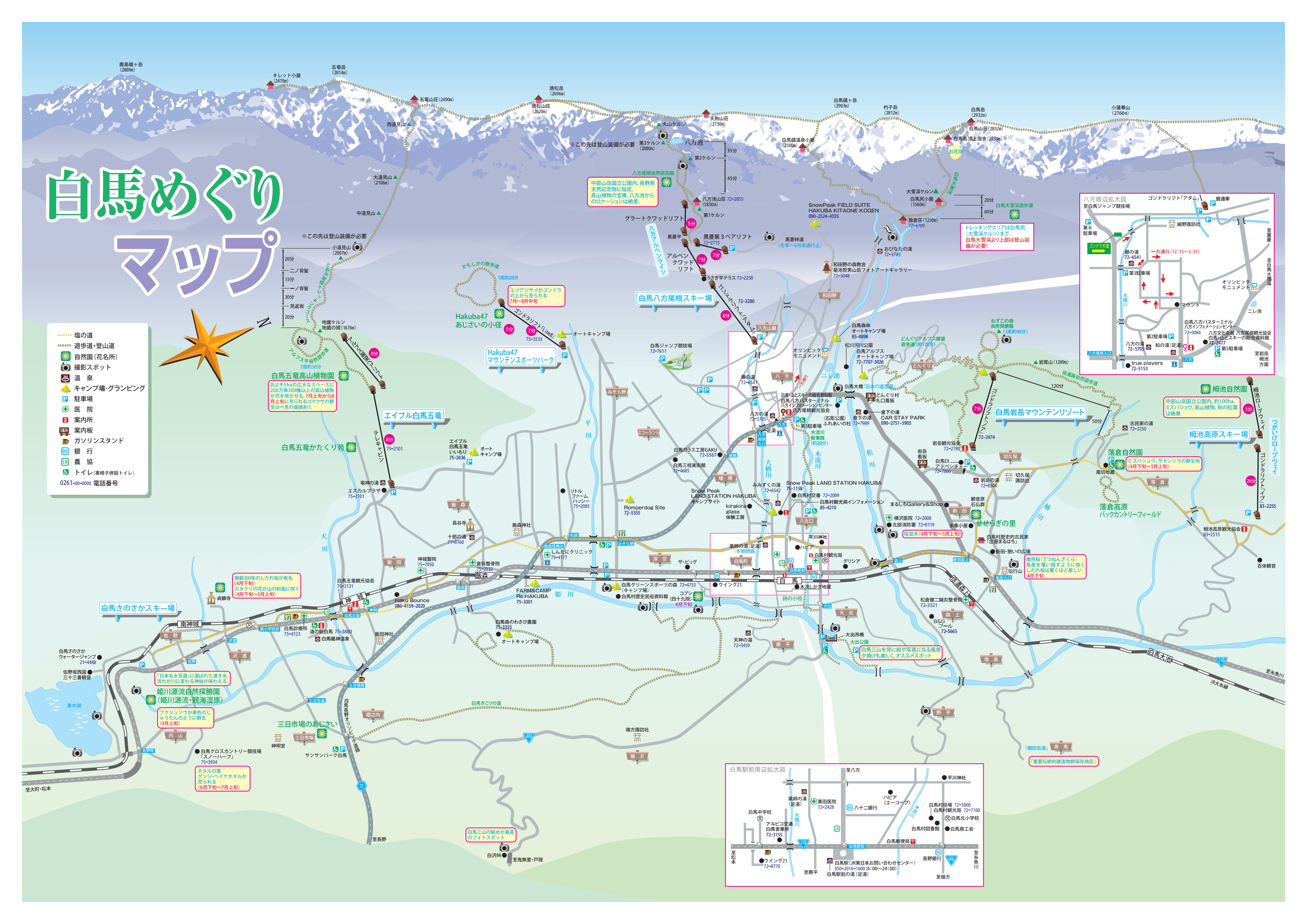
Accommodation in Hakuba spans the full range, from traditional Japanese ryokan and pensions to modern apartments, chalets, and luxury hotels. Self-catering apartments and houses are widely available and can be a smart choice for longer stays or bigger groups, and many properties blend traditional Japanese design with modern comforts.
Hakuba Village is the main base for most visitors, with the largest concentration of lodging, restaurants, and bars, and direct access to Happo-one, the valley's flagship resort. The neighbouring areas of Iida and Chikuni offer a quieter setting with a more local feel, and the shuttle bus network means all 10 resorts across the valley are accessible regardless of where you stay.
The Hakuba Valley All-Mountain Pass gives you access to all 10 resorts on a single RFID card. The All-Mountain Pass is the best option for most visitors, as it lets you hop between resorts based on weather and conditions. Hakuba Valley is also part of the Epic Pass alliance, giving Epic holders five consecutive days across the valley.
Check for family and multi-day pass options when booking your Hakuba ski holiday through WeSki to find the best fit for your trip.
Equipment hire is well covered in Hakuba, with rental shops in every village area and at the base of most resorts. Shops carry a full range of skis, snowboards, boots, and accessories, and it's worth upgrading to demo-level skis if you want to try the latest equipment on Hakuba's powder. Most shops have English-speaking staff, and many offer delivery to your accommodation. Booking in advance is recommended during peak periods (late December through February).
Hakuba is a spread-out valley, but getting between resorts and villages is straightforward. A shuttle bus network runs between the resorts for Hakuba Valley lift pass holders, with multiple routes and stops throughout the day. The shuttle connects to all 10 ski areas and the main accommodation villages, so you can ski a different mountain each day without needing a car. Schedules and route maps are available at the Happo Bus Terminal and tourist information centres.
Within the main village areas, most things are within walking distance, though the paths can be icy so good boots are a must. Taxis are readily available and affordable for evening trips (useful, for example, if you're heading to dinner in Echoland from Happo or vice versa). For complete flexibility, car hire is an option, though parking at the busier resorts can be limited during peak periods.
Hakuba is approximately 280km northwest of Tokyo, and the most common route involves flying into Tokyo Narita or Haneda Airport. From Tokyo Station, the Hokuriku Shinkansen bullet train reaches Nagano in 90 minutes, and from there it's a one-hour express bus ride to Hakuba. Direct coach services also run from both airports to Hakuba, taking around five to six hours.
WeSki offers car rentals from the airport as well as private and scheduled transfers to Hakuba. Add them to your Hakuba ski holiday package for seamless door-to-door travel.
Yes, Hakuba has strong options for beginners. Tsugaike resort is the top choice for beginner terrain, with wide, gentle slopes and a relaxed atmosphere. The lower sections of Goryu and Iwatake also have dedicated beginner areas. English-speaking ski schools are available across the valley, and the shuttle bus means you can access the best beginner slopes regardless of where you're staying.
Both are excellent, but they suit different priorities. Niseko is more compact, gets consistently cold, dry snow, and it's a more streamlined resort town experience. Hakuba has greater terrain variety with its 10 resorts, steeper mountains, and a more authentic Japanese village feel. If you value choice and big-mountain skiing, Hakuba has the edge. If you want a single, well-organised resort with reliable powder, Niseko is hard to beat.
A shuttle bus service connects all 10 resorts for Hakuba Valley lift pass holders, running throughout the day with multiple stops at accommodation areas. Taxis are affordable and widely available, and many hotels run their own shuttles. You don't need a car, though having one adds flexibility for evening dining and day trips.
Not at all. Hakuba has a well-established international community, and English is widely spoken in hotels, restaurants, ski schools, and rental shops (particularly in the Happo and Echoland areas). Road signs and most menus are in English. That said, learning a few basic Japanese phrases goes a long way and is always appreciated.
An onsen is a traditional Japanese hot spring bath, and you absolutely should try it. Hakuba has dozens of public and hotel onsen, fed by natural mineral springs. The etiquette is simple: wash thoroughly before entering the communal bath, and swimwear is not worn. Separate male and female baths are standard. The Happo-One area has particularly pure alkaline water that's said to be good for the skin.
Very much so. The variety of resorts means there's something for every age and ability. Tsugaike and Goryu's Iimori area are ideal for younger children, Cortina has a Pokemon Snow Adventure zone, and English-speaking childcare is available at several resorts. Teenagers can explore terrain parks at Hakuba 47 or try a different resort each day. Dining is family-friendly throughout the valley, and activities like the Snow Monkey Park day trip add variety beyond skiing.
Japanese resorts generally follow a system similar to Europe, with green, red, and black designations on their trail maps. However, grading can be inconsistent between resorts (what counts as an intermediate run at Tsugaike may be steeper at Happo-One). It's worth checking trail maps at each resort and asking at the lift pass office or ski school if you're unsure. The terrain is clearly marked, and the progression between resorts in the valley naturally helps you gauge difficulty.
\[To be populated manually from the live WeSki site.\]
 4.9/5
4.9/5I usually book flights, ground transportation, hotel, ski rental and lift tickets myself but this year used WeSki for a trip to Morzine. It was so much easier. Everything worked perfectly - ground transportation arrived on time and there was plenty of feedback throughout the whole process giving you confidence the vacation would go smoothly.

A really useful service that is so much easier to use than other 'all-inclusive' sites. It nicely bridges the gap between a travel agent and booking the trip yourself online. I'll use WeSki every time I go skiing from now on.
We booked a late minute skiing trip to Morzine through we ski. We looked at booking the trip ourselves but could get anywhere near the price quoted by we ski. The company was excellent and we had no problems at all from start to finish. I would definitely use them to book another weekend skiing trip.
Seamless experience from start to finish. I was spending ages trying to sort out a weekend break and managed to do it with we ski in minutes and for the same price as booking it all up yourself. Flight, transfers and accommodation was all as expected and faultless.