EN
EN
Les Menuires and Val Thorens sit one above the other in the Belleville valley, at the far end of the Three Valleys. The usual summary is that Val Thorens is higher and Les Menuires is cheaper. Both are true, and neither settles much. Three things matter more. Your lift pass may not cover both resorts, depending which one you buy. The Les Menuires ski area climbs higher than the Val Thorens village, so the altitude gap is about where you sleep rather than where you ski. And Val Thorens is the last stop on the road, which you drive through Les Menuires to reach. This guide compares them on terrain, snow, lift passes, villages, families, experts and transfers.
Choose Les Menuires for: a shorter transfer and a lower village with air you sleep better in, quiet north-facing skiing on Pointe de la Masse that holds its snow, wide beginner ground at village level, and the broadest spread of family accommodation in the valley.
Choose Val Thorens for: the longest season in the Three Valleys, skiing that starts at 2,300 m and runs to 3,230 m, one of the biggest freestyle and ski-cross setups in France, and a compact car-free village that works well for groups who want everything within a five-minute walk.


| Feature | Les Menuires | Val Thorens |
|---|---|---|
| Country | France | France |
| Shared ski area | Three Valleys - 600 km across seven resorts | Three Valleys - 600 km across seven resorts |
| Local sector | Les Menuires and Saint-Martin - around 160 km | Val Thorens and Orelle - around 150 km |
| Village altitude | 1,850 m at La Croisette, with quarters from 1,800 m to 2,000 m | 2,300 m - the highest ski resort in Europe |
| Highest lift | 2,850 m (Mont de la Chambre); Pointe de la Masse 2,804 m | 3,230 m (Pointe du Bouchet); Cime Caron 3,200 m |
| Season | Roughly early December to late April | Roughly late November to early May |
| Lift pass | Les Menuires and Saint-Martin, Belleville Valley, or Three Valleys | Val Thorens and Orelle, Belleville Valley, or Three Valleys |
| Best for | Families, quiet north-facing runs, easy access to the rest of the area | Altitude, long season, freestyle, après |
| Village character | Four quarters strung along one side of the valley | Compact and car-free, built around a single bowl |
| Nearest airport | Chambéry (~2 hr); Geneva (~3 hr) | Chambéry (~2 hr 15 min); Geneva (~3 hr 15 min) |
The two sit in the same valley and ski it from opposite ends. Les Menuires works both flanks: the Mont de la Chambre side rises east from the village to 2,850 m and is where the links to Méribel and Courchevel go, all broad blues and long reds that suit intermediates as well as anything in the area. Facing it across the valley, Pointe de la Masse is the quieter half - a single gondola to 2,804 m, a full 1,000 m of vertical back down, three blacks, a set of patrolled Liberty Ride freeride routes and, on the Bouquetin and Vallon blues, a way for less confident skiers to come down from the top. Val Thorens sits in a bowl with lifts fanning out on three sides and a fourth sector, Orelle, over the back ridge into the Maurienne. Its 150 km lean blue and red, wide and open, with almost no terrain under 2,000 m. The trade-off is repetition: Les Menuires gives you two distinct mountains, Val Thorens gives you one very large one.
Who it suits: for variety in the local sector and quick links to the rest of the Three Valleys, Les Menuires; for high, wide cruising with the most vertical in the area above you, Val Thorens.
Val Thorens has the stronger record, and the reason is the village rather than the pistes. At 2,300 m it is the highest ski resort in Europe, nearly all its terrain sits above 2,000 m, and its slopes mostly face north and north-west, so the runs home are in condition when lower resorts are thinning out. That is what stretches its season from late November to early May, a fortnight longer at each end than Les Menuires. The part competitors skip is that Les Menuires skis high too. Mont de la Chambre at 2,850 m and Pointe de la Masse at 2,804 m are both well above the Val Thorens village, and La Masse is north-facing, which is why locals head there after a storm. What Les Menuires has that Val Thorens does not is a lower half, from 1,850 m down towards Saint-Martin at 1,450 m, and that is the ground that softens first in spring.
Who it suits: for a late-November or May trip, Val Thorens is the safer booking; from January to March the skiing is comparable and the difference is the last run of the day.
This is the part most comparisons get wrong, and it can cost you the week. The two resorts do not automatically share a pass. There are three tiers. The local Les Menuires and Saint-Martin pass covers around 160 km and stops at the ridge - it does not reach Val Thorens. The Val Thorens and Orelle pass covers around 150 km and does not include Les Menuires. Between them sits the Belleville Valley pass, which covers all three Belleville resorts and roughly 300 km, and above that the full Three Valleys pass, which adds Méribel, Courchevel, La Tania and Brides-les-Bains for 600 km. One more piece of timing: the inter-valley links open with the lower resorts in early December and close before Val Thorens does in spring, so a late-November or early-May week in Val Thorens is a Belleville-valley week whatever pass you hold.
Who it suits: if you intend to ski both villages, the Belleville Valley pass is the one to look at; take the full Three Valleys pass only if you actually plan to cross the ridge to Méribel and Courchevel.
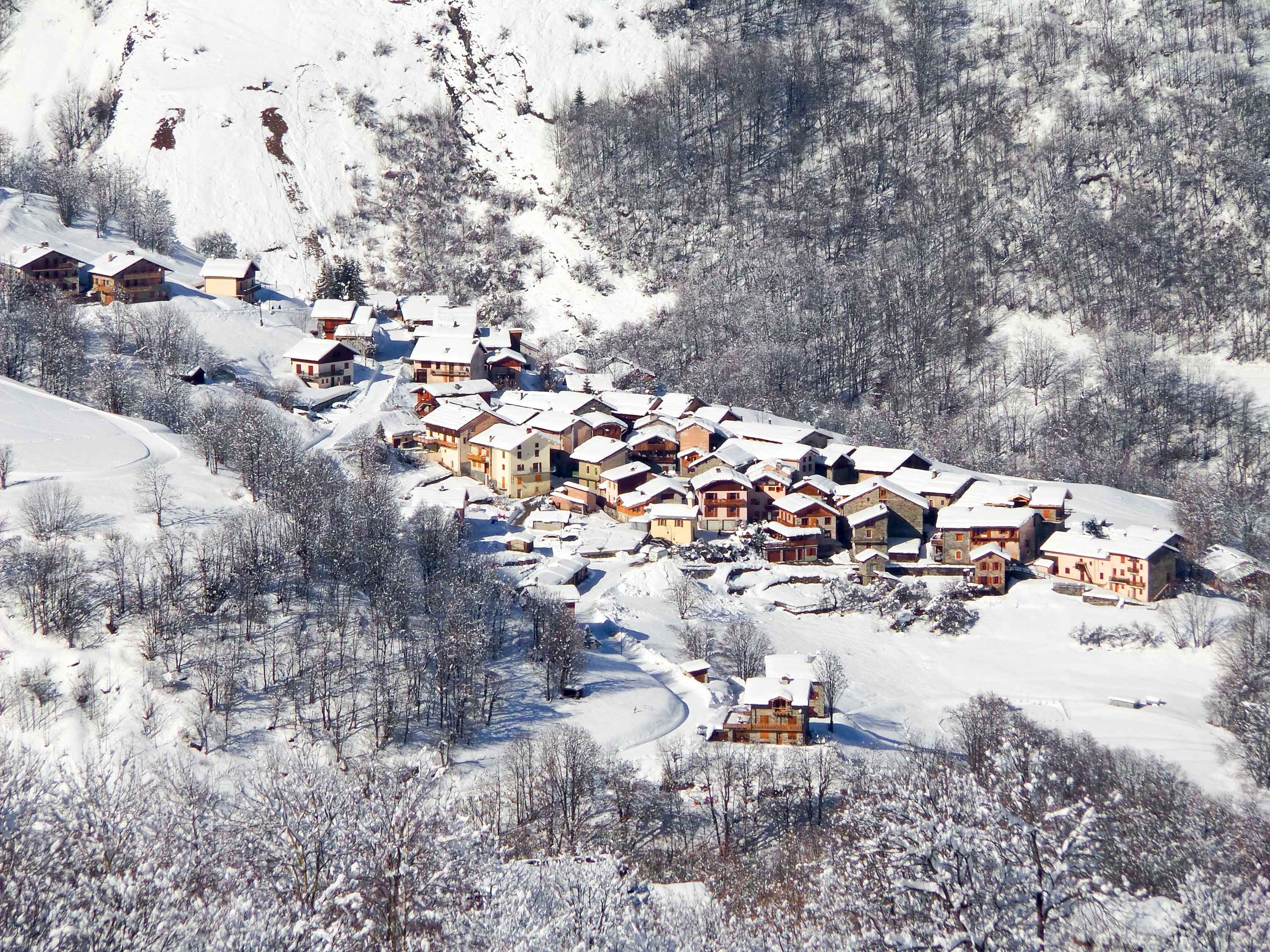
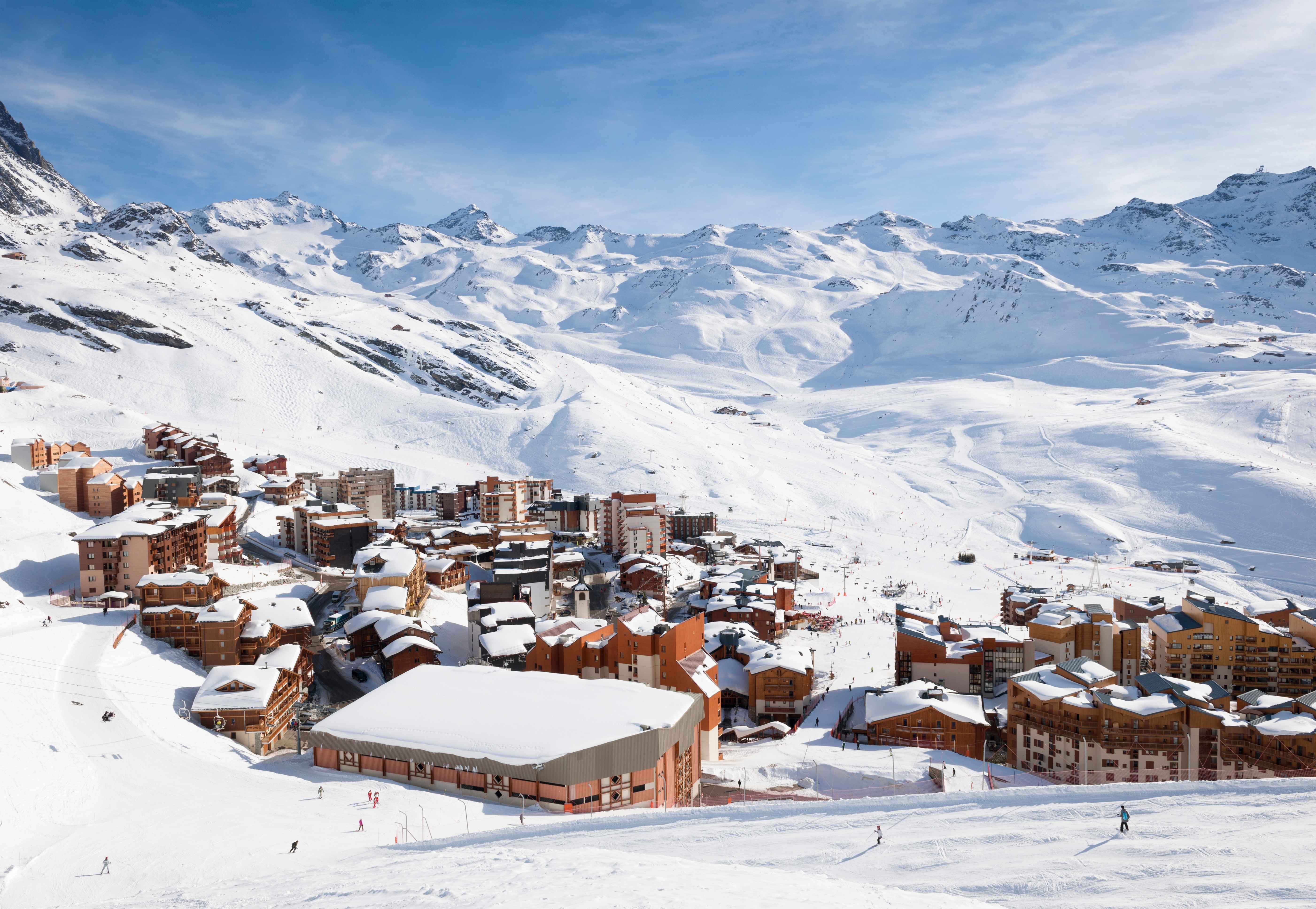
Les Menuires is not one village but four quarters strung along the valley side, and which one you book changes the week more than the resort name does. La Croisette at 1,850 m is the lift hub and the 1960s architecture the resort is teased for, largely reclad since. Reberty sits highest at 2,000 m in chalet style and is where most British apartment stock is; Les Bruyères has the second lift hub and the Aquafun pool; Preyerand sits lowest. Most of it is ski-in, ski-out, and free buses link the lot. Val Thorens is the opposite: one compact, car-free bowl where you leave the car in a garage on arrival and walk everywhere, with lifts leaving from the edges and a denser, smarter run of hotels and residences than anywhere else in the Belleville valley. It is also treeless and built in one go, which some people find bracing and others find bleak.
Who it suits: for a choice of bases and a softer, lower village, Les Menuires; for walking everywhere and stepping onto snow from the door, Val Thorens.
Val Thorens runs the bigger operation by some distance. La Folie Douce above the village sets the afternoon going, the slope-side bars carry it into the evening, and the centre keeps running late for a young, international crowd. Dining spans quick and cheap through to tasting menus. Les Menuires plays it quieter: sunny terraces at La Croisette and Les Bruyères, a handful of good Savoyard tables, and a short trip down the valley to Saint-Martin, where La Bouitte has long ranked among the best restaurants in the Alps if you want one memorable dinner. What Les Menuires does not have is late nights, which is either the point or the problem depending on the group.
Who it suits: for a big afternoon and a later evening, Val Thorens; for an early start the next morning, Les Menuires.
Les Menuires has the better case, and altitude is part of it. Its beginner areas sit at village level across La Croisette and Les Bruyères with free lifts and wide, gentle green runs, and a 1,850 m base is easier on small children arriving from sea level than 2,300 m, where a first night can mean headaches and broken sleep. The resort holds the Famille Plus label, runs childcare from a few months old, and has two pools, a night cinema and the Speed Mountain toboggan for the afternoons. Val Thorens is well set up too, with nursery slopes right in the village, free beginner lifts and the Lagon leisure centre, and its easy blues are wider and higher than anything at Les Menuires. The catch is the altitude and the exposure: no trees, and a village that is cold and windy when the weather turns.
Who it suits: for a first family week, or anyone with young children, Les Menuires; Val Thorens suits families already skiing blues who want more ground to cover.
Val Thorens is the stronger of the two on both counts. The Combe de Caron drops around 900 m of north-facing black from Cime Caron, the Lac du Lou off-piste route runs down the back of the Masse ridge, the Orelle sector holds snow long after the front side has been skied out, and the snowpark and ski-cross arena are among the most serious in France. Les Menuires answers with La Masse, which is a better sector than its reputation. The three blacks off the top are steep and quiet, the Liberty Ride routes are patrolled off-piste with the reassurance that brings, and the north face holds powder for days after a storm because most of the valley is on the other side skiing towards Méribel. Its south-facing off-piste towards Val Thorens is the prize after a cold spell, and it wants an early start and a guide.
Who it suits: for freestyle and sustained high-altitude steeps, Val Thorens; for quiet powder within one gondola ride of the village, La Masse at Les Menuires is a strong hand.
Both run up the Tarentaise from Moûtiers, then up the same single road into the Belleville valley - past Saint-Martin, through Les Menuires, and on up to Val Thorens at the top. That order matters. Val Thorens adds roughly twenty minutes to whatever Les Menuires costs you, and the final stretch above Les Menuires is the section that closes first when it snows hard on a Saturday. Chambéry is the closest airport at around two hours to Les Menuires, Geneva the most common UK gateway at around three, and Lyon and Grenoble both work. If you would rather come by rail, Moûtiers is on the TGV line from Paris and Lyon and sits about forty minutes below Les Menuires by coach.
Who it suits: the gap is twenty minutes, so let flights and prices decide - unless you are travelling with small children on a changeover Saturday, when twenty minutes at the end of a long day is worth having.
WeSki insider tip: Val Thorens has no trees, so a flat-light day up there is hard work. When the cloud comes in, head down the valley instead: the runs below Les Menuires towards Saint-Martin drop past the treeline, and the Jerusalem blue down to the village gives you something to read the snow against. It works whichever of the two you are based in, as long as your pass covers the Belleville valley.
Three questions settle this one, and the ski area is not among them - you are choosing a village, not a mountain.
Which pass are you buying? If a local pass is what fits your trip, the choice is final, because neither local pass reaches the other village. If you are taking the Belleville Valley or Three Valleys pass, you can ski both freely and the decision drops back to where you would rather sleep.
When are you going? Late November or the first week of May, and Val Thorens is the only one of the two reliably open. From Christmas through March both ski well, and Les Menuires has the advantage on the way home in spring being a little lower and a little softer.
Who is in the group? Young children, mixed abilities, or anyone who feels altitude tend to point at Les Menuires and its lower base. A group set on skiing hard and going out afterwards will get more out of Val Thorens, and will not mind the extra twenty minutes on the coach.
Yes, and it is an easy crossing. The two sit in the same valley and the lifts connect directly, so you can ski from one to the other in well under an hour without taking off your skis. The usual route from Les Menuires runs up the Mont de la Chambre side and over to the Val Thorens bowl, with the return coming back across the ridge or round via Cime Caron. The only thing that stops you is your lift pass, so check that before you go.
Not the full one, no, but you do need more than a local pass. The Les Menuires and Saint-Martin pass covers around 160 km and stops short of Val Thorens; the Val Thorens and Orelle pass covers around 150 km and does not include Les Menuires. The Belleville Valley pass is the one that covers both, along with Saint-Martin, for roughly 300 km. Take the full Three Valleys pass only if you plan to cross into Méribel and Courchevel as well.
Val Thorens has the higher village, at 2,300 m against 1,850 m at La Croisette, and the higher lift, at 3,230 m against 2,850 m. The part that gets missed is that the Les Menuires ski area still climbs well above the Val Thorens village: Mont de la Chambre at 2,850 m and Pointe de la Masse at 2,804 m are both around 500 m higher than the streets of Val Thorens. So you ski at broadly similar altitudes in either. The real difference is where you sleep.
Val Thorens, on the strength of its base altitude and aspect. Starting at 2,300 m with most slopes facing north means the runs back into the village stay skiable at both ends of the season, which is why it opens a fortnight earlier and closes a fortnight later. Les Menuires holds up well through the core winter, and its north-facing La Masse sector keeps powder for days after a storm, but its lower runs towards Saint-Martin soften first in spring.
Les Menuires tends to come out ahead for a first ski holiday. Its beginner areas sit at village level with free lifts and wide green runs, the 1,850 m base is gentler on young children than 2,300 m, and the resort has childcare, two pools and a night cinema for the afternoons. Val Thorens has nursery slopes in the village, free beginner lifts and a good leisure centre, and suits families who are already skiing blues and want more terrain, but it is colder, windier and entirely above the treeline.
Broadly, yes, and the reason is the type of accommodation rather than the resort charging less. Les Menuires is weighted towards self-catered apartments and mid-range hotels spread over four quarters, while Val Thorens holds more of the smart residences and hotels, along with the bars and restaurants that go with them. Lift passes come from the same Belleville valley system, so the saving shows up in where you sleep and where you eat. A week in Reberty and a week in Val Thorens are different styles of holiday before they are different budgets.