EN
EN
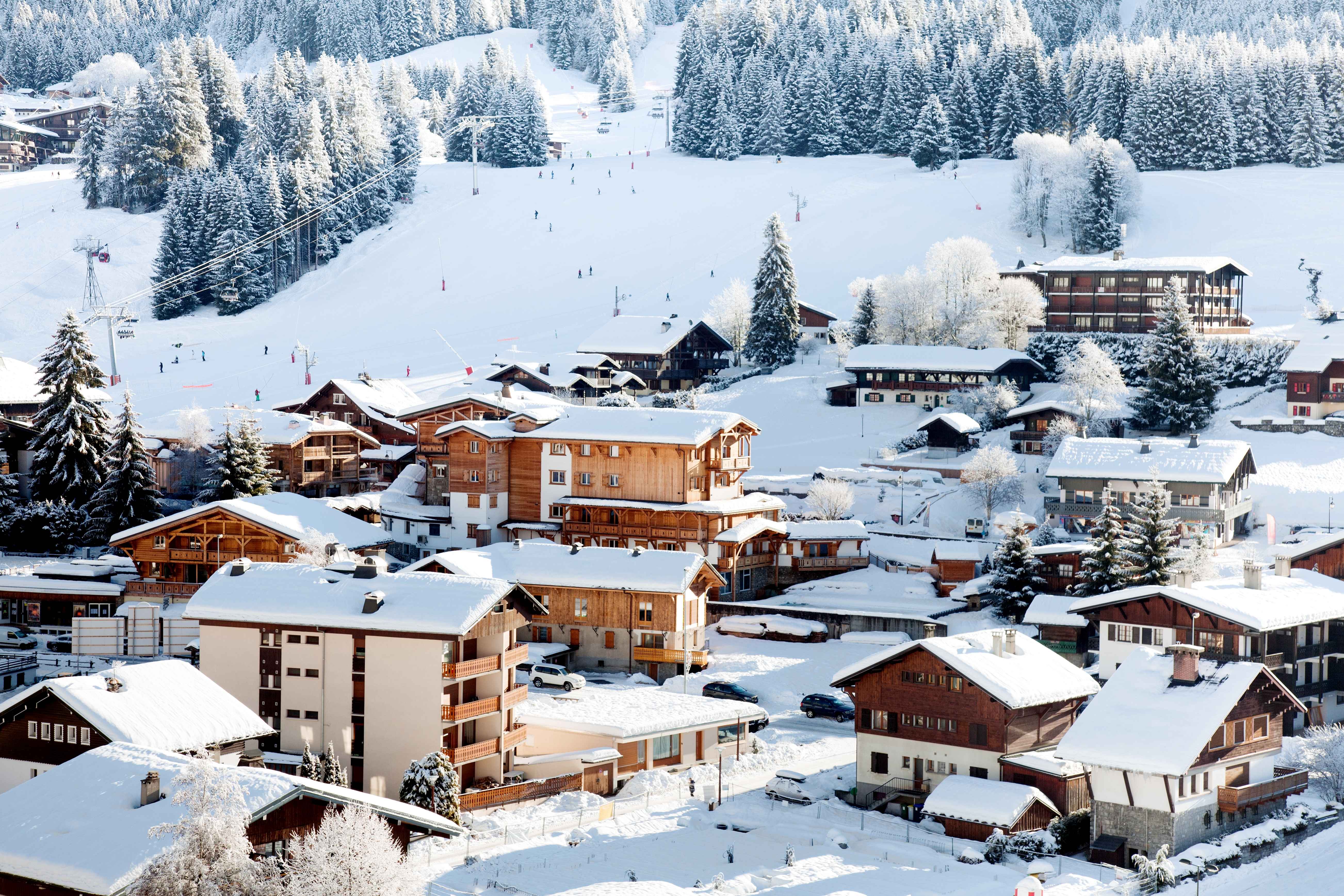
Samoëns and Morillon sit a few minutes apart in the Giffre valley, ski the same slopes on the same lift pass, and get described in the same two sentences everywhere you look: Samoëns is the handsome one, Morillon is the quiet one. That is true enough, and it skips the thing that shapes the week. Samoëns is a medieval village at 720 m with no piste back down into it, so you ride a gondola home at four o'clock. Morillon sits 20 m lower with a snowmaked run that comes all the way to the village, plus a ski-in/ski-out satellite on the plateau above. Both plug into the same corner of the Grand Massif, a lift or two from each other. This guide compares them on terrain, access, snow, passes, villages, families and experts.
Choose Samoëns for: a working Savoyard village with shops, a market and somewhere to eat, the higher and more open half of the local terrain, the longer season at both ends of the winter, and enough going on off the snow to carry a mixed group where not everybody skis.
Choose Morillon for: a snowmaked run home to the village door, ski-in/ski-out at Morillon 1100, long green and blue runs through the trees that suit a first week, and a plateau layout that keeps the day short for families with young children.


| Feature | Samoëns | Morillon |
|---|---|---|
| Country | France | France |
| Shared ski area | Grand Massif - 265 km across five resorts | Grand Massif - 265 km across five resorts |
| Local sector | Samoëns 1600, up to the Tête des Saix | Morillon 1100 (Les Esserts), on the next shoulder |
| Village altitude | 720 m | 700 m village, 1,100 m at Les Esserts |
| Highest local lift | Tête des Saix, 2,120 m | Sairon, at the top of Morillon's own slopes; Tête des Saix one lift across |
| Ski back to the village | No - gondola down, or ski to Vercland and take the bus | Yes - the Doïna red, snowmaked end to end |
| Season | Roughly mid-December to mid-April | Roughly late December to early April |
| Lift pass | Grand Massif, or the four-village VILL4GES pass | Grand Massif, or the four-village VILL4GES pass |
| Best for | Village life, non-skiers, a longer season | Skiing home, first weeks, young families |
| Village character | Medieval stonemasons' village in the valley | Quiet valley village plus a purpose-built plateau |
| Nearest airport | Geneva (~1 hr 10 min) | Geneva (~1 hr 10 min) |
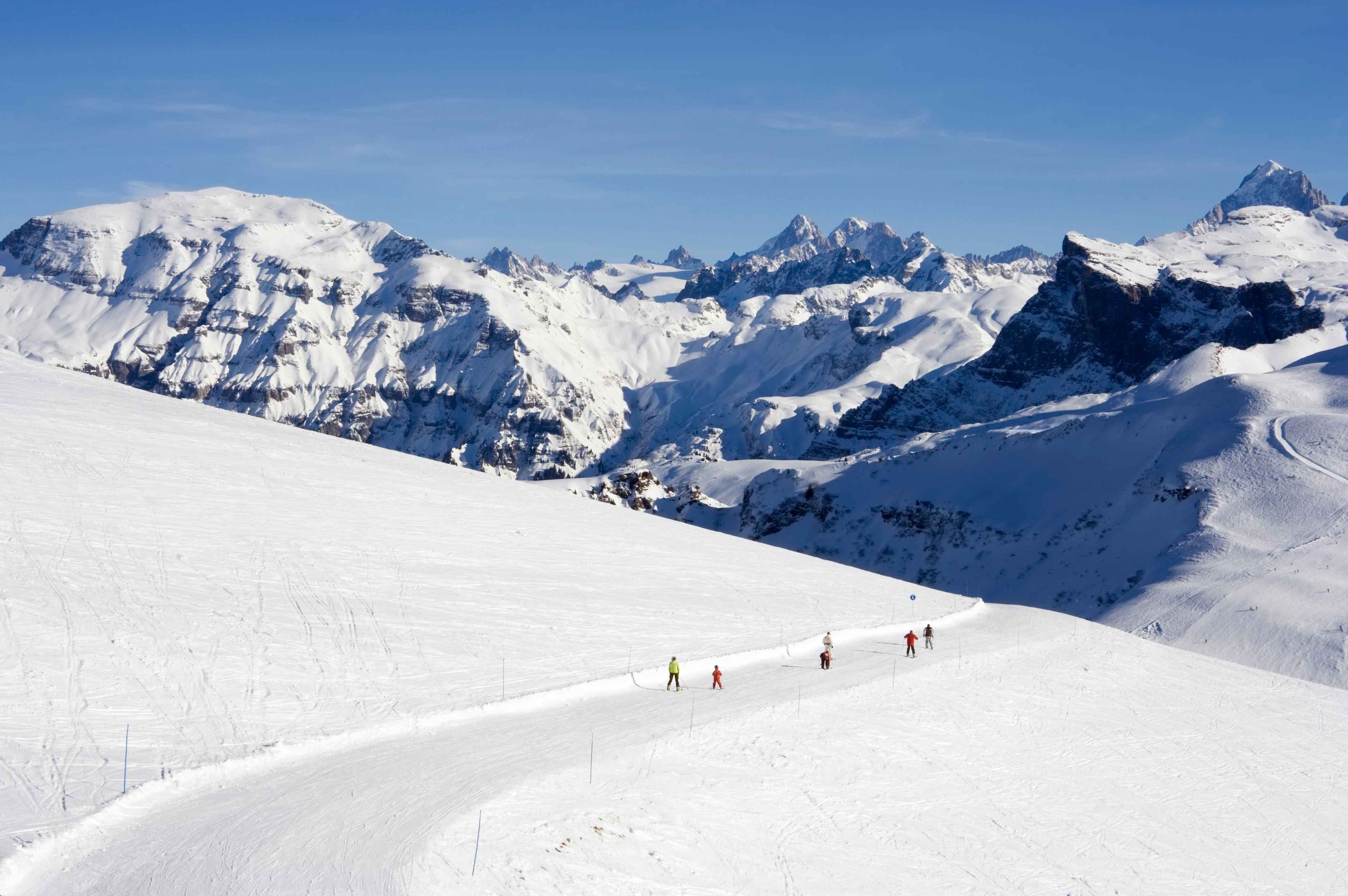
On the mountain these two are close to being one resort. Samoëns 1600 and Morillon 1100 sit on adjoining shoulders of the same plateau, linked by piste and lift, and a steady intermediate crosses between them in about a quarter of an hour. From either side the Chariande Express pulls you up to the Tête des Saix at 2,120 m, which is the gate to Flaine, Les Carroz and the rest of the Grand Massif's 265 km.
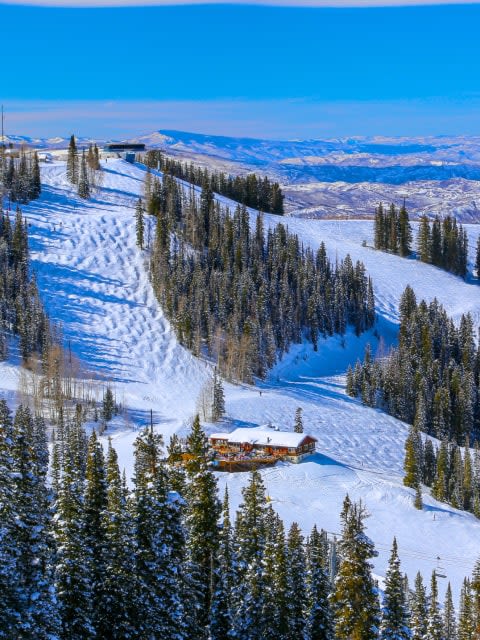
What changes is what sits above your head. Samoëns holds the higher, more open half: the Marmotte red, the Aigle Noir black and the off-piste dropping off the Tête des Saix towards the Coulouvrier chair. Morillon's own terrain is lower and almost entirely wooded - the long green Marvel winds through the forest to Les Esserts, and the Sairon blue runs around three kilometres with 600 m of descent under it.
Who it suits: for pitch and open ground off the top lift, Samoëns; for long, sheltered runs through trees, Morillon.
Both are around an hour and ten from Geneva, most of it motorway as far as Cluses, and the transfer is not a reason to pick one over the other. The last half hour of the day is.
Samoëns' snow front is at 1,600 m and the village is at 720 m, with nothing skiable in between. Two gondolas connect them - the Grand Massif Express from the edge of the village and the Vercland gondola a couple of kilometres down the valley - and at the end of the afternoon you ride one back down. The Grand Cret red does drop 1,320 m to the hamlet of Vercland when snow reaches that low, but it is a fair-weather run and it leaves you at a lift station with a shuttle bus still to come.
Morillon built its way around the same problem. The Doïna red links Les Esserts to the village 400 m below and carries snowmaking along its whole length, which is why a village at 700 m keeps a working run home. Stay at Morillon 1100 and the question never arises: the Marvel, Charnia and Sairon all finish in the resort.
Who it suits: if skiing home matters, Morillon - and it is the clearest split in the pairing.
Neither village is high, and both lean on the same thing: aspect. Around 80% of the Grand Massif's pistes face north, which is why a ski area with villages at 700 m holds groomed cover better than the altitude suggests. Above both resorts the slopes sit between roughly 1,600 m and 2,120 m on shaded ground, with Flaine's bowl reaching 2,480 m behind them if conditions lower down turn.
The split is season length rather than snow quality. Samoëns' lifts usually open about a week earlier and close about a week later than Morillon's, and Morillon runs one of the shorter seasons of the five Grand Massif resorts. Its lower terrain is also the first to feel a mild spring, which is exactly what the snowmaking on the Doïna is there to hold together.
Who it suits: through January and February there is nothing in it; for an early-December or mid-April week, check Morillon's opening and closing dates before you book anything.
Both villages sell the same two passes, so the pass will not decide where you sleep - but it does decide how much of the mountain you see. The Grand Massif pass covers all five resorts, Flaine included. The cheaper VILL4GES pass covers the four valley villages - Samoëns, Morillon, Les Carroz and Sixt - which are all linked to each other on skis. What it leaves out is Flaine.
That matters more than it sounds, because Flaine's bowl holds the area's high ground, its steepest pistes and the top of the 14 km Cascades run down to Sixt. On the VILL4GES pass you can still fill a week without repeating much, and for a first week or a family finding its feet it is the sensible buy. If anyone wants the Grandes Platières or the Cascades, you need the full pass - from either village, at the same price.
Who it suits: identical from both, so buy on what you intend to ski rather than on where you are staying.
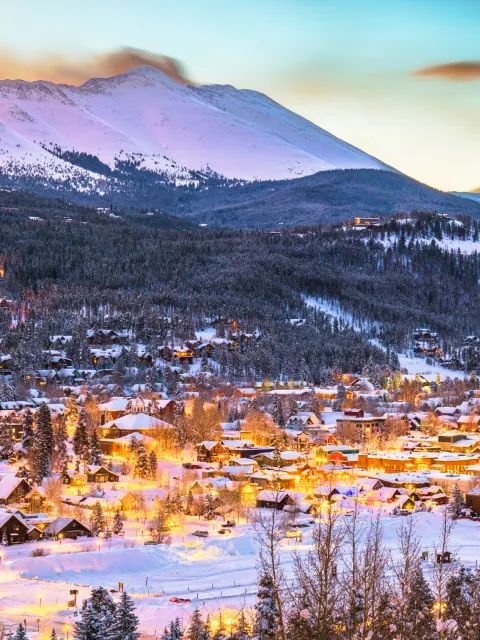
Samoëns is the reason most people look at this pairing at all. Its square is built around a lime tree planted in 1438 and listed as a natural monument, with a fourteenth-century covered grain hall on one side and a church rebuilt by the village's own stonemasons on the other, and the Jaÿsinia alpine botanical garden climbing the slope above. It is a working village with shops, a weekly market and a run of restaurants, and most of what you can book is a chalet or a hotel a short walk from the square.
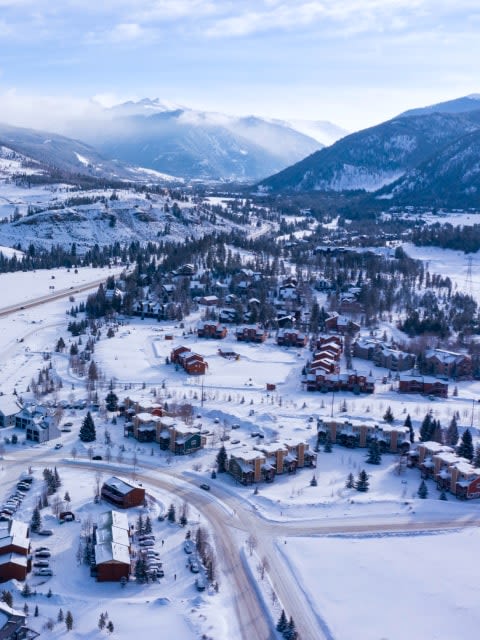
Morillon is two places, and the difference is not a detail. The valley village at 700 m is small and quiet - a sixteenth-century church, a few bars, not much else. Morillon 1100 Les Esserts is the purpose-built satellite on the wooded plateau above, largely car-free, with the nursery slopes, the crèche and most of the apartments on the snow front. Booking "Morillon" without checking which of the two you have is the most common mistake on this pairing.
Who it suits: for a village with a life of its own, Samoëns; for walking out of the door onto snow, Morillon 1100.
This is the closest-run section, because both hold the Famille Plus label and both put their nursery areas at altitude rather than in the village. From Samoëns the beginner zone sits at 1600 at the top of the gondola, with carpets, drags and the Demoiselles and Damoiseaux chairs feeding it, and the ski schools meet there - a gondola ride at each end of every lesson. From Morillon village the pattern is identical. Book Morillon 1100 and it changes completely: nursery slopes, the Village des Enfants childcare and the sledging area are all a few minutes from the door.
The terrain gives Morillon the edge for a second week too. The Marvel runs a long way through the forest with wildlife boards along it, and the blues around Les Esserts all return to the same point, so a beginner stepping off the nursery slope need not take on a big mountain to do it.
Who it suits: for the shortest possible day with small children, Morillon 1100; for the same skiing with a village to come back to, Samoëns.
Neither does late nights, and this is where the gap is widest. Samoëns has a spread of bars and restaurants around the square, an ice rink, food and antique shops along the main street and the botanical garden - enough that somebody not skiing can fill a week without going near a lift. Morillon village has a handful of places to eat and little else, and Les Esserts has a small cluster of restaurants on the snow front and a mini-market. Both do their drinking in the afternoon sun at altitude rather than after dark.
Who it suits: if anyone in the group is off the snow for a day or more, Samoëns; if the plan is ski, eat, sleep, repeat, Morillon.
Neither village is an expert base in its own right. Samoëns has the better local case: the Aigle Noir black off the Tête des Saix, the Grand Cret red and its 1,320 m of descent when it is open, and off-piste lines back towards the Coulouvrier chair that stay quiet because most traffic heads for Flaine. Morillon tops out lower and runs to reds such as Paccoty and Timalets rather than anything steeper. For both, the serious terrain is a lift or two away - the Combe de Gers above Flaine is the area's real freeride descent and one to take with a guide, and the 14 km Cascades down to Sixt is the long day out. Both sit on the far side of the VILL4GES boundary.
Who it suits: Samoëns for the steeper home mountain; for either, buy the full pass and plan the week around Flaine.
WeSki insider tip: if you are based in Samoëns and the light goes flat, cross to the Morillon side rather than riding the gondola down. The Marvel and the blues below Les Esserts run through trees the whole way, so you keep your depth perception while the open ground above Samoëns 1600 turns white - and the Doïna will put you out in Morillon village for the bus home.
Same sector, same passes, a few minutes of road between them - so the skiing itself will not settle this. Three questions tend to.
Where do you want to be at four o'clock? Morillon is the one you can ski home to, on a run built and snowmaked for exactly that. From Samoëns you ride the gondola down, every day of the week. With tired children or heavy boot bags that is not a small thing.
Is anyone off the snow? Samoëns has a village - shops, a market, restaurants, a botanical garden, an ice rink. Morillon village is quiet and Les Esserts is quieter. A non-skier has a week in Samoëns and about two days in Morillon.
When are you travelling? Through the core of the winter there is nothing between them. At the edges there is: Samoëns opens earlier and closes later, and Morillon's lower terrain softens first in spring. For early December or the back end of the season, check both sets of dates before you commit.
If those three come out level, book Morillon 1100 for the snow front and Samoëns for the square.
Yes, easily and in both directions. Samoëns 1600 and Morillon 1100 sit on adjoining shoulders of the same plateau, joined by piste and lift, and a steady intermediate crosses in around fifteen minutes. Both are covered by the same passes, so there is nothing to buy and nothing to plan. In practice most people staying a week ski both sides without thinking about it, and the two sectors read as one on the piste map.
To Morillon, yes. To Samoëns, no. The Doïna red links Les Esserts to Morillon village 400 m below and has snowmaking along its full length, so the run home holds up. Samoëns has no piste into the village at all - you ride the Grand Massif Express or Vercland gondola down. The Grand Cret red reaches the hamlet of Vercland when snow allows, but that is a couple of kilometres out with a shuttle bus to follow.
It depends which part of Morillon you book. Both put their nursery areas at altitude, so from Samoëns or from Morillon village a lesson means a gondola ride at each end of the day. Stay at Morillon 1100 and the nursery slopes are a few minutes' walk away, which removes two journeys from every day of a first week. The teaching is strong in both; Morillon 1100 simply makes the logistics shorter.
Not to ski between them. The cheaper VILL4GES pass covers Samoëns, Morillon, Les Carroz and Sixt, all four linked to each other on skis, and that is plenty for a beginner or intermediate week. It does not cover Flaine, which is where the area's high ground, its steepest pistes and the start of the 14 km Cascades run sit. The full pass costs the same from either village, so decide on what you want to ski.
Both carry the Famille Plus label and both work, in different ways. Morillon 1100 wins on the daily grind: ski-in/ski-out, nursery slopes and childcare on the snow front, and long forest greens for early progression. Samoëns wins on the rest of the week, with a village that gives everyone somewhere to go when nobody wants to ski. Families skiing every day lean Morillon 1100; families with a mix of ages and interests lean Samoëns.
They share the same mountain and the same aspect, so day to day there is very little between them - around 80% of the Grand Massif faces north, which keeps cover in better shape than villages at 700 m would suggest. The difference shows at the edges of the season. Samoëns opens earlier and closes later, and its terrain sits higher, while Morillon relies on snowmaking on the Doïna to keep the run home open into the spring.