EN
EN
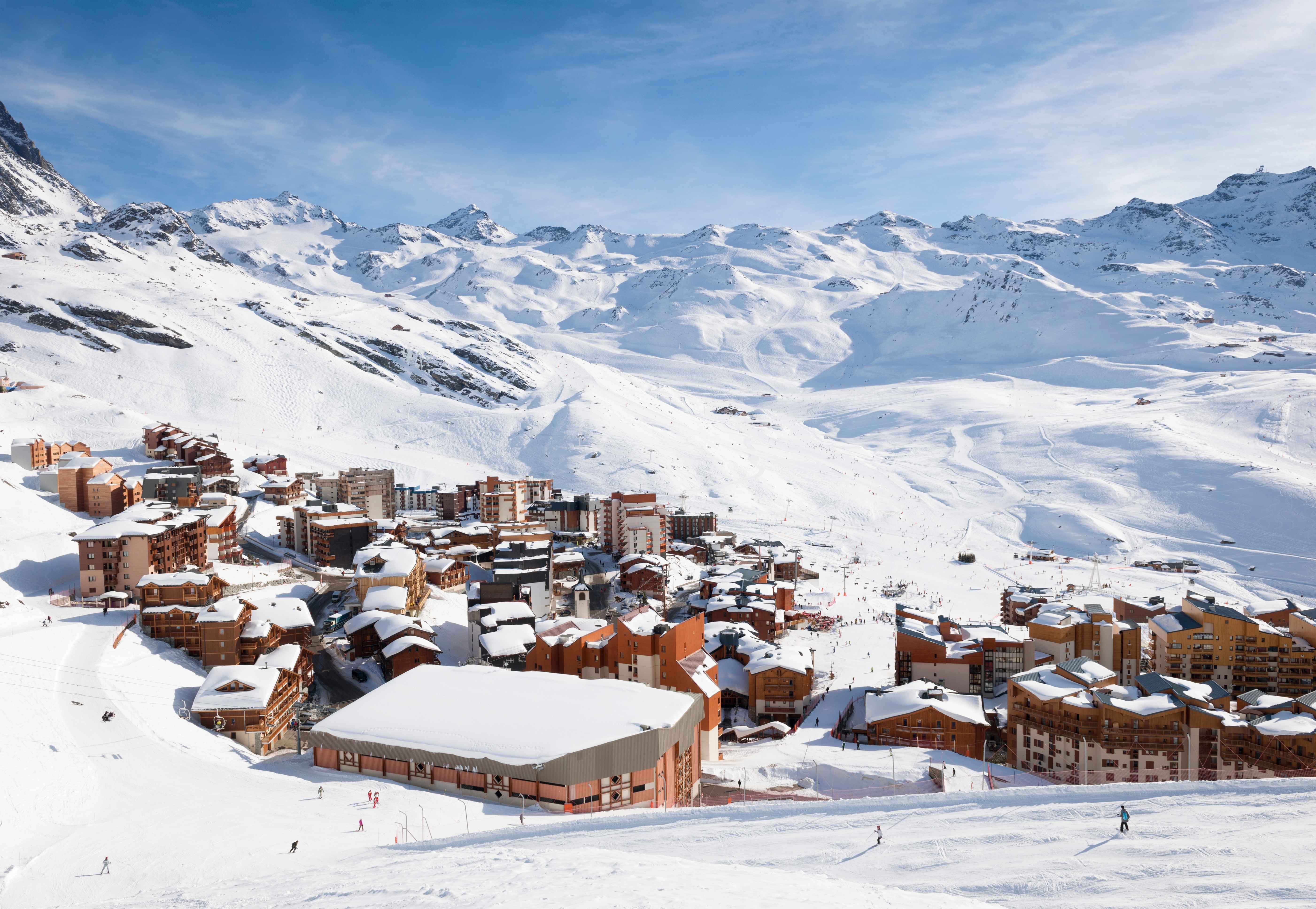
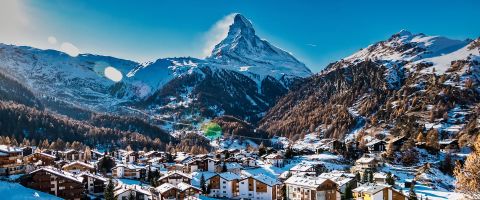
Val Thorens and Méribel sit in the same 600 km of linked pistes on the same lift pass, an hour's skiing apart, and between them they pose one of the clearest choices in the French Alps. Val Thorens is the highest resort village in Europe at 2,300 m, built above the treeline for snow and convenience. Méribel runs along the middle valley of the Three Valleys at 1,450 m, wood and stone chalets threaded through the trees, with the rest of the area spread out either side of it. One gives you the most reliable conditions and the shortest walk to a lift. The other gives you the better-looking village and the better position for covering the whole thing. This guide sets them side by side so you can pick the base that fits your week.
Choose Val Thorens for: the most snow-sure base in the area and the longest season, ski-in/ski-out from almost every bed, wide high-altitude terrain above the treeline, and the liveliest evenings in the Three Valleys - which is why it works so well for groups.
Choose Méribel for: the best-looking village in the area, a central position that puts all 600 km within easy reach, sheltered tree-lined runs for flat-light days, and a chalet culture built around families and mixed-ability parties.


| Feature | Val Thorens | Méribel |
|---|---|---|
| Country | France | France |
| Shared ski area | Three Valleys - 600 km of pistes | Three Valleys - 600 km of pistes |
| Village altitude | 2,300 m | 1,450 m (Centre) / 1,750 m (Mottaret) |
| Highest lift | 3,230 m (Pointe du Bouchet, Orelle side) | 2,952 m (Mont Vallon) |
| Season | Roughly late November to early May | Roughly early December to mid April |
| Best for | Snow reliability, doorstep skiing, big nights | Position, village life, mixed-ability groups |
| Village character | Compact, car-free, purpose-built, above the treeline | Chalet-built, spread along a wooded valley road |
| Nearest airport | Chambéry (~2 hr 15 min); Geneva (~3 hr 30 min) | Chambéry (~1 hr 45 min); Geneva (~3 hr) |
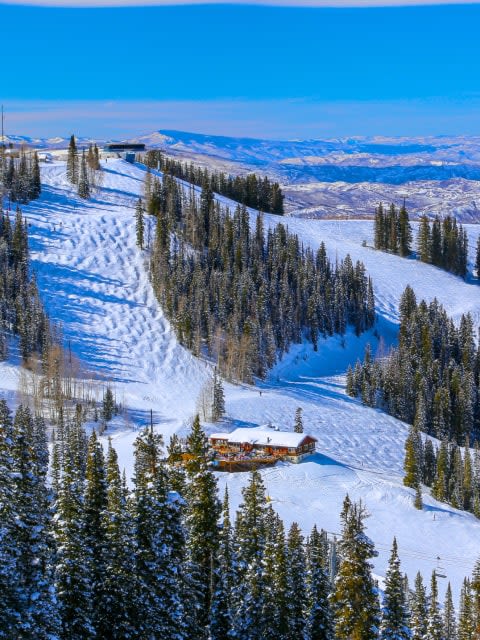
The lift pass is the same, so the difference is what you ski before breakfast wears off. Val Thorens' own sector is a bowl of wide, treeless runs, every metre of it above 2,000 m - long blues and reds rolling off the Cime Caron and Péclet sides, with the Orelle link dropping into a fourth valley that most visitors never bother with. Méribel's terrain climbs between Saulire and Tougnète, steepening in the middle and softening into tree runs at the bottom. Mont Vallon is the standout: a single lift to 2,952 m and two long reds down an otherwise empty bowl. Neither sector is small; they simply read differently - one open and high, one layered and enclosed.
Who it suits: for open, high, above-the-treeline skiing, Val Thorens; for varied runs with trees at the bottom, Méribel.
This is the part most people underestimate. Méribel sits in the middle valley with Courchevel over Saulire on one side and Les Menuires and Val Thorens over Tougnète on the other, so either end of the area is a morning's skiing and the return trip is never a worry. Val Thorens sits at the head of the Belleville valley, the far corner of the map. Skiing to Courchevel and back from there is a full day and needs an eye on the clock and the wind, since a closed high lift on the Belleville side turns the homeward leg into a bus. What Val Thorens gets in return is depth close to home: its own bowl plus Orelle is more terrain than most people cover in a week.
Who it suits: to roam all 600 km without watching the last lift, Méribel; to ski one sector properly with the highest terrain on your doorstep, Val Thorens.
Altitude settles this one. Val Thorens starts at 2,300 m, sits in a north-facing bowl and has glacier terrain above the village, so it opens in late November and usually runs to early May with cover that holds from the top lift to the front door. Méribel's upper slopes are equally dependable, but its centre is 850 m lower and the runs home pass through trees on ground that warms up sooner. Snowmaking covers the main descents and the core of the season is rarely a problem, but in a lean winter, or in April, the last few hundred metres into the village can thin out and you may finish the day on a lift rather than skis.
Who it suits: for an early-season or spring trip, or peace of mind in a poor winter, Val Thorens; from January to March there is little between them.
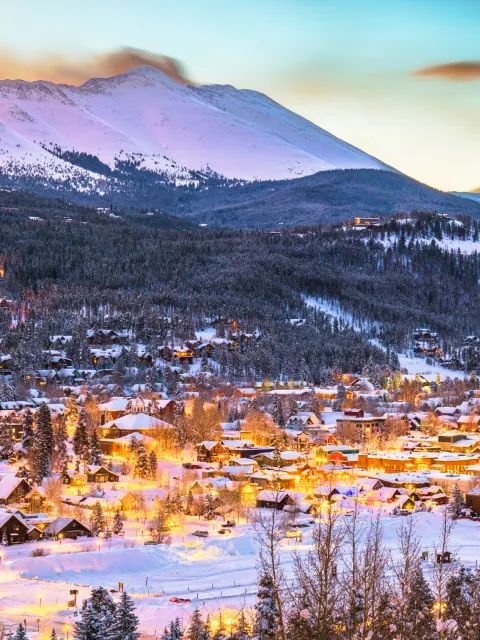
Méribel was built from the late 1930s under a rule that every building use local stone and timber, and it has stuck to it - the result is a chalet-built resort strung along a wooded valley road rather than a block of towers. Méribel Centre holds the shops and the social life, Mottaret sits 300 m higher with better ski-in/ski-out, and Méribel Village and Les Allues are quieter again. Catered chalets are the local speciality. Val Thorens makes no such claim: it is compact, car-free and purpose-built, and nearly every apartment opens onto snow. Nothing in the village is more than a walk away, which is the whole point of it.
Who it suits: if the village is part of the holiday, Méribel; if the distance between bed and lift is what matters, Val Thorens.
Val Thorens runs the loudest afternoons in the Three Valleys. La Folie Douce starts things on the mountain and the village keeps going well past dinner, with a younger, sportier crowd that treats the evening as an extension of the day. Méribel is lively without being late: the Rond Point and Jack's Bar fill up as the lifts close, then the valley settles into chalet dinners and Savoyard restaurants. Both resorts eat well - Val Thorens has the higher-end kitchens, Méribel the broader spread of places you would go back to twice in a week. The difference is the closing time rather than the quality.
Who it suits: for nights that run long, Val Thorens; for a good afternoon that ends at a reasonable hour, Méribel.
Méribel has been a family resort for decades and the infrastructure shows it: gentle greens around the Altiport, ski schools used to teaching in English, the Parc Olympique for a day off the snow, and tree cover that gives beginners something to look at when the light goes flat. The trade-off is that the resort is spread out, so some accommodation means a short bus or a walk. Val Thorens puts the nursery slopes in the middle of the village and removes the walking entirely, which counts for a lot with small children and ski boots. But it is exposed, and above the treeline a windy day with low cloud is harder work for someone on their third morning.
Who it suits: for first-timers and mixed-age parties, Méribel; for families who want zero logistics and guaranteed cover, Val Thorens.
Val Thorens is the stronger draw for strong skiers. The Combe de Caron drops off the cable car at 3,200 m, the glacier and the Orelle side open up freeride terrain that holds snow long after the pistes are tracked out, and the snowpark and boardercross are among the biggest in France. Méribel answers with pitch rather than volume: the Roc de Fer carries an Olympic downhill, the couloirs under Saulire give short, steep lines close to a lift, and the two parks cover most of what a freestyler needs without being a destination in themselves. Off-piste, Méribel's options are good; Val Thorens' are better and last longer.
Who it suits: freeriders and park riders lean Val Thorens; skiers after long reds and a race pitch lean Méribel.
You reach both the same way - up the Tarentaise to Moûtiers, then a mountain road. Méribel's is the shorter and lower of the two, which puts it around 1 hour 45 minutes from Chambéry and roughly 3 hours from Geneva, the usual gateway for UK flights. Val Thorens adds about half an hour on the climb up the Belleville valley. Moûtiers has a station with direct winter trains and transfers up to both resorts. The gap is real but small, and it widens only in bad weather, when the higher road is the one more likely to slow down.
Who it suits: if travel days with children are the thing you dread, Méribel shaves half an hour off each end; otherwise this should not decide it.
WeSki insider tip: if your group is split between the two, look at Méribel Mottaret. It sits 300 m above Méribel Centre, so it keeps its snow later and puts you a lift closer to the Val Thorens side, while anyone still finding their feet has the sheltered tree runs down to the Centre. It is the closest thing to splitting the difference.
One pass covers both, so neither choice shuts anything out. Three questions tend to settle which village you come home to.
How much of the Three Valleys will you actually ski? If the plan is to cross to Courchevel, ride the far ends of the area and tick off the 600 km, Méribel's position in the middle valley makes every day shorter and the way home simpler. If you would rather ski one sector until you know it properly, Val Thorens has its own bowl plus Orelle and you will not run out.
When are you going? Through January and February there is almost nothing in it. For late November, or anything past mid April, Val Thorens sits 850 m higher with glacier terrain above it, and that is the difference between skiing to your door and riding a lift down.
Who is in the group? Méribel gives a beginner sheltered tree runs when the light flattens, and gives anyone not skiing a village to spend the day in. Val Thorens takes the walking out of the week, but leaves you more exposed when the weather turns.
Answer those three and the choice usually makes itself.
Yes, and plenty of people do it daily. Both sit inside the Three Valleys, a fully linked 600 km area on one lift pass, and the crossing over Tougnète or the Mont de la Chambre takes roughly an hour each way at a steady pace. It is an easy day out with a lunch in the middle. Just keep an eye on the last lift home, especially in poor weather when the high links between the valleys can close.
Méribel, fairly clearly. It sits in the middle valley, so Courchevel is one link away in one direction and Val Thorens one link away in the other, and you can go exploring without worrying about the journey back. Val Thorens is at the end of the Belleville valley, which makes a Courchevel day a proper expedition. If ticking off all 600 km is the plan, Méribel makes it simpler; if you would rather ski one sector deeply, Val Thorens has more terrain of its own.
Méribel has the edge for most first-timers. The greens around the Altiport are gentle and sheltered by trees, which makes a real difference when the light flattens, and the ski schools are well used to nervous beginners. Val Thorens has good nursery slopes right in the village and no walking at all in ski boots, which suits families with young children. The deciding factor is usually weather: above the treeline, a grey windy day is harder on someone still learning.
Val Thorens, by a comfortable margin. It starts at 2,300 m, faces north and has glacier terrain above the village, so it opens earlier and closes later with snow that holds all the way to the door. Méribel's upper slopes are just as good through the core of the winter, but its village sits 850 m lower, so late in the season or in a lean year the runs home can thin out. For a November, April or May trip, Val Thorens is the safer booking.
Broadly they sit in similar territory, and the lift pass is identical since it covers the whole area. Méribel leans towards catered chalets and a wide spread of village restaurants; Val Thorens has more self-catered apartments alongside its higher-end hotels and kitchens. The style of week you book matters more than which of the two you pick.
Méribel is the more established family choice, with its chalet culture, gentle tree-lined beginner terrain, the Parc Olympique and a slightly shorter transfer at each end. Val Thorens counters with convenience: nursery slopes in the village, no walks in ski boots, and snow you can rely on whenever you book. Young beginners and an easy week point to Méribel; an early or late booking that needs the conditions to hold points to Val Thorens.