
FR
FR
Domaine skiable de SkiBig3
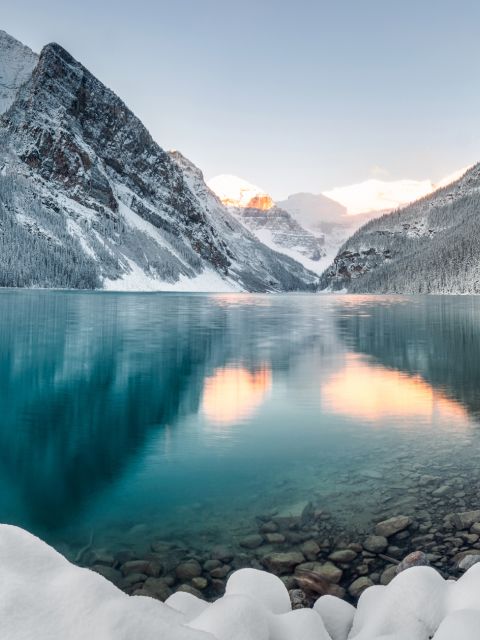
Banff National Park, in the Rocky Mountains of western Canada, is home to three ski areas that share one lift pass under the name SkiBig3. It’s the country’s first national park, and now forms part of a UNESCO World Heritage Site, recognised for its landscape of peaks, glaciers, and lakes. Each ski area has its own slopes and lifts, and together they cover around 3,200 hectares of skiable terrain. That figure includes the groomed runs as well as open bowls, tree skiing, and steep chutes. The park’s main town, Banff, is the base for two of the three resorts. Mt Norquay sits just above town, while Banff Sunshine spreads over three mountains a little further out. Further up the valley, the small village of Lake Louise lies close to the lake and to Lake Louise Ski Resort. The largest of the three, this resort ranks among the biggest ski areas in North America.
Snow here tends to be light and dry in the cold Rockies climate, and Banff Sunshine gets up to 9m of it in an average season. Sunshine’s lifts climb the highest, to 2,730m, and above the treeline both Sunshine and Lake Louise open out into wide bowls and ridges. Lower down, the runs wind through the forest. Runs are graded the North American way, with green for beginners, blue for intermediates, and black or double black for advanced and expert skiers. With no reds, blues cover a wider range than they do in Europe, and each ski area grades its runs against its own terrain.
Every ski area has its own learning area and ski school, so beginners can start wherever they stay. Intermediates have long blue runs through the trees at all three, and at Lake Louise, easier routes lead from the summit into the open bowls on the back of the mountain. Advanced skiers can head for the steep chutes and bowls of Lake Louise and Sunshine, and Mt Norquay’s small ski area includes several steep blacks. For experts, Sunshine’s highlight is Delirium Dive, which has been named one of the top off-piste destinations in the world. It drops from the top of the ski area into a vast, ungroomed bowl lined with steep chutes and cliff bands.
Off the slopes, visitors can enjoy all sorts of activities out in the park’s winter landscape. From both Banff and Lake Louise, dog sleds and horse-drawn sleighs head out through the snowy forest, and guided ice walks lead into canyons where waterfalls freeze into columns of ice. At Lake Louise, a rink is cleared on the frozen lake for skating beneath the glacier. In Banff, natural hot springs feed an outdoor pool on the slopes of a mountain just outside town. Food here leans on Rocky Mountain ingredients, with Alberta beef, bison, and elk on many menus. They turn up everywhere from relaxed pubs and steakhouses to the elegant dining rooms of the landmark Fairmont hotels in Banff and Lake Louise. Base lodges at each ski area host the first round of après-ski, and back in Banff, brewpubs, bars with live music, and late-night clubs keep evenings lively.
| Country | Canada |
| Region | Alberta (Banff National Park, Canadian Rockies) |
| Total piste area | 8,000 acres (over 3,200 hectares) across three resorts |
| Altitude | 1,630 m (Banff town) - 2,730 m (Lake Louise summit) |
| Linked resorts | 2 on WeSki Banff Lake Louise 3 resorts total (Mt Norquay, Sunshine Village, Lake Louise) |
| Lifts | 26 (across all three resorts) |
| Runs | 334 (across all three resorts) |
| Season | Early November - late May (Sunshine Village); mid-November - early May (Lake Louise); early December - mid-April (Mt Norquay) |
| Ski pass name | SkiBig3 pass |
| Nearest airports | Calgary (~1 hr 30 min to Banff, ~2 hr to Lake Louise) |
| Glacier skiing | No (though surrounded by glacial peaks in the national park) |
| WeSki services | Lessons: Banff Transfers: Banff (private, shared, scheduled), Lake Louise (private, scheduled) No WeSki ski equipment hire currently available |
The town of Banff has two separate ski areas nearby, Banff Sunshine and Mt Norquay. Sunshine, the larger, lies a short drive west of town, and its lifts spread out from a small hub high on the mountain. Beginners can learn on gentle slopes right beside it, then move onto wide greens and blues nearby. Every lift serves at least one blue run, so intermediates can explore all three of Sunshine’s mountains. Up high, they’ll find open slopes, and the lowest of the three is full of natural rolls and dips that keep cruising playful. Advanced skiers can look forward to mogul fields, tight tree runs, and steep drops, plus ungroomed freeride zones for the most experienced. Closer to town, Mt Norquay has gentle learning slopes near its base lodge. Its steep runs have made it a local favourite for generations, and the best known, Lone Pine, drops steeply through moguls with the town spread out below.
In town, shops, cafés, and restaurants line Banff Avenue. The town is compact and easy to explore, with shops, cafés, and restaurants lining Banff Avenue. Hotels make up most of the accommodation, from grand historic properties to boutique hotels and cosy lodges. For more room to spread out, mountain lodges and condos sit on the hillside just above town. Ski shuttles stop near most hotels and run out to both ski areas. At Sunshine, they pull up at the gondola that climbs to the hub where the skiing begins.
Days off the slopes are easy to fill in Banff, and much of the fun happens outdoors. You can snowshoe or cross-country ski through the forest, skate on an outdoor rink, or climb a frozen waterfall, and there are galleries, museums, and spas in the town centre that suit slower-paced moments. Sunshine’s mountain hub has its own restaurants, while in town, dinner choices stretch well beyond Rocky Mountain cooking, with Japanese, Indian, and fondue restaurants among them. Up at Sunshine, après-ski gets going at Mad Trapper’s, a saloon in the ski area’s original 1920s log cabin, often with live music. In Banff itself, the nightlife spreads across a few walkable streets and draws a lively mix of locals, seasonal workers, and visitors. There’s an Irish pub that hosts Celtic music, a Western-style saloon with line dancing and live country bands, and DJs that take over later in the night.
Lake Louise Ski Resort spreads over four mountain faces a few kilometres from the village. Almost every lift serves beginner, intermediate, and expert runs, so groups with different abilities can ride the same lifts and each head for the terrain that suits them. Beginners can start in the learning area at the base, then progress onto easy runs from a nearby chairlift. Richardson’s Ridge, on the back of the mountain, adds mellow groomers for building confidence. Intermediates have long, groomed cruisers down the front of the mountain and tree-lined runs around the back. Advanced skiers come for the back bowls, a huge sweep of open terrain above the treeline, where you can pick your own line between chutes and cliff bands. For steep tree skiing, Tower 12 sets the standard.
Sitting higher than any other community in Canada, Lake Louise lies in a valley ringed by glacier-topped peaks. The village itself is small, with cafés, a bakery, and a grocery store at its centre, all an easy walk from the hotels. Hotels and mountain lodges provide most of the places to stay in the village, alongside a hostel. A handful more sit by the lake, a short drive up the hill, including a grand historic hotel right on the shore. Ski shuttles collect from the hotels for the short ride to the slopes, and local buses link the village with Banff.
When you’re not skiing, there’s plenty to do in the valley. Groomed cross-country trails start close to the village, snowshoe routes wind through the forest, and with a guide, even first-timers can try ice climbing on frozen waterfalls nearby. Up on the mountain, lodges on both sides of the ski area serve hearty, home-style food, including the historic timber Temple Lodge, where the resort began. Evening meals are mostly enjoyed in the hotels, whose restaurants include relaxed pubs, elegant dining rooms, and a Swiss-style fondue restaurant by the lake. You’ll find the après scene starting at the foot of the slopes, in a fireside lounge in the main lodge and on the deck of a cabin bar with live music. Back in the village, evenings slow down over drinks by the fire in the hotel lounges.
Beginners feel at home quickly in SkiBig3, and wherever you stay, there’s gentle terrain and a learning area within easy reach. Each ski area has its own learning zone, with wide, gently pitched slopes and conveyor lifts to carry you up. What makes learning here special is the setting, since even your first turns come with the peaks of the Rockies all around. Once you’re linking turns, green runs lead high up the mountains. Many are marked as slow zones, where everyone has to ease off, so you can take your time.
Mt Norquay is where many Banff locals first learn to ski, and its small size makes it easy to find your way around in your first days. At Sunshine, you’ll learn right beside the hub, high in the mountains, and the gentlest of its three mountains has a beginner chairlift serving wide, open greens and easy blues. Lake Louise has a green way down from every lift except the one to the summit. Its Wiwaxy run (No. 9) is kept as a slow zone for beginners and winds through the trees from halfway up the front of the mountain to the base.
Intermediate skiers have a huge range of terrain to grow into across SkiBig3. Groomed blues give you room to carve long, fast turns, and open slopes above the treeline let you pick your own path down the mountain. When you’re ready for something new, easy glades (runs through spaced-out trees) and gentle bowls offer a first taste of ungroomed snow, so you can build up to steeper terrain step by step.
If you love skiing through the trees, Lake Louise’s Larch area is worth seeking out. This separate section on the back of the mountain is lined with north-facing, tree-lined runs, and Larch (No. 148) holds a steady pitch from top to bottom. For your first open bowl, head to Wawa Bowl at Sunshine, right above the hub. Back near Banff, Mt Norquay’s express chair on the upper mountain serves long, wide blue groomers with views over the town.
Strong skiers have big-mountain terrain to get stuck into here, with around 1,000m of vertical at both Lake Louise and Sunshine. Much of the steepest skiing lies inside the ski area boundaries, where ski patrol carries out avalanche control, so ungroomed bowls, chutes, and glades are right off the lifts. Some of it is set aside as freeride terrain, open slopes and trees with no marked runs, where you choose your own line. Expect everything from long mogul runs to tight trees and drop-ins from snowy ridges.
At Lake Louise, West Bowl opens up a huge freeride area on the front of the mountain, with steep glades, natural gullies, and rolling features to play on. Sunshine’s long, steep runs are on Goat’s Eye, and below them, the Wild West holds the most technical of its gated freeride zones, a step up even from Delirium Dive. Both are open only to skiers carrying avalanche safety gear and skiing with a partner. Above Banff, the Big Chair at Mt Norquay serves steep mogul runs that challenge even expert skiers. Beyond the resort boundaries, the national park opens up to ski touring, where skiers climb on skins to reach remote slopes, though it’s unpatrolled avalanche terrain that calls for training and the right equipment.
Snowboarding has deep roots in Banff, and one of Canada’s snowboarding pioneers first rode at Mt Norquay back in 1981. Riders come for the light, dry snow, open bowls, and tree runs, with plenty of natural features to launch off along the way. It’s worth knowing that Lake Louise has a few long, flat traverses, especially on the way back from the back of the mountain, so it helps to keep your speed up. If you’re trying snowboarding for the first time, the learning areas have gentle slopes and conveyor lifts, so you can get used to the board before riding a chairlift.
Freestyle riders are well catered for, especially at Sunshine, which runs five separate terrain parks designed to help you progress. New park riders can start on small boxes, rails, and jumps in a beginner park, then move up to the jib park (rails and boxes to slide along) beside the hub. The Great Divide Park, set right on the Continental Divide, mixes jumps with bigger rails and a wall ride for confident riders. Lake Louise has terrain parks for different levels on the front of the mountain, and Mt Norquay has its own park close to town.
A SkiBig3 lift ticket covers all three ski areas, with around 3,200 hectares of skiable terrain and 32 lifts, including two gondolas, between them. You can ski any of the three on any day of your ticket, and the ski shuttles from hotels in Banff and Lake Louise are included too. Tickets start from a single day, and multi-day tickets come with built-in rest days, so a three-day ticket can be used over five days and a six-day ticket over eight. A ski day at Mt Norquay also includes a session at its tube park.
Each ski area sells its own lift tickets as well, which suit a stay focused on one mountain. For longer stays or repeat visits, a SkiBig3 season pass covers all three ski areas for the whole winter. If you already hold a partner pass, Ikon Pass holders have days at all three ski areas, and the Mountain Collective Pass includes days at Sunshine and Lake Louise. Both passes also cover the ski shuttles.
Calgary International Airport is the closest major airport to SkiBig3 and is served by most major airlines. From the airport, it’s around 130–145km to Banff and 185–200km to Lake Louise, with the Trans-Canada Highway taking you all the way.
You can hire a car at the airport, book a private transfer, or take one of the shared shuttle buses that run to hotels in Banff and Lake Louise throughout the day. The highway is well maintained through the winter. Visitors to the national park also need a Parks Canada pass, which can be picked up at the park gates or bought online.
Once you’re there, getting around is easy without a car. Ski shuttles run from hotels in Banff and Lake Louise to the ski areas. Sunshine’s gondola base is around 15km from Banff, and Lake Louise lies about 57–60km further up the valley. Local buses also link Banff with Lake Louise and run to sights around town, like the hot springs and the gondola.
All three ski areas usually open in early November. Mt Norquay closes around mid-April and Lake Louise in early May, while Sunshine keeps going until late May, one of the longest seasons in Canada. January and February bring the coldest days, with average highs of around -5°C in Banff and lower at Lake Louise, so warm layers are a must. By March, the days are longer and sunnier, and the snow is usually at its deepest. In April and May, spring skiing takes over, with softer snow and sunny lunches out on the decks.
The SnowDays Festival runs from late January into early February, filling Banff and Lake Louise with ice sculptures, live entertainment, and evening events. Towards the end of the season, Sunshine holds its Slush Cup, when skiers and snowboarders try to skim across a pool of icy water. The busiest periods are Christmas and New Year, along with the long weekends in mid-January and mid-February, when Canadian and US holidays bring extra visitors.
Mt Norquay is the easiest choice for young families. It’s small enough to find your way around, it sits just above Banff, and a ski day there on a SkiBig3 ticket includes a session at the tube park. Lake Louise and Sunshine suit families with more confident skiers, combining dedicated learning areas with plenty of bigger terrain for children who already ski.
No. The three ski areas aren’t linked by lifts, so each one makes a separate day out. From Banff, Sunshine and Norquay are a short shuttle ride away, while Lake Louise lies further up the valley. With a multi-day SkiBig3 ticket, you can pick a different ski area each day or go back to a favourite as often as you like.
If you’re staying in Banff, the SkiBig3 pass is usually the better fit, since it covers both nearby ski areas as well as Lake Louise and the ski shuttles. If you’re staying in Lake Louise and plan to ski only there, a Lake Louise ticket may be all you need. Each ski area sells its own lift tickets directly.
Stay in Banff for the widest choice of hotels, restaurants, and nightlife, with two of the three ski areas close by. Lake Louise suits skiers who want to be near the largest of the three, in a small village ringed by peaks, where evenings are spent in hotel restaurants and fireside lounges. Shuttles and local buses link the two.
The two are similar in total size but set up very differently. Whistler Blackcomb links two big mountains, with lifts rising straight from its pedestrian village and more than 1,600m of vertical. SkiBig3 spreads a similar amount of terrain across three separate ski areas in a national park, where the colder Rockies climate brings drier snow. Whistler is reached from Vancouver, and SkiBig3 from Calgary.
The biggest differences are the climate and the layout. Winters here are colder, so the snow tends to be lighter and drier. Much of the steep, ungroomed terrain lies inside the ski area boundaries, where it’s patrolled and checked for avalanches. Lunch is usually in a few large lodges, and most accommodation is in town, linked to the slopes by shuttles.
Yes, especially if you stay in Banff, where shops, galleries, museums, and spas fill the town centre and natural hot springs feed an outdoor pool on the mountainside. Dog sledding, sleigh rides, snowshoeing, and guided ice walks run from both Banff and Lake Louise, and the frozen lake at Lake Louise is cleared for skating.
Yes, but only one. The hotel in Sunshine’s upper village, high on the mountain, is the only ski-in, ski-out accommodation in Banff National Park. Everywhere else, places to stay in Banff and Lake Louise are linked to the slopes by ski shuttles, so most visitors start their ski day with a short ride to the lifts.
Start building your dream ski trip today with our one-stop ski shop - hundreds of resorts, unlimited combinations.


 4.9/5
Je réserve habituellement moi-même les vols, les transferts, l'hôtel, la location du matériel de ski et les forfaits ski, mais cette année j'ai utilisé WeSki pour un séjour à Morzine. C'était tellement plus simple. Tout a parfaitement fonctionné - les transferts sont arrivés à l'heure et il y avait beaucoup de retours d'information tout au long du processus, ce qui vous donne confiance que les vacances se dérouleront sans problème.

Un service vraiment utile qui est beaucoup plus facile à utiliser que d'autres sites "tout compris". Il comble parfaitement le fossé entre une agence de voyage et la réservation du séjour par vous-même en ligne. J'utiliserai WeSki chaque fois que j'irai au ski à partir de maintenant.
Nous avons réservé un séjour au ski de dernière minute à Morzine via WeSki. Nous avions envisagé de réserver le séjour nous-mêmes, mais nous n'avons pas pu trouver un prix aussi avantageux que celui proposé par WeSki. L'entreprise a été super et nous n'avons rencontré aucun problème du début à la fin. Je passerai certainement de nouveau par eux pour réserver un autre week-end au ski.
Une expérience fluide du début à la fin. Je passais des heures à essayer d'organiser un week-end et j'ai réussi à le faire avec WeSki en quelques minutes et pour le même prix que si je l'avais réservé moi-même. Le vol, le transfert et l'hébergement étaient tous comme prévu et nous n'avons rencontré aucun problème.
WeSki est un nom commercial exploité par Wetrip Weski Ltd (BR021500). Tous les vols et séjours incluant des vols sur ce site web sont financièrement protégés par le programme ATOL. Lorsque vous effectuez un paiement, un certificat ATOL vous sera fourni. Veuillez le demander et vérifier que tout ce que vous avez réservé (vols, hôtels et autres services) y figure. Veuillez consulter nos conditions de réservation pour plus d'informations ou, pour en savoir plus sur la protection financière et le certificat ATOL, rendez-vous sur : www.caa.co.uk.
Les formules tout compris qui n'incluent pas le transport aérien sont financièrement protégées par ABTOT.
For the latest travel advice from the Foreign & Commonwealth Office visit www.gov.uk/foreign-travel-advice.
Weski Europe BV (numéro d'enregistrement 87334100 à la chambre de commerce) est un membre enregistré de SGR. Vous pouvez vérifier cela sur www.sgr.nl/english. Les vacances répertoriées sur ce site web sont couvertes par la garantie de SGR, selon les termes du programme de garantie SGR. Sous la garantie SGR, les consommateurs verront la somme de leur voyage prépayée remboursée si leur contrepartie est incapable de remplir ses obligations contractuelles en raison d'une incapacité financière. Dans la mesure où l'accord comprend le transport et que la destination a déjà été atteinte, le voyage de retour sera organisé.