
FR
FR
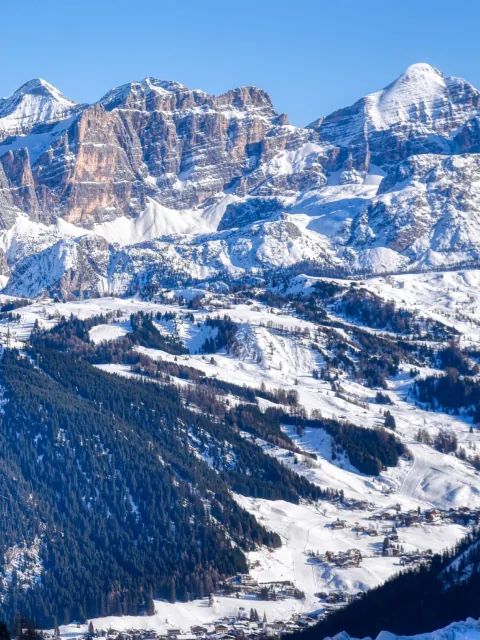
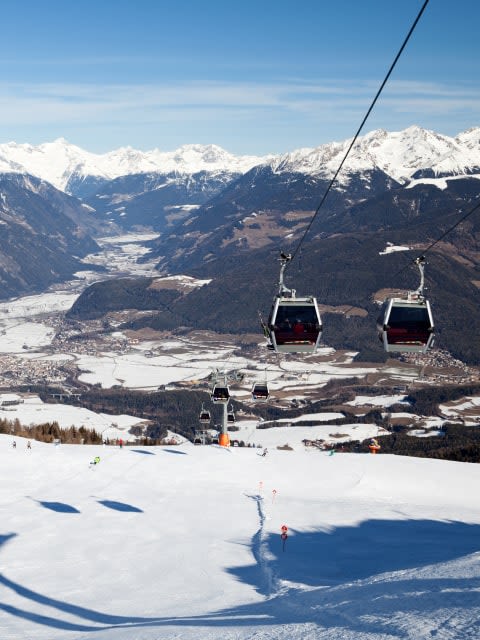
Les Alpes italiennes font vraiment partie des destinations de ski les plus prisées au monde : stations perchées en altitude, paysages à couper le souffle et plus de 1 200 kilomètres de pistes. Entre villages alpins pleins de charme, traditions des Dolomites, cuisine généreuse et ambiance après-ski, les stations italiennes ont tout pour t’offrir des vacances au ski inoubliables, que vous partiez en famille ou entre amis.
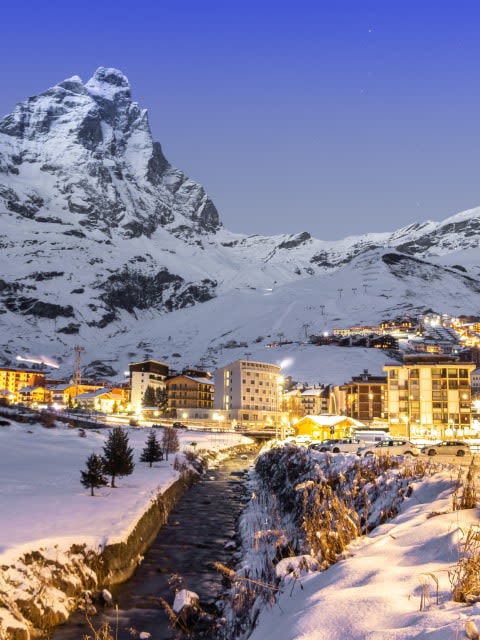
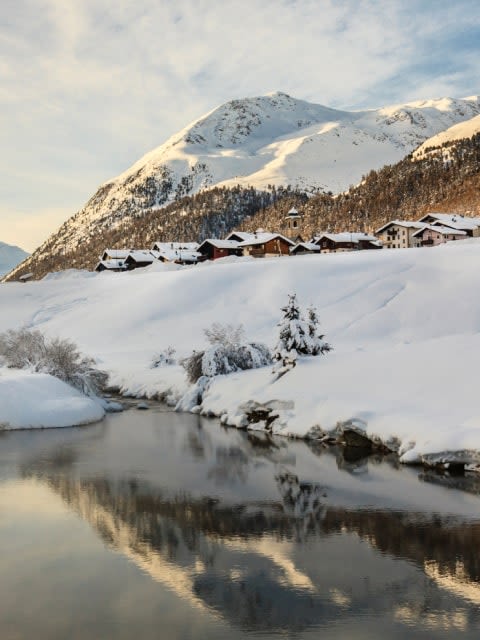
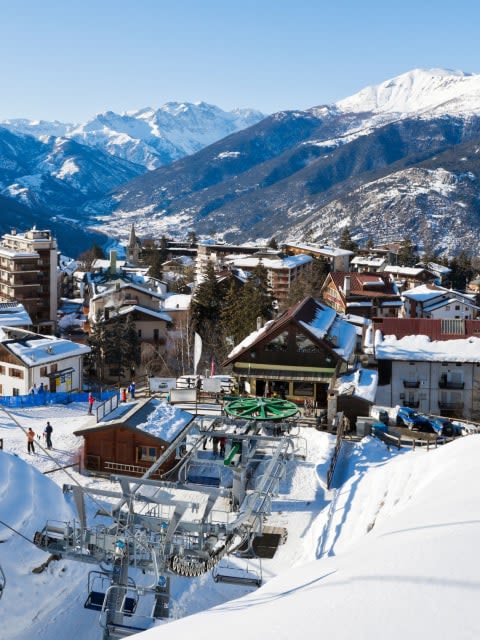
Cervinia and Livigno are two of Italy's strongest family bases. Cervinia has a compact, pedestrian-friendly centre that keeps everything close by, from ski schools and kids' clubs to family-friendly restaurants and a lively festive atmosphere over Christmas. Its high altitude keeps snow reliable year after year, which matters for families booking well ahead. Livigno has a fully pedestrianised village, plus snow playgrounds, tobogganing, and an aquapark to fill days off the slopes. Duty-free shopping adds an extra draw for parents at Livigno, and with terrain ranging from gentle beginner slopes to steep runs, families with a mix of abilities can easily ski together.
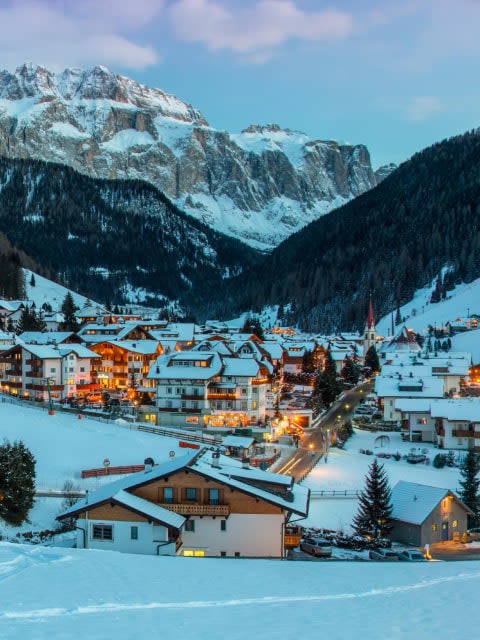
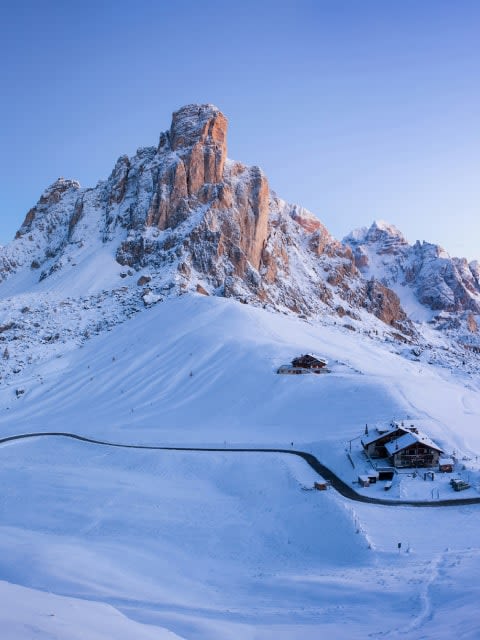
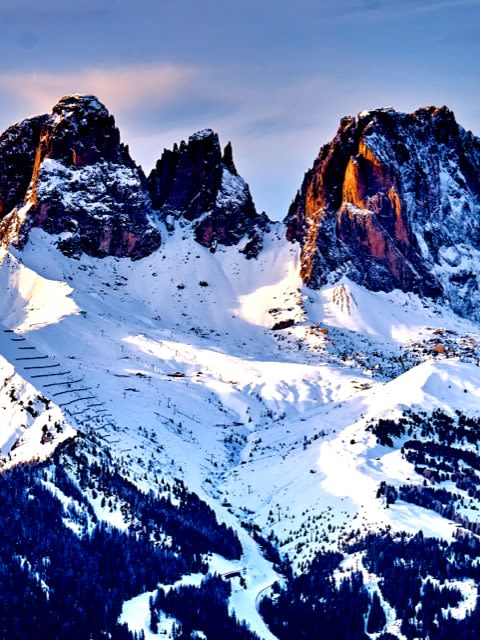
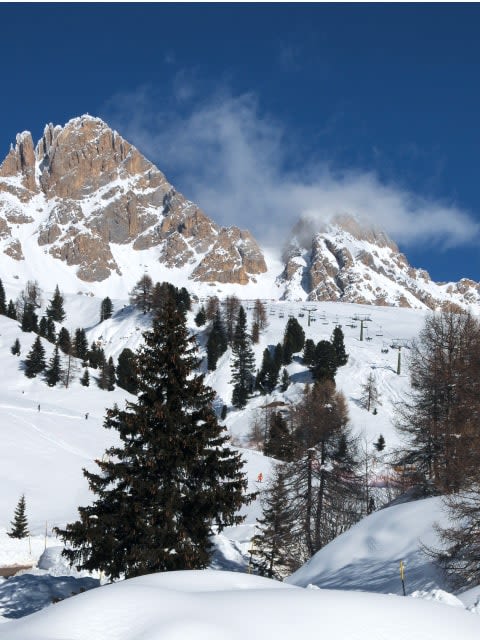
The Dolomites offer some of the most striking scenery in the Alps, along with a distinct Ladin culture. Val Gardena sits at the heart of the Sella Ronda circuit, with varied terrain, a long history of hosting World Cup races, and a Ladin identity running through its three villages. Alta Badia shares that Ladin heritage but keeps a quieter pace, with wide, sunny slopes well suited to unhurried cruising. Kronplatz stands out for exceptionally well-groomed runs and a cultural edge of its own, from Zaha Hadid's mountaintop museum to Brunico’s Italian-Austrian food scene. Cortina d’Ampezzo is known as the "Queen of the Dolomites" since it drew European royalty through the 1920s to 1950s, hosted Italy's first Winter Olympics in 1956, and returned to the Olympic stage again in February 2026.
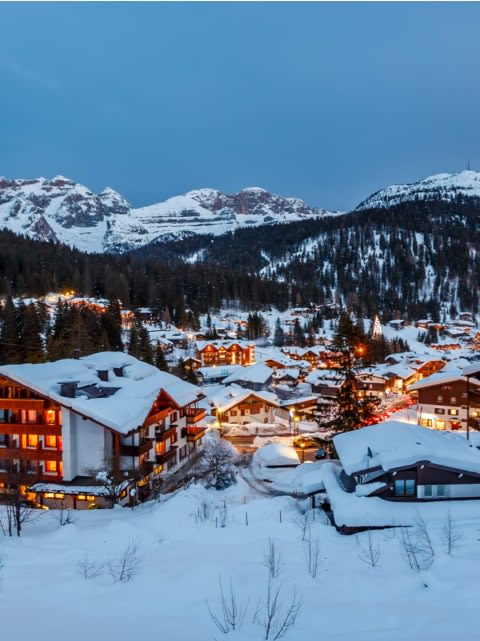
Sauze d’Oulx, Livigno, Val Gardena, and Cortina d’Ampezzo are considered Italy's top spots for après-ski, each with its own distinct style. Sauze d'Oulx has a reputation as one of Italy's liveliest nightlife destinations, with a concentrated strip of bars that fills up with live music and dancing as soon as the lifts close. Livigno's après scene centres on large slope-side bars right at the base of the main lifts, where parties kick off in early afternoon and draw an international crowd of skiers. Val Gardena has one of the highest bar counts for Italian resorts, blending wine bar culture with late-night club energy. Cortina d'Ampezzo offers a polished nightlife scene, where après-ski means elegant wine bars and boutique clubs.
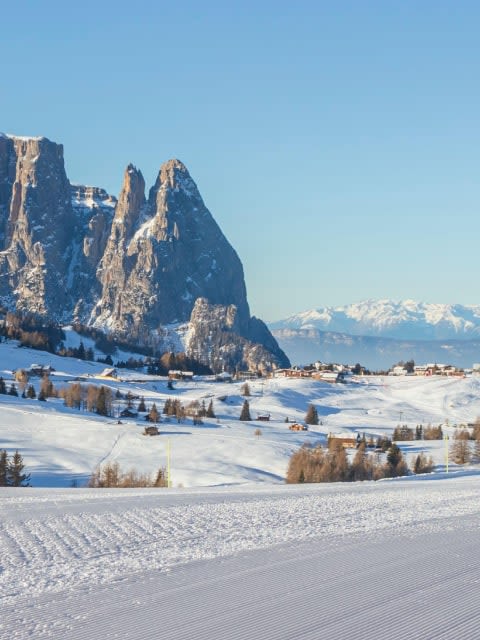
Passo Tonale, Cervinia, and Val Gardena are three of Italy's most highly rated resorts for first-timers. Passo Tonale's high-altitude, glacier-fed slopes keep conditions reliable throughout the season, with dedicated nursery areas and a strong network of ski schools built around structured progression. Cervinia is often ranked Italy's top beginner resort, with gentle slopes around Plan Maison and long, forgiving blue runs that let confidence build gradually. Val Gardena is just as well suited to beginners, with a dedicated learners' zone on the Alpe di Siusi, Europe's largest high-altitude meadow, plus easy lift access from the village for a smooth start to the day.
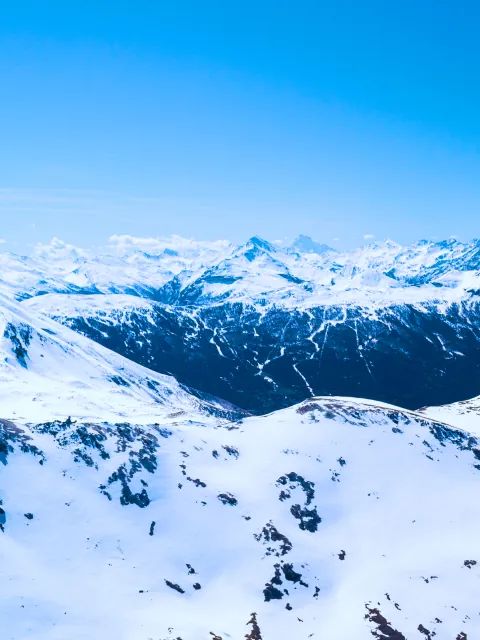
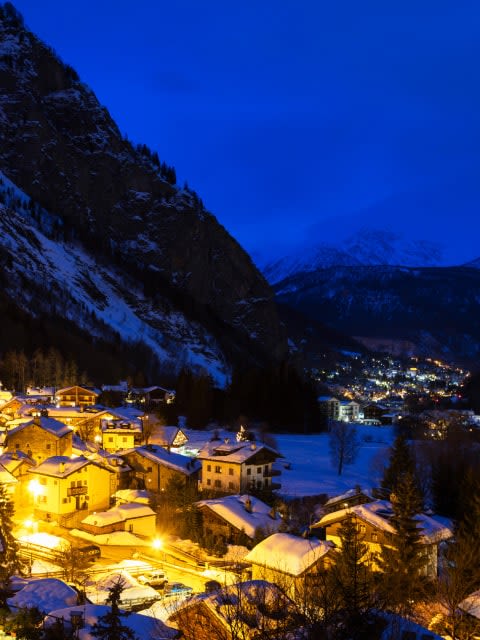
Alagna Valsesia, Champoluc, and Courmayeur are three of the strongest names in Italian freeride skiing. Alagna has lift access up to 3,275m and a reputation built on steep couloirs, glacial bowls, and serious backcountry terrain. Champoluc offers long, well-maintained descents and its own respected freeride zones, giving confident intermediates the opportunity to taste off-piste without extreme exposure. Courmayeur sits beneath Mont Blanc, with a Skyway cable car opening up glacier descents and a route across the border into France's Vallée Blanche.
Courmayeur, Alta Badia, and Madonna di Campiglio offer some of the best culinary experiences of Italy's ski resorts. Courmayeur has built a reputation on high-mountain, farm-to-table cooking, with ingredients sourced from the valley itself. Alta Badia is home to a three-Michelin-starred restaurant whose "Cook the Mountain" philosophy of using only local Alpine ingredients has reshaped fine dining across the region. Madonna di Campiglio carries a long history as an elegant cuisine destination, and today its valley holds four Michelin-starred restaurants among a broader culture of refined dining.
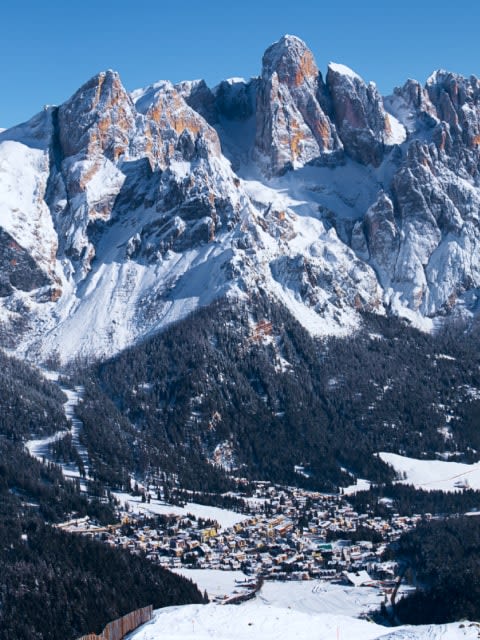
San Martino di Castrozza and Sesto both offer a side of Italy that many visitors never get the chance to encounter. San Martino sits beneath the Pale di San Martino peaks, famous for the enrosadira, a pink glow that spreads across the rock face at sunset. Its history as a 19th-century artists' and mountaineers' retreat still shapes its character today. Sesto lies in a valley beneath the Tre Cime di Lavaredo, in a village where German is still the first language for most residents. More than 150 years of local mountaineering history have made it one of the spiritual homes of Dolomite alpinism.
Yes. Italy offers excellent skiing across the Dolomites, the Aosta Valley, and the Milky Way, generally with more sun and better food than its Alpine neighbours. It's also often better value than France or Switzerland, without sacrificing terrain or scenery.
Most Italian ski resorts are reached via Milan, Turin, or Venice airports, with transfer times ranging from one to three hours depending on the resort. WeSki packages include transfers, so the journey from the airport is sorted.
Italy is generally better value than France and Switzerland. Lift passes, food, and drink are all reasonably priced, especially in resorts like Livigno, which is duty-free, and across the Milky Way area. Dolomite resorts tend to be slightly pricier but remain competitive with the rest of the Alps.
January and February offer the best snow. March is popular for its sunshine and warmer temperatures. High-altitude, glacier-fed resorts like Cervinia and Passo Tonale hold their snow well into spring, making Italy a strong late-season option
Italy's skiing spans three distinct mountain ranges, each with its own geography and culture, from the Dolomites' limestone peaks and Ladin-speaking villages to the glacier-fed slopes of the Aosta Valley beneath Mont Blanc and the Matterhorn. Food is a defining part of the experience too, with several resorts holding Michelin stars and a mountain restaurant culture built around sit-down meals rather than quick cafeteria stops. The pace tends to be more relaxed as a result, with lunch often treated as a proper part of the day rather than a break from it.
Yes, particularly around Alagna Valsesia, Champoluc, and Courmayeur. Alagna and Champoluc sit within the Monterosa Ski area, known internationally for steep couloirs and glacial bowls, while Courmayeur offers glacier descents beneath Mont Blanc, including a route across the border into France.
The Dolomites, in the north-east, are known for dramatic limestone peaks, a distinct Ladin culture, and resorts like Val Gardena and Cortina d'Ampezzo. The Aosta Valley, in the north-west beneath Mont Blanc and the Matterhorn, is home to high-altitude, glacier-fed resorts like Cervinia and Courmayeur. The Milky Way, near the French border by Turin, is a large linked ski area known for lively resorts like Sauze d'Oulx and Sestriere.
Commencez à créer votre séjour au ski de rêve dès aujourd'hui avec notre guichet unique pour le ski - des centaines de stations, des combinaisons illimitées.












 4.9/5
4.9/5Je réserve habituellement moi-même les vols, les transferts, l'hôtel, la location du matériel de ski et les forfaits ski, mais cette année j'ai utilisé WeSki pour un séjour à Morzine. C'était tellement plus simple. Tout a parfaitement fonctionné - les transferts sont arrivés à l'heure et il y avait beaucoup de retours d'information tout au long du processus, ce qui vous donne confiance que les vacances se dérouleront sans problème.

Un service vraiment utile qui est beaucoup plus facile à utiliser que d'autres sites "tout compris". Il comble parfaitement le fossé entre une agence de voyage et la réservation du séjour par vous-même en ligne. J'utiliserai WeSki chaque fois que j'irai au ski à partir de maintenant.
Nous avons réservé un séjour au ski de dernière minute à Morzine via WeSki. Nous avions envisagé de réserver le séjour nous-mêmes, mais nous n'avons pas pu trouver un prix aussi avantageux que celui proposé par WeSki. L'entreprise a été super et nous n'avons rencontré aucun problème du début à la fin. Je passerai certainement de nouveau par eux pour réserver un autre week-end au ski.
Une expérience fluide du début à la fin. Je passais des heures à essayer d'organiser un week-end et j'ai réussi à le faire avec WeSki en quelques minutes et pour le même prix que si je l'avais réservé moi-même. Le vol, le transfert et l'hébergement étaient tous comme prévu et nous n'avons rencontré aucun problème.

Weski Europe BV (numéro d'enregistrement 87334100 à la chambre de commerce) est un membre enregistré de SGR. Vous pouvez vérifier cela sur www.sgr.nl/english. Les vacances répertoriées sur ce site web sont couvertes par la garantie de SGR, selon les termes du programme de garantie SGR. Sous la garantie SGR, les consommateurs verront la somme de leur voyage prépayée remboursée si leur contrepartie est incapable de remplir ses obligations contractuelles en raison d'une incapacité financière. Dans la mesure où l'accord comprend le transport et que la destination a déjà été atteinte, le voyage de retour sera organisé.