
EN
EN
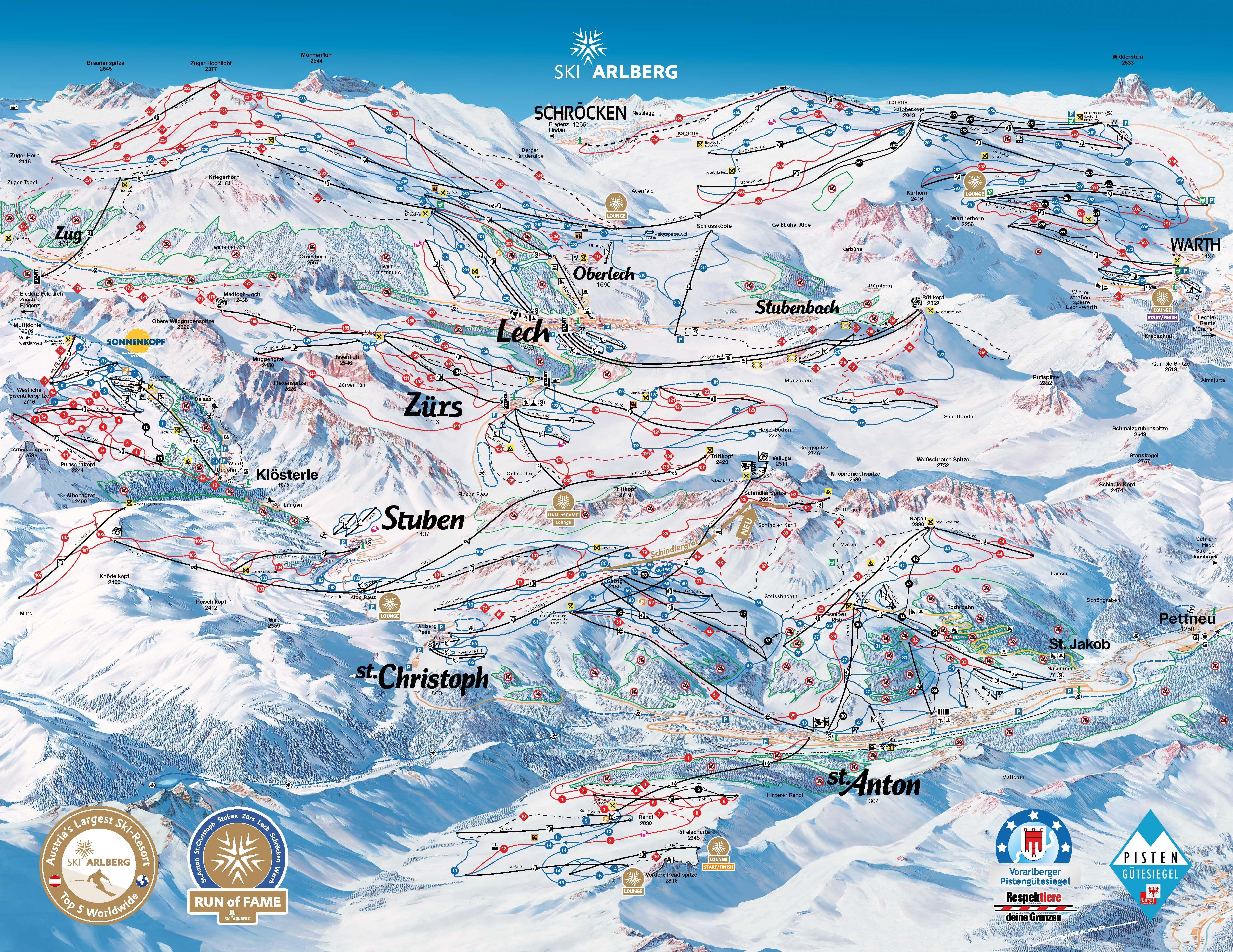
Ski Arlberg is the largest connected ski area in Austria and one of the most famous in the world. Straddling the border between Tyrol and Vorarlberg, it links four resorts across the Arlberg pass - a place with a legitimate claim to being the birthplace of alpine skiing. Hannes Schneider developed the modern ski technique here in the 1920s, and the area has been at the centre of ski culture ever since. The terrain is big, varied, and gets buried in snow - the Arlberg is one of the snowiest corners of the Alps.
The area covers 305 km of marked piste served by 88 lifts, sitting between 1,270 m and 2,811 m at the Valluga summit. There are 131 runs: 46 blue, 56 red, and 29 black. The season typically runs from late November to late April. Four resorts are fully linked by lifts since the Flexenbahn gondola connected the St. Anton and Lech sides in 2016, creating one of the largest connected ski areas in the Alps.
St. Anton is the most famous resort - internationally known for its steep terrain, off-piste, and legendary nightlife. Lech Zürs is more refined, with elegant hotels and immaculate grooming. Stuben is tiny, quiet, and snow-sure. Warth-Schröcken, the newest addition, is the snowiest part of the area and the least well-known internationally. Browse Ski Arlberg ski deals on WeSki to start planning your trip.
| Country | Austria |
| Region | Tyrol / Vorarlberg |
| Total piste km | 305 km |
| Altitude | 1,270 m (St. Anton) - 2,811 m (Valluga) |
| Linked resorts | 4 St. Anton Lech Zürs Stuben Warth-Schröcken |
| Lifts | 88 |
| Runs | 131 (46 blue, 56 red, 29 black) |
| Season | Late November - late April |
| Ski pass name | Ski Arlberg pass |
| Nearest airports | Innsbruck (~1 hr 15 min) Zurich (~2 hr) Friedrichshafen (~1 hr 30 min) Munich (~2 hr 45 min) |
| Glacier skiing | No |
| WeSki services | Transfers: all 4 resorts (private, shared, and scheduled to St. Anton and Lech Zürs; shared to Stuben; private to Warth-Schröcken) Ski equipment hire: St. Anton, Warth No WeSki lessons currently available |
St. Anton am Arlberg is the resort that put the Arlberg on the map. The village sits at 1,270 m in the Stanzer Valley and has a long main street with a lively mix of traditional Tyrolean Gasthöfe, high-end hotels, and some of the most famous après-ski bars in the world - the Mooserwirt and Krazy Kanguruh need no introduction. The skiing above is serious: the Valluga summit (2,811 m) drops steeply on all sides, and the terrain between the Galzig, Gampen, and Kapall peaks is demanding, varied, and holds snow exceptionally well. St. Anton is the area's epicentre for off-piste skiing, with extensive backcountry accessible from the marked runs. The Flexenbahn gondola connects St. Anton to the Lech Zürs side.
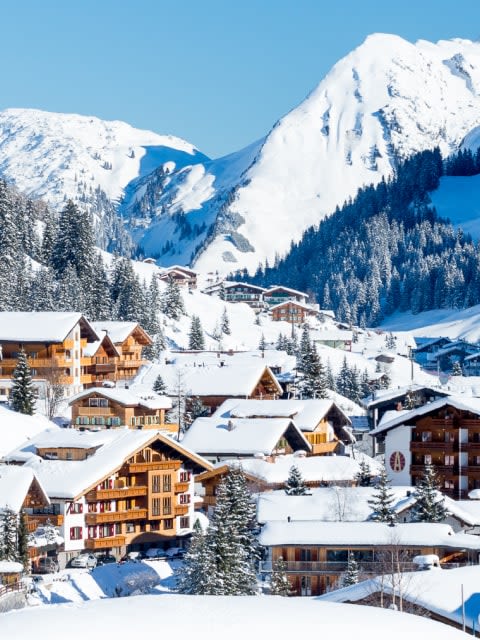
Lech and Zürs are two villages on the Vorarlberg side of the Arlberg pass, connected by lifts and a short bus ride. Lech is the larger of the two - an elegant, well-maintained village at 1,450 m with some of the best hotels in the Austrian Alps, excellent restaurants, and a polished atmosphere. Zürs sits higher at 1,716 m and is smaller, quieter, and more exclusive. The skiing on this side is wider and more groomed than St. Anton, with long, sweeping reds and blues across the Rüfikopf, Kriegerhorn, and Zuger Hochlicht sectors. The White Ring - a famous circuit around the Lech-Zürs valley - is a classic day out. The connection to Warth-Schröcken extends the terrain further north.
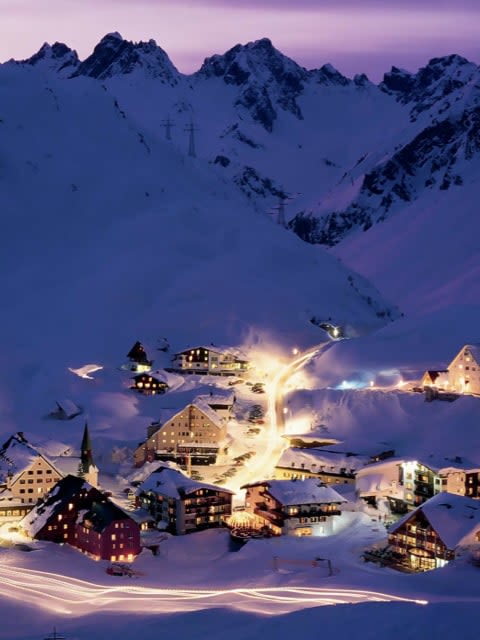
Stuben is the smallest resort in Ski Arlberg - a hamlet of a few dozen buildings at 1,407 m on the Tyrolean side of the Arlberg pass. It's the birthplace of Hannes Schneider's alpine ski technique and retains an old-school, understated character. What Stuben lacks in village amenities, it makes up for in snow: the north-facing slopes above catch enormous amounts, and the terrain is steep, varied, and uncrowded. A chairlift links directly into the Rauz junction, connecting to both St. Anton and Lech Zürs. It's a quiet, no-fuss base for strong skiers who care about the mountain more than the village.
Warth-Schröcken is the northernmost part of Ski Arlberg, connected to Lech via the Auenfeldjet gondola. It's the area's snow magnet: Warth receives an average of over 10 metres of snowfall per season, making it one of the snowiest resorts in the Alps. The village of Warth sits at 1,494 m, tiny and traditional, with a handful of hotels and a peaceful atmosphere. The skiing is a mix of wide blues and cruising reds, with some excellent off-piste potential in the bowls above. Schröcken, slightly further north, is even smaller. For snow reliability and uncrowded slopes, this is the strongest sector in the Arlberg.
The Arlberg's reputation for advanced skiing can make beginners hesitant, but there's good learning terrain if you know where to look. Lech has the best beginner infrastructure, with a dedicated nursery area at the Schlegelkopf and gentle blues across the Oberlech plateau - a sunny, elevated area that's separated from the main traffic. Warth also has calm, well-groomed beginners' slopes. St. Anton has a learning zone at the Gampen, but the mountain gets steep quickly and is less ideal for first-timers. Zürs has a small nursery slope near the village.
WeSki does not currently have lessons available in the Ski Arlberg area, but all resorts have well-established ski schools with English-speaking instructors. St. Anton's ski school is one of the oldest in the world.
WeSki tip: If you're a beginner, base yourself in Lech or Warth. Lech's Oberlech plateau is one of the best beginner areas in Austria - it's sunny, wide, and at altitude, so the snow quality is excellent. Once you're comfortable on blues, you can explore more of the Lech-Zürs side before venturing towards St. Anton.
With 46 blues and 56 reds, intermediates have a huge playground. The White Ring circuit around the Lech-Zürs valley is a classic: a 22 km loop that takes in a variety of terrain and stunning scenery. The long reds from the Kriegerhorn and Zuger Hochlicht above Lech are consistently satisfying. On the St. Anton side, the runs from the Galzig and Gampen are well-groomed and have excellent vertical. The link between the two sides via the Flexenbahn opens up a full day of exploration. Warth's cruising blues are ideal for more relaxed days.
WeSki tip: The White Ring circuit starts and finishes in Lech and is best done clockwise. It takes around 2 to 3 hours of actual skiing, but allow a full morning or afternoon so you can enjoy the scenery and stop for coffee. The descent from the Madloch into Zürs is the highlight - a long, scenic red with views across the whole Arlberg.
The 29 blacks and the off-piste terrain are what made the Arlberg's reputation. St. Anton is the epicentre: the Valluga summit (2,811 m) gives access to the area's steepest lift-served terrain, including the famous Valluga descent (guide required for the second cable car section). The runs off the Schindler Spitze and through the Mattun valley are sustained, north-facing, and hold powder well. Stuben's steep, tree-lined terrain is exceptional after fresh snow. On the Lech side, the Mehlsack and Zuger Tobel routes are challenging marked itineraries. The Arlberg receives massive snowfall - consistently among the highest in the Alps - which makes the off-piste outstanding. A mountain guide is essential for backcountry skiing.
WeSki tip: Stuben is the insider's pick after a big snowfall. The north-facing slopes above the village receive more snow than almost anywhere else in the Arlberg, and because most visitors head to St. Anton or Lech, the powder here often stays untracked longer. Take the Albona chairlift and drop into the trees on skier's left for some of the best snow in Austria.
The Ski Arlberg pass covers all 305 km of piste and 88 lifts across St. Anton, Lech Zürs, Stuben, and Warth-Schröcken on a single ticket. Passes are available from one day up to the full season, with discounted rates for children, teens, and seniors. There are no separate single-resort passes - the Ski Arlberg pass covers the entire connected area, which keeps things simple.
You can add the lift pass directly to your WeSki booking, along with ski equipment hire at St. Anton and Warth - so everything's sorted before you arrive.
WeSki tip: The Ski Arlberg pass includes the free ski bus network that connects the resorts via the valley roads. This is useful for getting between St. Anton and Lech in the evening (the mountain lifts close, but the bus keeps running) and for reaching Stuben without driving. The buses run frequently during the season.
Innsbruck is the closest major airport, around 1 hour 15 minutes' drive west along the Inn Valley and over the Arlberg pass. Zurich is about 2 hours via the Arlberg tunnel. Friedrichshafen (on Lake Constance) is roughly 1 hour 30 minutes and has some seasonal UK flights. Munich is about 2 hours 45 minutes. By train, St. Anton has its own station on the Innsbruck-Bludenz railway line - the Railjet service from Innsbruck takes about 1 hour 15 minutes. Lech, Zürs, Stuben, and Warth-Schröcken are reached by bus from the railway stations at St. Anton or Langen.
WeSki has private, shared, and scheduled transfers to St. Anton and Lech Zürs. Shared transfers are available to Stuben, and private transfers to Warth-Schröcken. Add them to your booking for a straightforward door-to-door trip.
The season runs from late November to late April. The Arlberg is one of the snowiest areas in the Alps - Warth averages over 10 metres of snowfall per season, and the north-facing slopes above St. Anton and Stuben hold snow exceptionally well. There's no glacier skiing, but the combination of altitude (up to 2,811 m), aspect, and snowfall means conditions are among the most reliable in Austria. December through to March sees consistent snow, with January and February typically the deepest.
Austrian school holidays in February and the Christmas-New Year period are the busiest times, particularly in St. Anton and Lech. If you've got flexibility, early January and the first half of March balance excellent snow with fewer people. St. Anton's nightlife peaks during holiday weeks and weekends. Late season brings spring conditions on the lower slopes while the upper terrain stays in good shape - April skiing at the Arlberg is a well-kept secret.
Yes, with the right resort choice. Lech has excellent beginner terrain on the Oberlech plateau, and Warth has calm, well-groomed nursery slopes. St. Anton is better suited to intermediates and above. WeSki does not currently have lessons available, but all resorts have well-established ski schools. St. Anton's is one of the oldest in the world.
Ski Arlberg covers 305 km of marked piste served by 88 lifts, ranging from 1,270 m to 2,811 m at the Valluga. There are 131 runs: 46 blue, 56 red, and 29 black. Four resorts are fully linked by lifts. It is the largest connected ski area in Austria.
St. Anton is more lively, steeper, and famous for off-piste and après-ski. The terrain is demanding, the atmosphere is youthful, and the nightlife is legendary. Lech is more refined - elegant hotels, immaculate grooming, wider runs, and a quieter, more upmarket feel. St. Anton suits adventurous skiers; Lech suits those who want polished mountain luxury. Both are excellent, and the Flexenbahn links them on the mountain.
The White Ring is a 22 km ski circuit around the Lech-Zürs valley, taking in a variety of terrain and stunning Alpine scenery. It's best done clockwise and takes around 2 to 3 hours of skiing. The circuit includes the Madloch descent into Zürs, which is one of the area's most scenic red runs. An annual White Ring race is held each January.
The season typically runs from late November to late April. There is no glacier skiing, but the Arlberg is one of the snowiest areas in the Alps - Warth averages over 10 metres of snowfall per season. Conditions are reliably good from December through to March, with the upper slopes holding into April.
Fly to Innsbruck (about 1 hr 15 min drive), Zurich (2 hr), or Friedrichshafen (1 hr 30 min). By train, St. Anton is on the Innsbruck-Bludenz railway line, with Railjet services taking about 1 hour 15 minutes from Innsbruck. WeSki has private, shared, and scheduled transfers to St. Anton and Lech Zürs, shared transfers to Stuben, and private transfers to Warth-Schröcken.
No. All four resorts are linked by lifts during ski hours - the Flexenbahn gondola connects the St. Anton and Lech sides. A free ski bus network also connects the resorts via the valley roads, running frequently throughout the day and into the evening.
Yes. Ski equipment hire is available through WeSki at St. Anton and Warth. WeSki does not currently have lessons available in the Ski Arlberg area. You can add equipment hire to your booking along with your lift pass and transfers.
Yes - it's one of the top off-piste destinations in the Alps. The combination of heavy snowfall (Warth averages 10+ metres per season), north-facing terrain, and high altitude makes conditions excellent. St. Anton and Stuben are the main hubs for advanced off-piste skiing. The Valluga summit (2,811 m), the Mattun valley, and Stuben's tree skiing are standout routes. A mountain guide is essential.
Start building your dream ski trip today with our one-stop ski shop - hundreds of resorts, unlimited combinations.


 4.9/5
4.9/5I usually book flights, transfers, hotel, ski rental and lift passes myself but this year used WeSki for a trip to Morzine. It was so much easier. Everything worked perfectly - transfers arrived on time and there was plenty of feedback throughout the whole process giving you confidence the holiday would go smoothly.

A really useful service that is so much easier to use than other 'all-inclusive' sites. It nicely bridges the gap between a travel agent and booking the trip yourself online. I will use WeSki every time I go skiing from now on.
We booked a late minute skiing trip to Morzine through we ski. We looked at booking the trip ourselves but could get anywhere near the price quoted by we ski. The company was excellent and we had no problems at all from start to finish. I would definitely use them to book another weekend skiing trip.
Seamless experience from start to finish. I was spending ages trying to sort out a weekend break and managed to do it with we ski in minutes and for the same price as booking it all up yourself. Flight, transfer and accommodation was all as expected and faultless.
WeSki is a trading name operated by Wetrip Weski Ltd (BR021500). All the flights and flight-inclusive holidays on this website are financially protected by the ATOL scheme. When you pay you will be supplied with an ATOL Certificate. Please ask for it and check to ensure that everything you booked (flights, hotels and other services) is listed on it. Please see our booking conditions for further information or for more information about financial protection and the ATOL Certificate go to: www.caa.co.uk.
Package holidays that do not include travel by air are financially protected via ABTOT.
For the latest travel advice from the Foreign & Commonwealth Office visit www.gov.uk/foreign-travel-advice.