
EN
EN
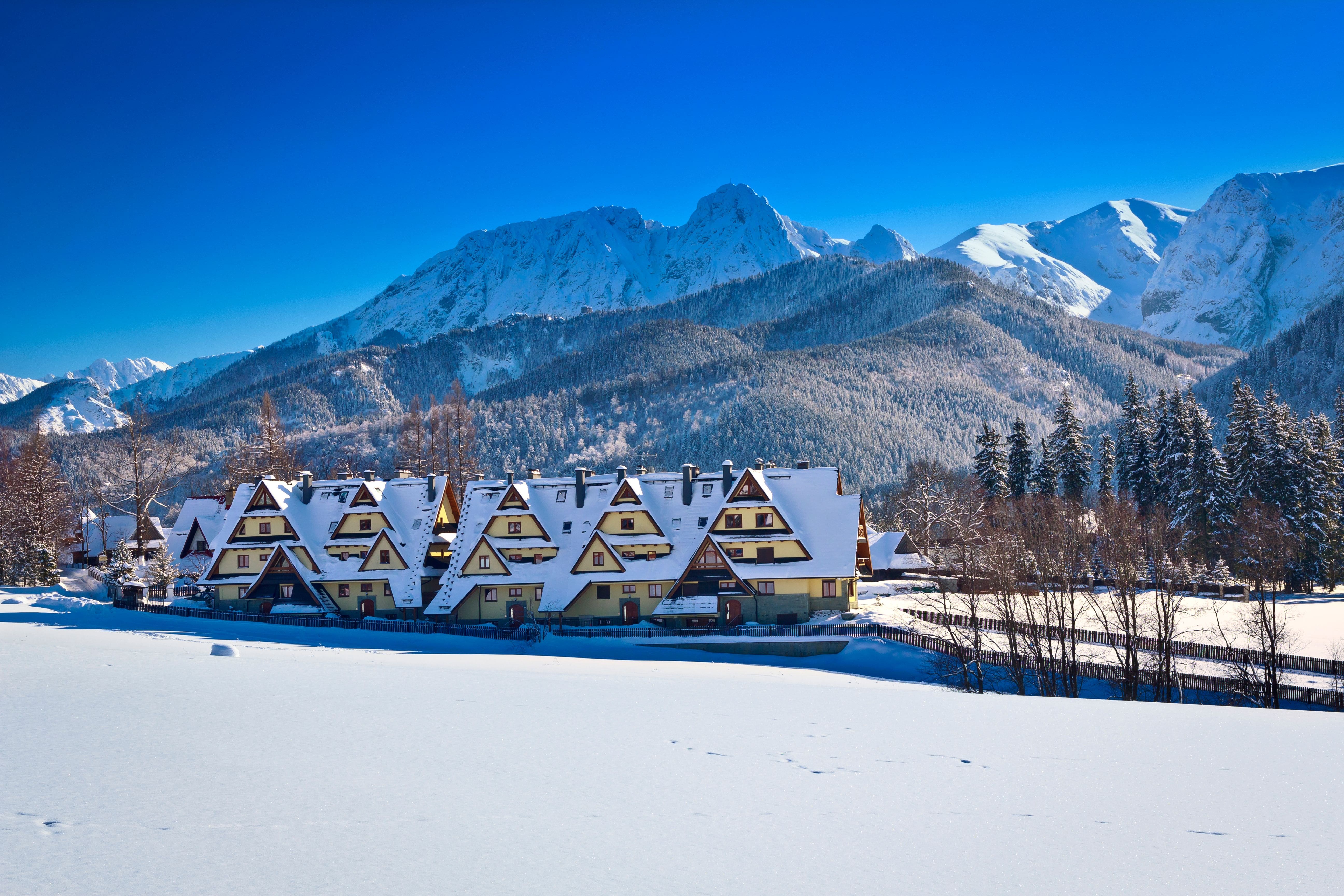
Everything shown here is within reach of Zakopane town, but it is not one connected ski area and it is not one lift pass. Kasprowy Wierch, Nosal, Harenda, Szymoszkowa and the Gubałówka-Butorowy hills are separate operations, and several sell their own tickets — so how ski passes work here is not the Alpine model.
The practical reading is that you choose a hill each day and travel to it by bus, taxi or on foot, rather than skiing between them. Zakopane works as a town holiday with skiing attached, which is a different proposition from an Alpine resort and the reason it is priced the way it is.
Zakopane ski resort guide · Ski resorts in Poland
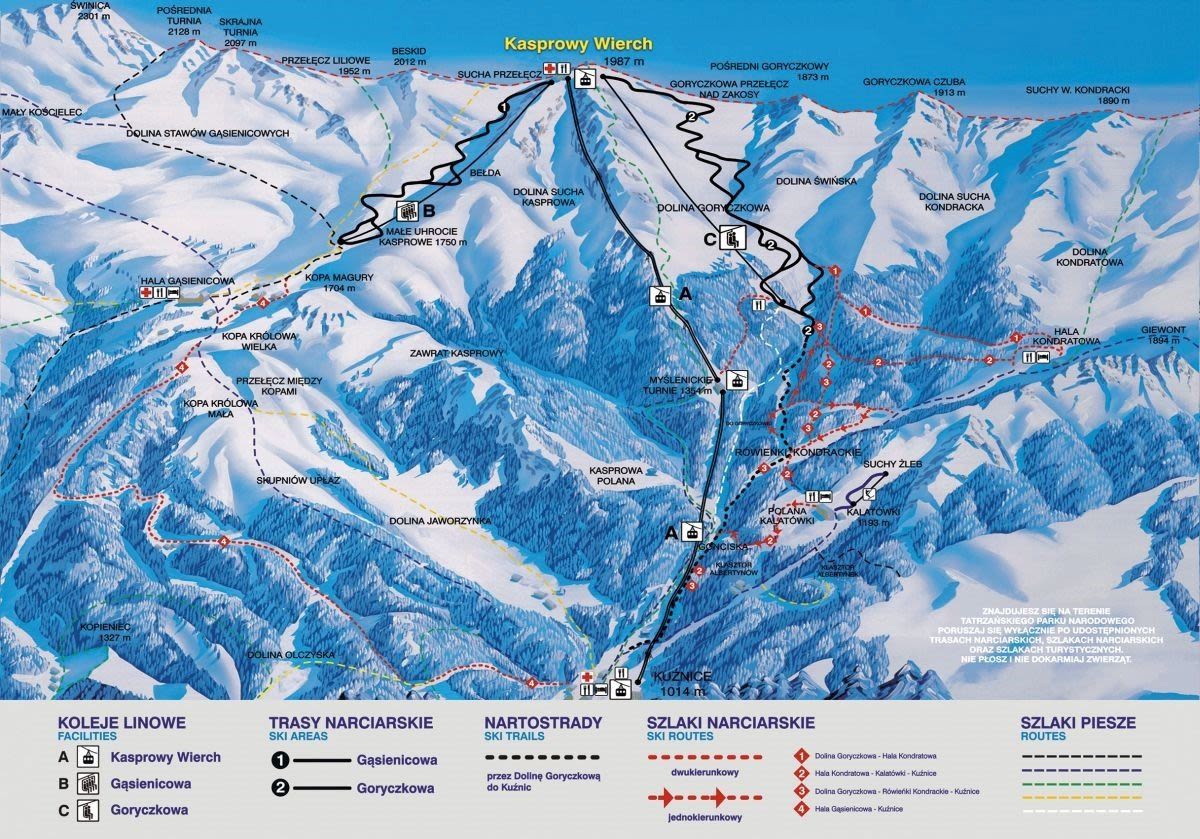
The sheet is centred on the town, with the hills arranged around it, and the thing to look for is which side of Zakopane each one sits on. South, up the Tatra valley, is Kasprowy Wierch — the serious one, and the only high mountain on the map. North, directly above the town, is the Gubałówka ridge, which is gentle and more about the view and the market stalls than the skiing. East and west are the mid-sized hills, Nosal, Harenda and Szymoszkowa, which carry most of the ordinary day-to-day skiing.
GreenBlueRedBlack16 km across the town's hills, 22 lifts, 1,987 m at Kasprowy Wierch
The only genuine mountain on the sheet and the reason skiers come to Zakopane at all. A historic cable car from Kuźnice climbs to the summit on the Slovak border, and the two bowls below it, Gąsienicowa and Goryczkowa, hold the long, open, properly steep descents.
Numbers are capped to protect the national park, so tickets are limited and sell out — book ahead rather than turning up. It is also the first thing to close in wind.
The everyday skiing. Each is a single face with a handful of runs, floodlit into the evening, with Harenda the longest and Szymoszkowa the most family-friendly. None will fill a week on its own, but together they give you variety within a short bus ride.
The funicular ridge directly north of Zakopane, reached from the top of Krupówki street. The skiing is short and gentle, and most people ride up for the Tatra panorama and the food stalls rather than the runs.
Useful as a half-day or a soft landing for absolute beginners, and the only part of the map you can reach on foot from the centre of town.
Szymoszkowa and the Gubałówka ridge are the gentle ground, and lessons here cost a fraction of Alpine prices, which is a large part of why Zakopane keeps turning up among Europe’s more affordable ski resorts. Kasprowy Wierch is emphatically not beginner terrain — do not let the cable car talk you into it.
Workable, with the caveat that you will be moving between hills rather than linking runs. Harenda and Nosal carry the best mid-level skiing, and a day on Kasprowy Wierch is the one to plan around. Floodlit evening skiing is a genuine bonus here.
Kasprowy Wierch, and realistically nothing else. The Goryczkowa and Gąsienicowa bowls give you sustained off-piste-feel descents with real vertical, and the ski touring out of Kuźnice is what brings Polish skiers back. Everywhere else on this map will be finished inside an hour.
Over the Tatras on the Slovak side, around two hours by road, and the nearest thing to a full modern ski resort in this part of Europe — one connected mountain rather than a town's worth of hills.
Twenty minutes east of Zakopane and the local favourite for a straightforward day's skiing — one hill, modern lifts, and thermal baths at the bottom.
Package holidays to Zakopane with flights, transfers, accommodation and lift pass, all booked together.
See Zakopane ski holidays



WeSki is a trading name operated by Wetrip Weski Ltd (BR021500). All the flights and flight-inclusive vacations on this website are financially protected by the ATOL scheme. When you pay you will be supplied with an ATOL Certificate. Please ask for it and check to ensure that everything you booked (flights, hotels and other services) is listed on it. Please see our booking conditions for further information or for more information about financial protection and the ATOL Certificate go to: www.caa.co.uk.
Package vacations that do not include travel by air are financially protected via ABTOT.
For the latest travel advice from the Foreign & Commonwealth Office visit www.gov.uk/foreign-travel-advice.
Weski Europe BV (Chamber of Commerce registration number 87334100) is a registered participant of SGR. You can verify this on www.sgr.nl/english. Vacations listed on this website are covered by SGR’s guarantee, within the terms of the SGR guarantee scheme. Under SGR’s guarantee, consumers shall have their prepaid travel sum refunded if their counterparty is unable to fulfill its contractual obligations due to financial inability. Insofar as the agreement includes the transport and the destination has already been reached, the return trip will be arranged.