
EN
EN
 Stunning views
 Top facilities
 Hidden gemStunning viewsTop facilitiesHidden gemStunning viewsTop facilitiesHidden gemStunning viewsTop facilitiesHidden gem
Aprica sits on a sunny high plateau at Passo dell'Aprica in Italy's Valtellina valley, a proper Alpine town with skiing traditions stretching back to the 1930s. At around 1,160m, the village is laid out along the plateau, with slopes rising directly from the edge of town. It's a mountain setting that charms visitors immediately, with a protected national park surrounding the resort and nature-inspired murals adorning the exteriors of houses and hotels throughout. Aprica's relaxed, authentic Italian character has a life beyond tourism, and the pace feels unhurried even during peak weeks.
The ski area covers 50km of pistes across 21 runs between 1,162m and 2,270m. Over 1,100m of vertical drop gives proper scale to the experience, and terrain is varied enough to keep you busy all week. Gentle blues in the heart of town suit beginners, flowing reds and blues through the trees make up the bulk of skiing, and steeper terrain higher up includes the 2.3km Benedetti black run, dropping a full vertical kilometre back to the village. At 6.5km, Superpanoramica is one of the resort's standout runs: a long, flowing descent from 2,000m back to town, which doubles as a floodlit night skiing run. Thanks to a combination of a north-facing aspect and snowmaking, Aprica's snow quality is preserved throughout the season, which typically runs from late November to mid-April.
Aprica's position in Valtellina valley brings with it a distinctive culinary identity. Pizzoccheri, bresaola, local alpine cheeses, and wines from the Valtellina valley feature on menus throughout the village, and with over 20 bars and restaurants, the après-ski and evening scene is lively. Off the slopes, visitors enjoy activities like visiting Pian di Gembro nature reserve, snowshoeing or cross-country skiing on 141km of trails, and daytrips to historic Tirano or the famous Bernina Express railway.
Aprica sits on a sunny high plateau at Passo dell'Aprica in Italy's Valtellina valley, a proper Alpine town with skiing traditions stretching back to the 1930s. At around 1,160m, the village is laid out along the plateau, with slopes rising directly from the edge of town. It's a mountain setting that charms visitors immediately, with a protected national park surrounding the resort and nature-inspired murals adorning the exteriors of houses and hotels throughout. Aprica's relaxed, authentic Italian character has a life beyond tourism, and the pace feels unhurried even during peak weeks.
The ski area covers 50km of pistes across 21 runs between 1,162m and 2,270m. Over 1,100m of vertical drop gives proper scale to the experience, and terrain is varied enough to keep you busy all week. Gentle blues in the heart of town suit beginners, flowing reds and blues through the trees make up the bulk of skiing, and steeper terrain higher up includes the 2.3km Benedetti black run, dropping a full vertical kilometre back to the village. At 6.5km, Superpanoramica is one of the resort's standout runs: a long, flowing descent from 2,000m back to town, which doubles as a floodlit night skiing run. Thanks to a combination of a north-facing aspect and snowmaking, Aprica's snow quality is preserved throughout the season, which typically runs from late November to mid-April.
Aprica's position in Valtellina valley brings with it a distinctive culinary identity. Pizzoccheri, bresaola, local alpine cheeses, and wines from the Valtellina valley feature on menus throughout the village, and with over 20 bars and restaurants, the après-ski and evening scene is lively. Off the slopes, visitors enjoy activities like visiting Pian di Gembro nature reserve, snowshoeing or cross-country skiing on 141km of trails, and daytrips to historic Tirano or the famous Bernina Express railway.
Skiing and snowboarding in Aprica has a satisfying depth to it. North-facing slopes beneath Monte Palabione keep snow quality consistent, and 1,100m of vertical gives you long, sustained runs with genuine mountain scale. The skiing is divided into four connected sectors: Campetti at the village base for beginners, Palabione and Baradello for the main intermediate and advanced terrain accessed by gondola, and Magnolta on the western side with its own gondola and some of the steepest skiing in the area.
The piste trails are the real strength here. Runs wind through larch and conifer forests on the lower slopes, opening above the treeline into broad, exposed alpine terrain. The sustained fall-line on red and black runs is genuinely impressive: these aren't token steep sections, but proper descents that require good technique and reward confident skiing. On weekdays, you'll often have the mountain largely to yourself, which makes the whole experience feel even better.
Aprica has excellent beginner facilities, and the friendly scale of the resort adds to the relaxed learning atmosphere. In the heart of town, beginners can start in Campetti, a gentle learning zone served by several parallel surface lifts and conveyor belts. It's a safe environment where first-timers can build confidence without worrying about fast traffic. Once you've mastered the Campetti area, Superpanoramica is a great run to progress onto. A 6.5km blue-graded descent, it's one of the longest easy runs in the region and lets novice skiers experience the mountain properly.
On the main slopes, Selletta and Chierroni are two sections with manageable intermediate terrain for those ready to step up. If you prefer guided instruction, Aprica's ski schools operate group and private lessons for all ages, and the Italian teaching approach is patient and encouraging.
WeSki insider tip: Take the Palabione gondola up and ski down the Superpanoramica rather than starting from the bottom. Beginning at 2,000m means you get the wide, open views from the start, and the gentle gradient lets you enjoy the full 6.5km descent without ever feeling out of your depth.
Intermediates have a satisfying spread of terrain in Aprica. Seven blue runs provide cruising, with the Superpanoramica as a centrepiece. But where the mountain really comes alive for intermediates is on its nine red runs, which build both fitness and technique. Off the Palabione gondola drop, the red runs take you through varied terrain like forest sections, open alpine bowls, and sustained pitches. Runs from Dosso Paso down to the village are also engaging, with consistent gradient and interesting natural features throughout.
Aprica's compact layout works in your favour. You can lap the best runs efficiently and cover the whole mountain in a day. For intermediates spending a week, the combined Aprica-Corteno ski pass extends terrain options, and a day trip to nearby Bormio or Livigno (both within 50km) adds further variety.
WeSki insider tip: Red runs accessed from the Dosso Paso lifts have the best sustained pitch on the mountain. They're north-facing, so the snow stays firm and fast. Aim for late morning when the surface has had time to soften just slightly.
Advanced skiers will find Aprica has challenging piste terrain. Four black runs provide sustained, serious fall-line descents (these aren't token advanced runs, but honest and demanding pistes). The Benedetti black drops a full vertical kilometre from the upper mountain back to the village, and the Magnolta Pistone is a proper test of nerve and technique. The Inferiore black, the only way down from the Magnolta gondola besides the gondola itself, adds a steepness that catches people by surprise.
On-piste, Aprica's advanced terrain is among the most rewarding in the Lombardy Alps - but off-piste options are more limited. Terrain between marked runs and in larch forests below the treeline often yield good turns after fresh snow, and the flanks of Monte Filone above the ski area boundary are accessible for those willing to skin up. For a broader off-piste experience, a day trip to Bormio or the Livigno freeride area extends the possibilities considerably.
WeSki insider tip: The Benedetti black run from top to bottom is one of the best sustained descents in the region, with a full 1,000m of vertical that builds in intensity as it drops through the treeline. Ski it early in the day before the lower sections get tracked, and you'll understand why locals rate it so highly.
Aprica's wide, rolling terrain on the main mountain suits snowboarders well, with good natural banks and features through the forest sections and a north-facing aspect that keeps snow consistent. Superpanoramica in particular is a lovely cruiser on a board, and the sustained fall-line on red runs makes for satisfying carving. If you want freestyle sessions, Aprica has a terrain park in the Palabione area with jumps, rails, and features for riders from intermediate level upwards.
Off-piste terrain within Aprica's ski area boundary is limited, but it's a practical base for a mixed on-piste and off-piste week. After fresh snowfall, the larch forests between marked runs hold wind-deposited snow that often yields enjoyable short lines. Open terrain above the treeline around Dosso Paso and on the flanks of Monte Filone provides some touring potential for experienced skiers with skins. For serious off-piste, Bormio and Livigno are both within an hour's drive and have extensive backcountry terrain.
Ski schools operate in Aprica with group and private lessons for all ages, running instruction for everything from first-time skiing and snowboarding to freeride touring. The Campetti beginner area is the main teaching zone for first-timers, with dedicated facilities and a fun park for learning. English-speaking instruction may be available, but Italian is the primary language, so it's worth confirming when booking.
Aprica has a terrain park in the Palabione area, with jumps, rails, and boxes for freestyle riders from intermediate level upwards. It's a modest setup when compared to major Alpine parks, but it's well-maintained and provides a fun change of pace from the piste. A fun park for younger children is also available, providing a gentle introduction to features and obstacles.
Aprica is a natural family choice. Italian culture is famously kind to children, and you'll feel that warmth in every interaction. The village is compact enough to walk to lifts, restaurants, and shops together without needing to arrange transport. Families tend to enjoy Aprica's relaxed pace, and the town's slope-side nature keeps logistics simple.
Campetti, the beginner area in the heart of town, is wide, gentle, and well equipped, with magic carpets and a safe, enclosed space for children learning to ski. Children under eight ski free when a parent buys a pass of three days or more, which is a welcome touch. Older children and teenagers will enjoy progressing onto longer mountain runs, and for most growing skiers, the 6.5km Superpanoramica is a genuine achievement. Night skiing on the same run, Europe's longest floodlit slope, adds a different thrill that kids in particular love.
An ice skating rink, swimming pool, and playground along the Ogliolo stream keep the whole family entertained on rest days, and the Pian di Gembro nature reserve is lovely for a snowshoe outing through protected parkland. The Bernina Express from Tirano to St Moritz, just 15km away, is one of the most scenic family day trips imaginable. Dining is effortless, with over 20 restaurants serving generous Italian staples like pizzoccheri and polenta alongside the inevitable pizza and pasta. Children are welcomed everywhere with an easy warmth that makes eating out a pleasure.
Aprica's setting within two valleys, surrounded by protected natural landscapes, gives non-skiing activities an enjoyable depth. Between Valtellina's food and wine culture, its proximity to historic Tirano, and the natural beauty of the Orobie Alps, you'll have plenty to explore beyond the slopes.
Aprica and the surrounding area have a range of winter activities to help you enjoy the mountain setting:
For days off the slopes, Aprica's Lombardy location opens up a surprising range of excursions and cultural experiences:
Dining in Aprica revolves around the rich food traditions of Valtellina, with buckwheat, mountain cheese, cured meats, and hearty alpine cooking. You have over 20 restaurants and pizzerias in the village, and a range that goes beyond what you might expect for a resort this size. Quality is consistently high, and the atmosphere is typically Italian: warm, unhurried, and generous.
WeSki insider tip: Order the pizzoccheri at any mountain restaurant or village trattoria. It's the signature dish of the Valtellina, featuring thick buckwheat pasta layered with cabbage, potatoes, butter, sage, and local Casera cheese. Follow it with a glass of Sforzato, the valley's distinctive full-bodied red wine made from dried Nebbiolo grapes.
Après-ski in Aprica is lively, with over 20 bars in a compact village. At the end of the ski day, the scene naturally turns social and the atmosphere's distinctly Italian: think aperitivo culture, espresso, and prosecco before transitioning into long, relaxed dinners. The main street fills up as skiers descend from the slopes, and the terrace bars catch afternoon sun on the village's south-facing side.
For those who want to keep the evening going, a handful of bars stay open late, with live music on weekends. The Disco Pub la Grolla provides a more energetic option for those who want to dance. But the real charm of Aprica's evenings is the Italian passeggiata, a relaxed wander through the village, stopping for a drink here and a bite there, with no agenda and no rush.
Après-ski spots to know:
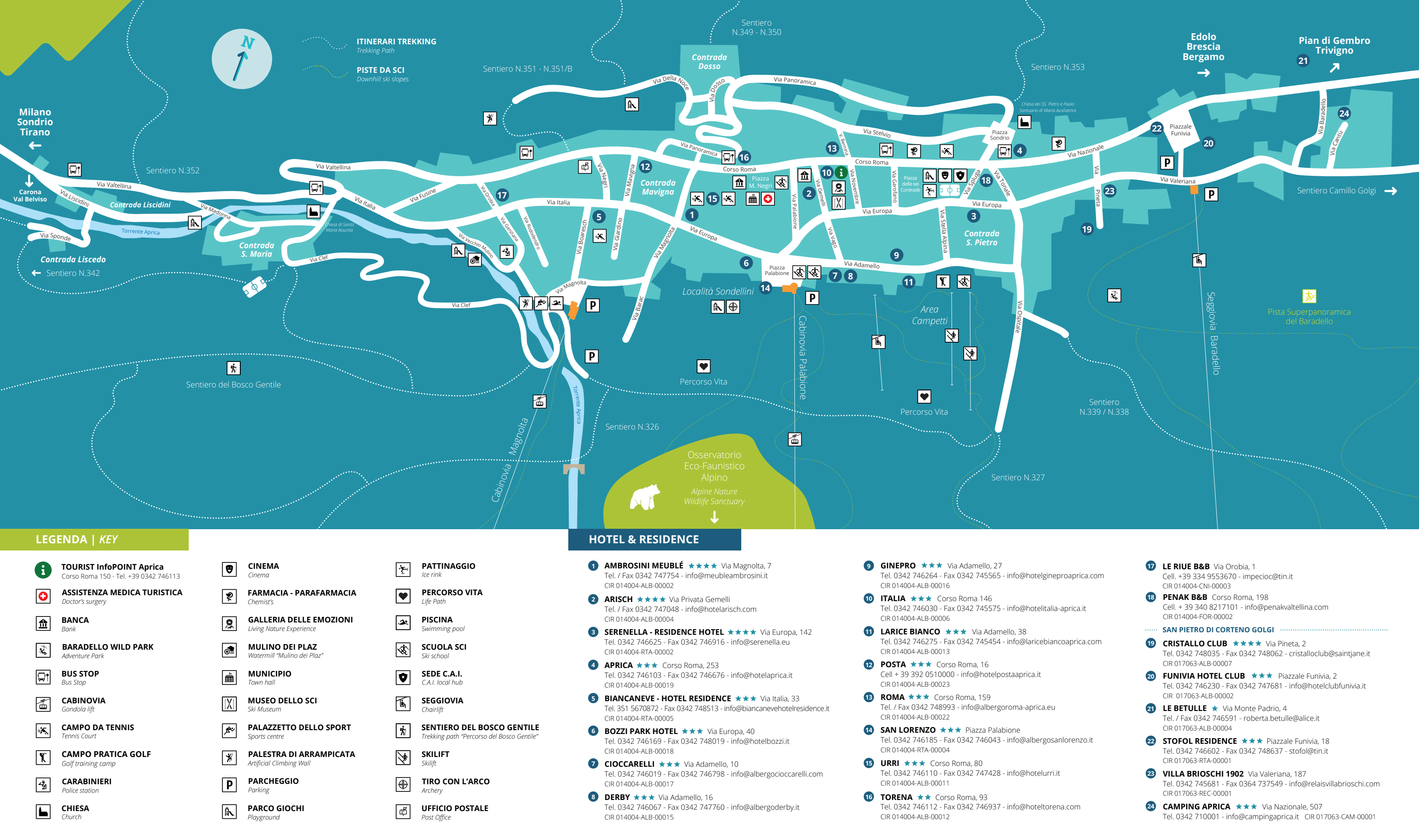
Accommodation in Aprica runs along the village, ranging from family-run hotels and comfortable three- or four-star options, to self-catering apartments and some B&Bs. Many properties are within walking distance of the lifts and several are properly ski-in, ski-out. Staying in the village centre around Piazza Palabione puts you closest to the main gondola, restaurants, and bars. Properties on the western side are closer to the Magnolta gondola and tend to be slightly quieter.
Aprica's pass covers all 16 lifts and 50km of pistes. For those wanting more variety, the extended Aprica-Corteno pass makes more terrain available. Day passes, multi-day options, and season passes are all available, with weekday rates providing particularly strong value.
Check for family and multi-day pass options when booking your Aprica ski holiday package through WeSki to find the best fit for your trip.
Equipment hire shops are located in the village and at the lift bases. Service is personal and friendly - this is the kind of resort where staff take time to fit you properly and remember you when you come back. Prices are competitive, consistent with Aprica's overall value. Pre-booking is recommended during peak weeks, but midweek availability is generally reliable.
Aprica is a walkable resort. The village is laid out along the main road, with the Palabione and Magnolta gondolas, restaurants, shops, and most accommodation all within easy walking distance. Its pedestrian-friendly village centre makes getting around simple, and the ski-in, ski-out layout means you can return to many properties directly from the slopes. A car is useful for day trips to Tirano, Bormio, or the Bernina Express, but within the village you won't need one.
Aprica is accessible from several airports in northern Italy. Milan Bergamo is the nearest at around 120km (approximately two hours by car), and is well served by international airlines. Milan Linate, Milan Malpensa, and Verona are all within three hours' drive. By train, the nearest station is Tirano (15km), which is the last stop of the Trenord line from Milan via Sondrio (approximately two and a half hours from Milan). From Tirano, a local bus connects to Aprica.
WeSki offers car rentals from the airport as well as private transfers to Aprica. Add them to your Aprica ski holiday package for seamless door-to-door travel.
Aprica is an excellent choice for both. Campetti beginner area in the village centre is gentle and well-equipped, with ski schools accepting children from age five, and the 6.5km Superpanoramica run gives progressing beginners a long descent with mountain views. The village is walkable, the atmosphere is warm, and prices are notably lower than in the big-name resorts. When it comes to dining, a range of restaurants and activities keeps the whole family happy in Aprica.
More challenging than you might expect. Nine red and four black runs provide genuine sustained fall-line terrain, with the Benedetti black dropping a full 1,000m of vertical from summit to village. The resort's north-facing aspect keeps snow quality high, and the 1,100m vertical drop is impressive. Intermediates and advanced skiers will find plenty to keep them engaged, though off-piste options are more limited.
Outstanding. The Valtellina has one of the richest mountain food traditions in Italy. Pizzoccheri (buckwheat pasta with cabbage, potatoes, and local cheese) is the signature dish, alongside bresaola (air-dried beef), polenta taragna (buckwheat polenta with cheese), and sciatt (fried cheese fritters). The local wines (Sforzato, Inferno, and Sassella) are excellent. Over 20 restaurants in the village serve generous portions at prices significantly lower than more famous Italian ski resorts.
Aprica is smaller, quieter, and more affordable than either Bormio or Livigno, but its piste skiing (particularly the red and black runs) is surprisingly strong. It lacks the off-piste and extensive terrain of Bormio, and the nightlife and duty-free shopping of Livigno, but it makes up for this with genuine Italian village character, excellent value, and a relaxed atmosphere. It's a great base for a varied week, with day trips to both Bormio and Livigno easily feasible by car.
The Bernina Express departs from Tirano, which is just 15km from Aprica for an easy drive or bus ride. The railway crosses the Alps to St Moritz in Switzerland, passing through dramatic mountain scenery including glaciers, viaducts, and the Bernina Pass. It's a UNESCO World Heritage route and one of the most spectacular train journeys in Europe.
Aprica's north-facing ski slopes help preserve snow quality, and around 40km of the 50km ski area is covered by snow-making. It receives an average of around 244cm of natural snowfall per season, and the summit at 2,270m provides reliable altitude snow. Its season typically runs from late November to mid-April. Wind is rarely an issue thanks to Aprica's sheltered position between the valleys, and its moderate altitude makes for comfortable skiing even on cold days.
Aprica is very accessible for UK travellers. Budget airlines fly regularly to Bergamo (around 120km away, approximately two hours by car), and Milan's airports are also within reach. A hire car is recommended for flexibility, though the train to Tirano (15km away) followed by a local bus is also an option.
 4.9/5
4.9/5I usually book flights, transfers, hotel, ski rental and lift passes myself but this year used WeSki for a trip to Morzine. It was so much easier. Everything worked perfectly - transfers arrived on time and there was plenty of feedback throughout the whole process giving you confidence the holiday would go smoothly.

A really useful service that is so much easier to use than other 'all-inclusive' sites. It nicely bridges the gap between a travel agent and booking the trip yourself online. I will use WeSki every time I go skiing from now on.
We booked a late minute skiing trip to Morzine through we ski. We looked at booking the trip ourselves but could get anywhere near the price quoted by we ski. The company was excellent and we had no problems at all from start to finish. I would definitely use them to book another weekend skiing trip.
Seamless experience from start to finish. I was spending ages trying to sort out a weekend break and managed to do it with we ski in minutes and for the same price as booking it all up yourself. Flight, transfer and accommodation was all as expected and faultless.

WeSki is a trading name operated by Wetrip Weski Ltd (BR021500). All the flights and flight-inclusive holidays on this website are financially protected by the ATOL scheme. When you pay you will be supplied with an ATOL Certificate. Please ask for it and check to ensure that everything you booked (flights, hotels and other services) is listed on it. Please see our booking conditions for further information or for more information about financial protection and the ATOL Certificate go to: www.caa.co.uk.
Package holidays that do not include travel by air are financially protected via ABTOT.
For the latest travel advice from the Foreign & Commonwealth Office visit www.gov.uk/foreign-travel-advice.