
EN
EN
 Great après-ski
 Snow-sure resort
 Traditional charm
 Off-piste skiing
 Stunning viewsGreat après-skiSnow-sure resortTraditional charmOff-piste skiingStunning viewsGreat après-skiSnow-sure resortTraditional charmOff-piste skiingStunning viewsGreat après-skiSnow-sure resortTraditional charmOff-piste skiingStunning views
A combination of world-class terrain, spectacular scenery, and an authentically charming atmosphere makes Banff an undeniably special ski destination. Part of the Banff National Park - Banff is a proper mountain town set in the heart of the Canadian Rockies. Visitors can expect to be wowed by nature's best - we're talking endless wilderness, elk wandering the streets, frozen lakes, and towering peaks in every direction.
Holidays in Banff centre on an area called SkiBig3, featuring three distinct mountains that boast long runs, varied terrain, and reliable snowfall: Banff Sunshine, Lake Louise, and Mount Norquay. With mountains this good, a holiday at Banff means the chance to experience skiing and snowboarding on an impressive scale, and it's truly exciting for every level.
The town of Banff itself is full of character - from proper restaurants and lively bars, to its walkable centre that comes alive after dark. It's a place where you can watch the sun set over the mountains, relax from a rooftop hot pool, then head out for dinner at a restaurant serving elk or bison.
WeSki makes planning a ski trip to Banff straightforward. Check out our Banff ski deals and get the best out of this magical resort's features.
A combination of world-class terrain, spectacular scenery, and an authentically charming atmosphere makes Banff an undeniably special ski destination. Part of the Banff National Park - Banff is a proper mountain town set in the heart of the Canadian Rockies. Visitors can expect to be wowed by nature's best - we're talking endless wilderness, elk wandering the streets, frozen lakes, and towering peaks in every direction.
Holidays in Banff centre on an area called SkiBig3, featuring three distinct mountains that boast long runs, varied terrain, and reliable snowfall: Banff Sunshine, Lake Louise, and Mount Norquay. With mountains this good, a holiday at Banff means the chance to experience skiing and snowboarding on an impressive scale, and it's truly exciting for every level.
The town of Banff itself is full of character - from proper restaurants and lively bars, to its walkable centre that comes alive after dark. It's a place where you can watch the sun set over the mountains, relax from a rooftop hot pool, then head out for dinner at a restaurant serving elk or bison.
WeSki makes planning a ski trip to Banff straightforward. Check out our Banff ski deals and get the best out of this magical resort's features.
With three mountains to choose from, visitors of every level can appreciate the diverse skiing and snowboarding opportunities at Banff. Each has its own character, and there's an experience to match every mood - whether it's the cruising bowls of Banff Sunshine, the dramatic steeps of Lake Louise or the famous night skiing at Norquay.
At Banff, you'll have the chance to experience Canada's legendary "champagne powder" - snow that's famously light and dry, often with fresh snow that leaves untracked lines into the afternoon. Thanks to its altitude and northerly latitude, the season at Banff is remarkably long, typically running from early November through late May.
WeSki insider tip: North American resorts use a different system to grade runs - green circles for beginners, blue squares for intermediates, and black diamonds for advanced terrain. There's no equivalent to European reds, so if you're comfortable with reds at home, expect to enjoy harder blues and easier blacks here. The good news? Once you've done a few runs, the system becomes second nature.
Each mountain at Banff caters to beginners, though Banff Sunshine's Strawberry area stands out for its extra gentle terrain. The 26 beginner runs across the area are wide and well-groomed, giving you space to make turns without feeling rushed. Norquay, being closest to town, is also popular for first-timers. Especially if you want to ease into skill-building, it has a compact learning area and a unique night skiing option, allowing you to extend your practice time even more.
Thanks to the altitude, beginners are pretty much guaranteed soft and reliable snow. And most of all, the views as you're learning are genuinely spectacular - it's hard not to stop and stare, even when you take a tumble. Lessons are also available at all three mountains, with an atmosphere that's notably friendly and encouraging.
Intermediates have an extraordinary playground available to them across the SkiBig3. The resort features a stunning variety of memorable intermediate runs, with many offering a quiet, uncrowded atmosphere to find your rhythm. For example, Banff Sunshine includes access to Wawa Bowl - terrain that's known to feel adventurous for intermediates, without being frightening.
Intermediate runs from Lookout Mountain, such as Star Trek or South Divide, provide long cruisers with stunning views - while others like Glade Runner give you the chance to experience playful, tree-lined trails. Lake Louise adds another dimension for intermediate skiers and boarders, with winding runs and open bowls that are perfectly fun and a great way to gain confidence.
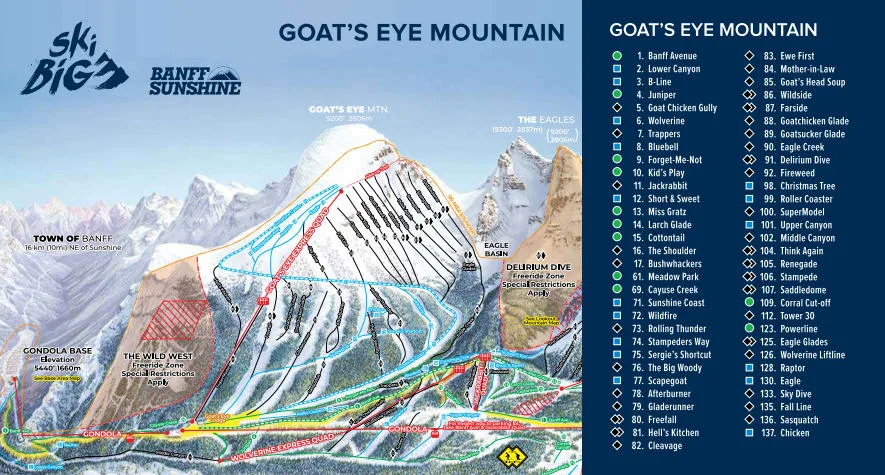
Advanced skiing is where the Canadian Rockies really earns its reputation. With 67 intermediate to advanced runs, plus 11 expert runs at Banff Sunshine alone, there's serious terrain to explore. Lake Louise's back bowls offer sustained steep terrain, with gorgeous powder that stays untracked for impressively long. Goat's Eye Mountain at Sunshine provides consistent advanced runs with genuine pitch, while the expert-level terrain at Lake Louise includes demanding - and rewarding - chutes and couloirs.
You'll have the chance to indulge in real ski adventures here, too. Delirium Dive at Banff Sunshine is an example of proper ski mountaineering terrain within the resort's boundaries - the controlled backcountry area requires avalanche equipment, and is a once-in-a-lifetime opportunity for many who take it on. Backcountry opportunities are extensive throughout the region, and guided heli-skiing operations provide moguls with access to completely untouched terrain in the surrounding wilderness.
Banff's wide-open bowls suit snowboarders really well - with minimal flat traverse sections, and exceptional powder quality. The five terrain parks across the SkiBig3 area provide features for all levels of boarding, though Banff Sunshine's offerings are particularly well-regarded. At Banff, the freestyle snowboard community is active and the parks well-maintained throughout the long season.
At Banff, advanced skiers and boarders have the chance to experience genuine backcountry, with powder quality that justifies its reputation. For backcountry ski and snowboard experiences, the Delirium Dive at Banff Sunshine offers controlled free-ride skiing within the resort boundary. Here, the right gear is required, and it's recommended to go with a guide who has proper knowledge of the territory. Beyond the resorts, heli-skiing gives you access to the vast wilderness of the Canadian Rockies, dropping skiers into terrain that sees maybe a handful of tracks per season. The extensive Nordic trails in Bow Valley and around Lake Louise also give visitors access to unique cross-country skiing experiences.
All three resorts in Banff have comprehensive ski schools with programs for children through adults. Group and private lessons are readily available, and the instructor quality is consistently high. Relatively quiet slopes mean lesson groups can access terrain without fighting through crowds, and the friendly Canadian atmosphere makes learning feel relaxed.
Through WeSki, you can add ski or snowboard lessons to your package and have everything arranged before you arrive. Check out Banff ski deals to get started.
Across the Banff area, visitors have access to five snow parks with features from beginner-friendly rails and small jumps, to pro-level kickers. The long season means parks are well-developed and maintained, with shapers keeping features well-maintained throughout the winter. Mount Norquay's snow park also benefits from night skiing access, extending riding hours for resort visitors.
Banff is a fantastic, one-of-a-kind destination when it comes to a family ski holiday. For kids learning how to ski, the three mountains provide great opportunities for progression. From gentle nursery slopes, to more challenging terrain as skills develop - Banff's relatively uncrowded mountain scene leaves parents less stressed about collisions.
Childcare facilities operate at all three resorts, and the ski school programmes are excellent - Canadian instructors are known to have a way of making children feel capable and excited as they ease onto the slopes. Wildlife sightings such as the elk who regularly wander through town add a magical dimension that your kids will never forget. The town itself is family-friendly, too - with enough restaurants to satisfy even the pickiest of eaters, and activities beyond skiing and snowboarding for everyone to enjoy.
WeSki insider tip: Mount Norquay is closest to town and offers night skiing - perfect for families who want to ski shorter days and take advantage of the lit-up slopes in the evenings.
Thanks to Banff's spectacular national park setting and real community life, it's the kind of resort village with nearly endless entertainment during a ski holiday. Beyond the slopes, there's something for every visitor - and every mood, too.
Whether you want to play in the snow and enjoy the best of the wild, Canadian Rockies, or seek unique off-snow activities for relaxing rest days - here's a sample of things to do in Banff:
There are plenty of ways to enjoy Banff beyond traditional skiing or snowboarding, including:
Banff offers a variety of off-snow activities, including:
Dining in Banff extends well beyond typical ski resort fare. Visitors who appreciate experiencing new cuisine can take advantage of the focus on local ingredients, including game, Alberta beef, and Pacific seafood.
Here are some of our favourite restaurant recommendations:
WeSki insider tip: It's definitely worth the effort of booking dinner reservations before you arrive. Popular restaurants fill up at Banff, especially at weekends and during peak season.
Banff's town and bar scene come alive after dark, making it a fantastic ski destination for an après experience with mountain town vibes. The resort's compact downtown means you can easily walk between venues, and the mix of locals, seasonaires, and visitors creates an atmosphere that feels genuine rather than manufactured.
The après-ski scene often starts at the base lodges before moving into town, and Banff Avenue is where you'll find most of the action. You'll have plenty of options to experience during your ski holiday - from local favorites to newer venues with added sophistication, with bars ranging from relaxed pubs to livelier dance spots.
Here are some of Banff's most popular après-ski spots:
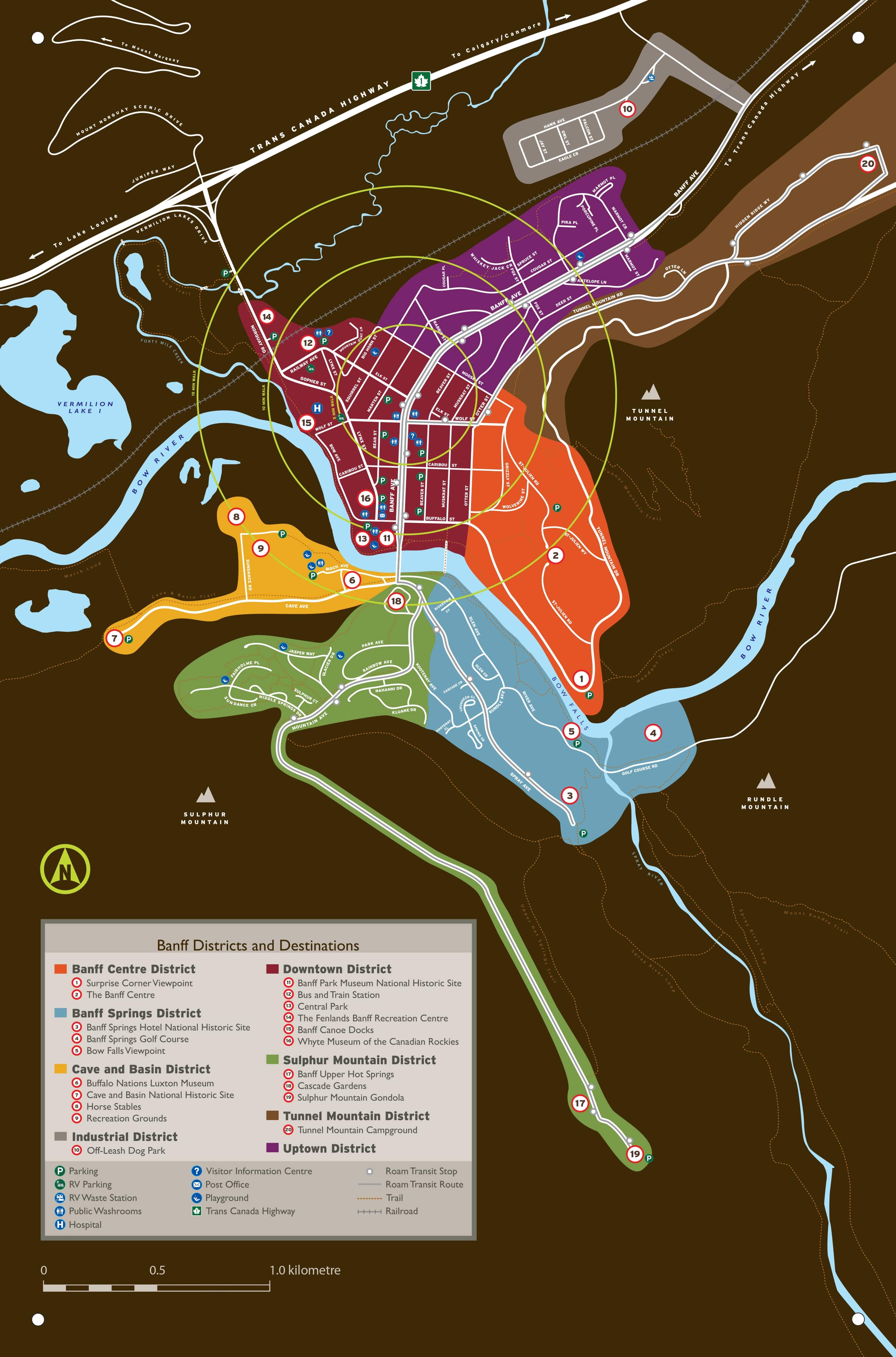
Accommodation in Banff is split between the town itself and slope-side options on the individual mountains. Most visitors stay in Banff town, which offers the best selection of restaurants, bars, and amenities. Hotels range from hostels and budget motels to luxurious options like the grand Fairmont Banff Springs - a castle-like landmark visible from miles around.
For slope-side convenience, Sunshine Mountain Lodge at Banff Sunshine and the Fairmont Chateau at Lake Louise offer ski-in/ski-out access. The town's location means a 15-20 minute drive to the ski areas on average, though shuttle services operate throughout the day. Lake Louise village provides a middle ground - it's closer to its mountain, but with some restaurants and shops.
WeSki insider tips:
Banff's SkiBig3 pass covers all three mountains, unlocking terrain across 334 runs with shuttle transport between them. Single-mountain passes are also available for those who want to focus on one single area during their ski holiday.
Ski passes include shuttle bus services that connect Banff town to the ski areas, adding significant convenience and value. The system integrates the gondola at Banff Sunshine, which transports skiers from the base area parking up to the main ski village.
WeSki can help you find the right pass for your group, with a variety of ski pass options available when building your Banff ski package.
Rental shops operate in Banff town and at each of the ski areas. Town rentals let you browse and fit equipment at leisure, though you'll need to transport gear to the mountains. On the other hand, slope-side rentals at Sunshine and Lake Louise are definitely more convenient - but typically have less to offer in terms of selection.
Standard packages at equipment shops cover skis, boots, and poles (or snowboard and boots), with premium options for current-season or performance equipment. Helmets are usually available separately. Keep in mind, booking your rentals in advance can save money and ensure availability - especially during busy periods.
WeSki insider tip: Consider performance rentals if you're an intermediate or above - the powder quality here rewards better equipment.
Free shuttle buses connect Banff town to all three ski areas, with regular service throughout the day. The SkiBig3 pass includes this transport, making it practical to stay in town and access different mountains on different days. Banff town itself is compact and walkable - you won't need a car for evening activities.
Driving is an option for those who prefer independence, with parking available at all three mountains. Winter conditions on the roads are generally manageable, though snow tyres are required and conditions can be challenging after storms.
Travel to Banff typically involves flying to Calgary International Airport, approximately 130km east of the town. Calgary offers direct flights from several UK airports, with the journey taking around nine hours. The drive from Calgary to Banff takes about 90 minutes along the Trans-Canada Highway, climbing steadily into the mountains with increasingly dramatic scenery.
The route is well-maintained and straightforward, and the drive to Lake Louise can be a special experience on its own - it passes through spectacular scenery and offers wildlife-spotting opportunities. Of course, winter driving conditions require appropriate tyres and some caution. Several transfer services operate between the airport and Banff, offering alternatives to self-drive for those who prefer not to navigate an unfamiliar country in winter conditions.
WeSki offers car rentals from the airport as well as private, shared, and scheduled transfers to Banff, which can be added to your package for seamless door-to-door travel. Explore Banff ski deals to start building your trip.
North American resorts use a different system to grade their runs. Instead of the green, blue, red, and black colours you'll find in the Alps, you'll see coloured shapes. Green circles mark beginner terrain, blue squares are for intermediates, and black diamonds indicate advanced runs. Double black diamonds are reserved for expert-only terrain - the steepest, most challenging slopes on the mountain. There's no direct equivalent to European red runs, so if you're comfortable on reds at home, you'll likely enjoy a mix of harder blues and easier blacks. The good news? Once you've done a few runs, the system becomes second nature.
In North America, you'll hear "backcountry" used where Europeans would typically say "off-piste" - but they're not quite the same thing. Off-piste generally refers to ungroomed terrain within or accessible from a resort's lift system. Backcountry means venturing beyond resort boundaries entirely, often requiring hiking, touring, or a helicopter to access. North American resorts tend to be stricter about boundary lines, and skiing out-of-bounds can have serious consequences - including losing your ski pass. If you're keen to explore unmarked terrain, check with ski patrol about inbounds off-piste options or look into guided backcountry tours. Many resorts offer "sidecountry" gates that let you access wilder terrain with a defined return route.
January temperatures regularly drop below -15°C, with wind chill making it feel colder still. However, the dry cold is more tolerable than a damp cold at higher temperatures. To prepare for the weather, dress in layers, protect exposed skin, and take breaks to warm up. The trade-off is the legendary light, dry powder - cold temperatures mean better snow quality.
Yes, each of the three SkiBig3 mountains has excellent beginner terrain. The slopes are generally quieter than European equivalents, giving learners more space. Banff Sunshine's 26 beginner runs and Norquay's convenient location near town make good starting points. The ski schools are excellent, and the friendly Canadian atmosphere makes learning feel encouraging rather than intimidating.
Banff receives "champagne powder" - light, dry snow that's noticeably different from heavier European snow. The cold temperatures preserve the powder quality, and the quieter slopes mean fresh snow stays untracked longer. The season runs from early November to late May, with the most reliable conditions from December through April. Snowfall averages around 9 metres per season at Banff Sunshine.
Banff is more expensive than European resorts in some ways - the long-haul flight adds cost, and Canadian resort prices have increased significantly. However, the SkiBig3 pass represents good value for the terrain accessed, and the quieter slopes mean you get more skiing done per day. Town restaurants and bars are comparable to European prices. Self-catering options and staying in Canmore can help manage budgets.
Each has its character. Banff Sunshine offers the best variety and snow record, with bowls, cruising, and advanced terrain. Lake Louise has the most dramatic scenery and excellent expert terrain in the back bowls. Norquay is smaller but closest to town with night skiing - good for shorter days or families. Most visitors split their time between Sunshine and Lake Louise, with Norquay for variety.
No - free shuttle buses connect Banff town to all three mountains, included with the SkiBig3 pass. The town is walkable for evening activities. Having a car offers flexibility and lets you explore the national park, but it's not essential for a ski-focused holiday. Winter driving requires appropriate tyres and some comfort with snowy conditions.
Elk are common in and around town - you'll likely see them on Banff's streets. Deer, bighorn sheep, and coyotes are regularly spotted. Bears hibernate in winter, so sightings are rare. Wolves are present in the park but elusive. The wildlife adds a dimension that European resorts simply can't match - this is genuine wilderness despite the town's amenities.


 4.9/5
4.9/5I usually book flights, transfers, hotel, ski rental and lift passes myself but this year used WeSki for a trip to Morzine. It was so much easier. Everything worked perfectly - transfers arrived on time and there was plenty of feedback throughout the whole process giving you confidence the holiday would go smoothly.

A really useful service that is so much easier to use than other 'all-inclusive' sites. It nicely bridges the gap between a travel agent and booking the trip yourself online. I will use WeSki every time I go skiing from now on.
We booked a late minute skiing trip to Morzine through we ski. We looked at booking the trip ourselves but could get anywhere near the price quoted by we ski. The company was excellent and we had no problems at all from start to finish. I would definitely use them to book another weekend skiing trip.
Seamless experience from start to finish. I was spending ages trying to sort out a weekend break and managed to do it with we ski in minutes and for the same price as booking it all up yourself. Flight, transfer and accommodation was all as expected and faultless.

WeSki is a trading name operated by Wetrip Weski Ltd (BR021500). All the flights and flight-inclusive holidays on this website are financially protected by the ATOL scheme. When you pay you will be supplied with an ATOL Certificate. Please ask for it and check to ensure that everything you booked (flights, hotels and other services) is listed on it. Please see our booking conditions for further information or for more information about financial protection and the ATOL Certificate go to: www.caa.co.uk.
Package holidays that do not include travel by air are financially protected via ABTOT.
For the latest travel advice from the Foreign & Commonwealth Office visit www.gov.uk/foreign-travel-advice.