
FR
FR
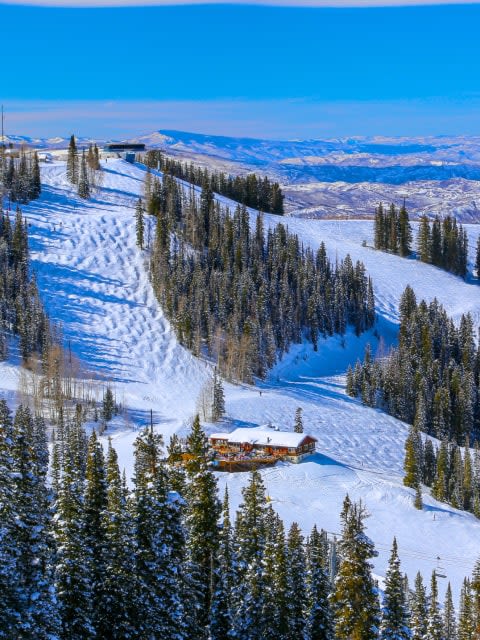
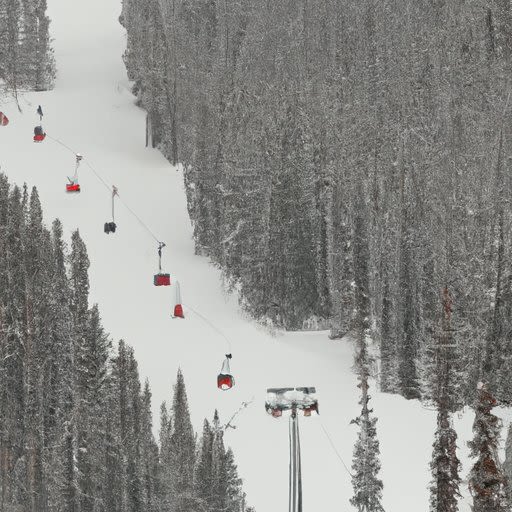
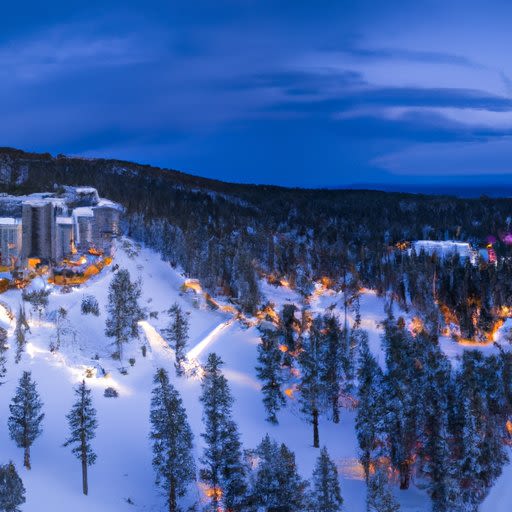
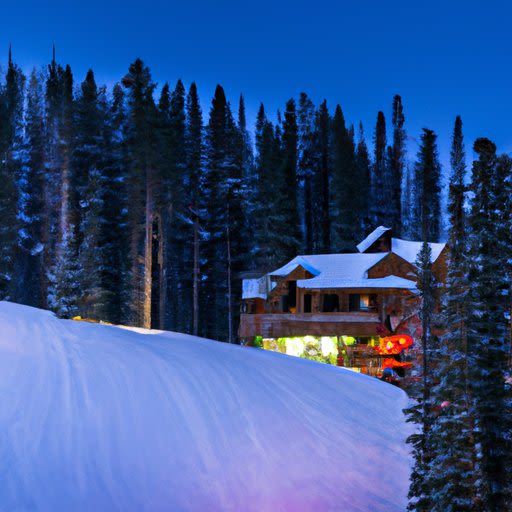
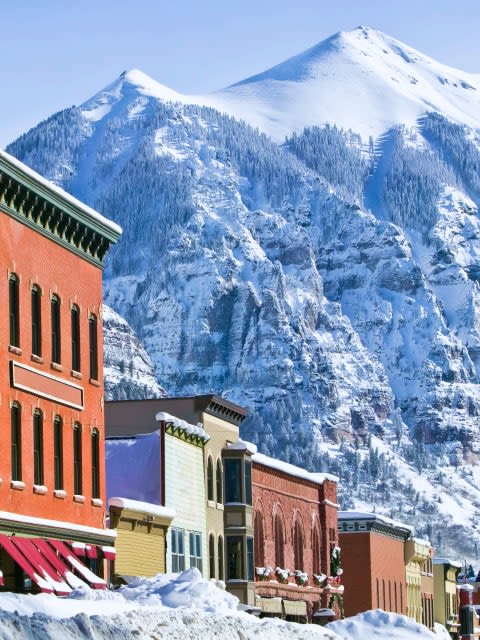
Les stations de ski américaines, réputées pour leurs excellentes conditions d’enneigement et leurs longues saisons, proposent des terrains variés sur des milliers d’hectares, adaptés à tous les niveaux de skieurs et de snowboardeurs. Ces stations, parmi lesquelles figurent des noms prestigieux comme Aspen, Vail et Park City, sont réparties à travers les paysages diversifiés des États-Unis, des Rocheuses aux Sierra Nevadas. Réputées pour leur ski de classe mondiale, leurs remontées mécaniques rapides et leurs télécabines, les pistes américaines offrent un entretien méticuleux, de vastes pistes ouvertes, ainsi que des back bowls exigeants et des pistes vertes douces. Le charme de ces destinations inclut également une ambiance de ville du Far West et certaines des pistes les plus calmes, enrichissant ainsi l’expérience de ski. À cela s’ajoutent des hébergements resort de luxe et un service exceptionnel, renforçant la réputation des États-Unis comme destination phare pour les sports d’hiver.
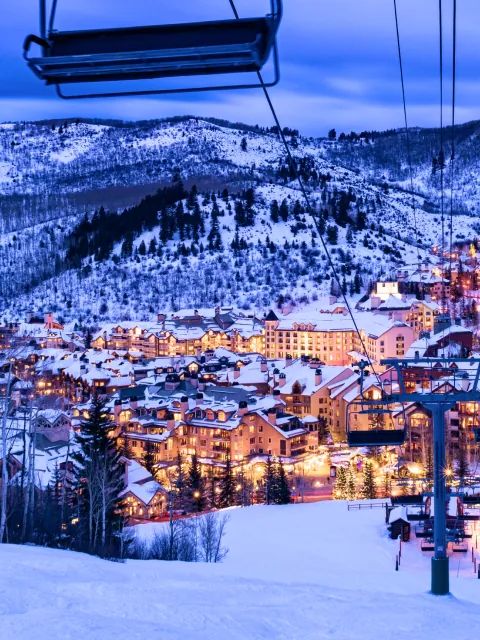
Beaver Creek and Keystone are two of the strongest family bases in the US. Beaver Creek runs a ski school guarantee, promising that your child will be confidently skiing green runs by their third lesson. It’s also backed by dedicated daycare from age two and a private teen club with games, music, and mocktails for older kids. The village itself is built for convenience, with heated sidewalks and covered escalators carrying skiers straight from the parking structure to the lifts. Keystone runs its own Kidtopia programme, with free games and events throughout the season, plus the world's largest mountaintop snow fort for building and sledging once the skiing's done. Its River Run Village is fully pedestrian and mostly ski-in, ski-out, with a gondola right at the centre of it so families can get from door to lift in minutes.
Brian Head and Big Bear Mountain Resort both make a strong start for first-time skiers. Brian Head's Navajo Peak is dedicated almost entirely to beginners, with wide, gentle runs served by surface lifts built specifically for learning, all while still delivering Utah's famously light, dry powder. Big Bear Mountain Resort's Snow Summit has some of the largest learning areas in Southern California, with a dedicated beginner zone at the base and full snowmaking coverage that keeps conditions consistent throughout the season, plus lessons starting from age four.
Jackson Hole, Alyeska, and Aspen’s Highlands mountain each deliver serious backcountry terrain. Jackson Hole has built an international reputation around Corbet's Couloir, a narrow, cliff-lined chute with a mandatory drop-in that's been called America's scariest ski run. Beyond the resort boundary, thousands of acres of ridgeline traverses and couloirs open up for those who want to go further still. Alyeska, in Alaska's Chugach Mountains, is the snowiest resort in the US, with heli-skiing and ski touring opening up some of the most remote terrain in North America. Aspen Highlands centres on the Highland Bowl, an avalanche-controlled bowl reached by a 20 to 30 minute hike from the top of the lift, rewarding the effort with some of the steepest lift-served terrain in Colorado.
Deer Valley, Aspen, and Vail are widely considered the top US destinations for a luxury ski trip. Deer Valley is one of only a few skier-only resorts left in North America, with lift ticket sales deliberately capped each day to keep the slopes uncrowded, ski valets who load and unload your gear, and an on-mountain dining scene serious enough to rival a city restaurant. Aspen carries a different kind of prestige, built on Victorian-era mining wealth and a century of Hollywood glamour, with designer boutiques, fur coats on the gondola, and some of the most decorated restaurants in American skiing. Vail takes a polished, effortless approach, with a European-inspired village built from scratch, high-end shopping, and luxury hotels set against some of the biggest lift-served terrain in North America.
Copper Mountain, Mammoth, and Palisades Tahoe are three of the best-regarded snowboarding destinations in the US. Copper Mountain was named Best Resort for Terrain Parks by OnTheSnow readers in 2025, with its Woodward Copper parks running the full range from beginner progression zones to massive, competition-level features. Mammoth offers huge natural terrain variety across its high-alpine mountain, from open bowls to steep chutes and tree runs, with consistent snowpack that keeps its terrain parks open from November well into spring. Palisades Tahoe spans thousands of acres of natural bowls, steeps, and glades, backed by a snowboarding culture that dates back decades, plus five parks and a halfpipe for those who want to mix in some freestyle too.
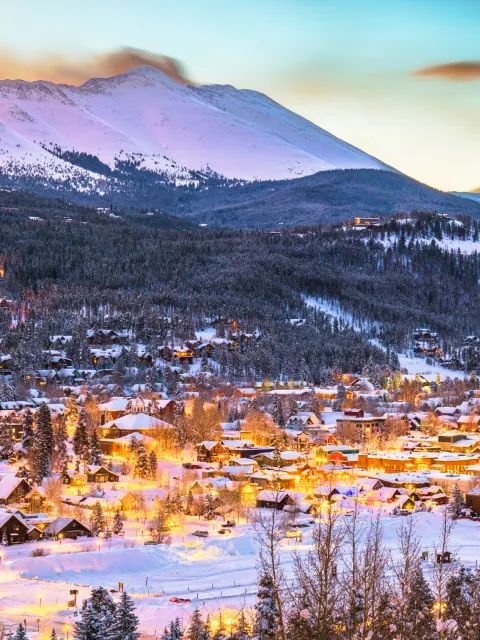
Aspen, Breckenridge, and Jackson Hole are widely considered the best après-ski destinations in the US, each with a different kind of energy. Aspen's scene centres on a slopeside terrace known for truffle fries and champagne as skiers come down for the day, before the evening moves into live music venues and even a hidden 1920s-style speakeasy. Breckenridge takes a more down-to-earth approach, with a walkable strip of historic saloons, craft breweries, and the Breckenridge Distillery, the highest in the world, all within a few minutes of each other. Jackson Hole leans into its Western roots, built around slopeside saloons like the Mangy Moose, a Teton Village institution since 1967 with live music most nights, and the Million Dollar Cowboy Bar downtown, known for its saddle barstools and country dancing.
Aspen, Breckenridge, and Jackson Hole are widely considered the best après-ski destinations in the US, each with a different kind of energy. Aspen's scene centres on a slopeside terrace known for truffle fries and champagne as skiers come down for the day, before the evening moves into live music venues and even a hidden 1920s-style speakeasy. Breckenridge takes a more down-to-earth approach, with a walkable strip of historic saloons, craft breweries, and the Breckenridge Distillery, the highest in the world, all within a few minutes of each other. Jackson Hole leans into its Western roots, built around slopeside saloons like the Mangy Moose, a Teton Village institution since 1967 with live music most nights, and the Million Dollar Cowboy Bar downtown, known for its saddle barstools and country dancing.
Yes. US resorts offer a different experience to the Alps, with bigger mountains, drier snow, and ski towns with real character. The long-haul flight is worth it for the terrain and atmosphere. WeSki packages include flights and transfers, so the logistics are handled.
Fly into Denver for Colorado resorts like Vail, Aspen, and Breckenridge. Salt Lake City serves Utah resorts like Park City and Deer Valley, with a short transfer. Jackson Hole has its own airport, and Reno or Los Angeles typically serve the Sierra Nevada resorts in California. WeSki packages include transfers from the nearest airport.
Lift tickets and dining tend to be pricier than in Europe, particularly at flagship resorts like Vail and Aspen. That said, accommodation can offer good value, and the scale of terrain means you get a lot for your money on the mountain. Multi-day passes often reduce the daily cost significantly.
The season runs from late November to mid-April at most resorts. January and February offer the most reliable powder. March brings warmer temperatures and longer days, with good snow still holding at higher altitudes.
Most visitors from the UK book 7 to 10 nights to make the most of the long-haul flight. WeSki packages are flexible on trip length, so you can tailor the duration to suit your plans and budget.
Yes, tipping is expected in most ski-town service situations. Ski instructors are typically tipped 15-20% of the lesson cost, hotel valets and bellhops a few dollars per car or bag, and restaurant servers 15-20% of the bill. It's worth carrying some cash for these, since not everyone accepts card tips.
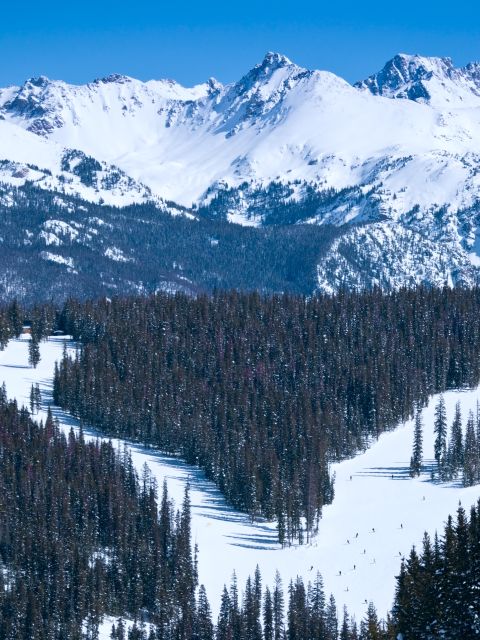
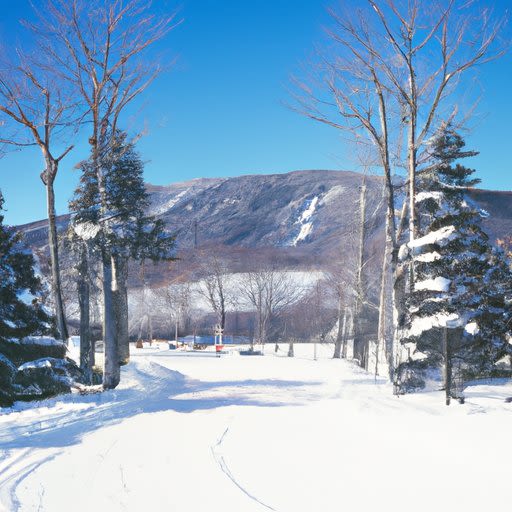
The Rockies, across Colorado, Utah, and Wyoming, are known for high altitude and light, dry powder, with a strong Western heritage in many of the base towns. The Sierra Nevada, in California, brings heavier snowfall, longer seasons, and resorts often set right on Lake Tahoe. New England's resorts are generally smaller and colder, but rely on modern snowmaking and offer a historic, close-knit mountain-town charm.
Commencez à créer votre séjour au ski de rêve dès aujourd'hui avec notre guichet unique pour le ski - des centaines de stations, des combinaisons illimitées.

 4.9/5
4.9/5Je réserve habituellement moi-même les vols, les transferts, l'hôtel, la location du matériel de ski et les forfaits ski, mais cette année j'ai utilisé WeSki pour un séjour à Morzine. C'était tellement plus simple. Tout a parfaitement fonctionné - les transferts sont arrivés à l'heure et il y avait beaucoup de retours d'information tout au long du processus, ce qui vous donne confiance que les vacances se dérouleront sans problème.

Un service vraiment utile qui est beaucoup plus facile à utiliser que d'autres sites "tout compris". Il comble parfaitement le fossé entre une agence de voyage et la réservation du séjour par vous-même en ligne. J'utiliserai WeSki chaque fois que j'irai au ski à partir de maintenant.
Nous avons réservé un séjour au ski de dernière minute à Morzine via WeSki. Nous avions envisagé de réserver le séjour nous-mêmes, mais nous n'avons pas pu trouver un prix aussi avantageux que celui proposé par WeSki. L'entreprise a été super et nous n'avons rencontré aucun problème du début à la fin. Je passerai certainement de nouveau par eux pour réserver un autre week-end au ski.
Une expérience fluide du début à la fin. Je passais des heures à essayer d'organiser un week-end et j'ai réussi à le faire avec WeSki en quelques minutes et pour le même prix que si je l'avais réservé moi-même. Le vol, le transfert et l'hébergement étaient tous comme prévu et nous n'avons rencontré aucun problème.

Weski Europe BV (numéro d'enregistrement 87334100 à la chambre de commerce) est un membre enregistré de SGR. Vous pouvez vérifier cela sur www.sgr.nl/english. Les vacances répertoriées sur ce site web sont couvertes par la garantie de SGR, selon les termes du programme de garantie SGR. Sous la garantie SGR, les consommateurs verront la somme de leur voyage prépayée remboursée si leur contrepartie est incapable de remplir ses obligations contractuelles en raison d'une incapacité financière. Dans la mesure où l'accord comprend le transport et que la destination a déjà été atteinte, le voyage de retour sera organisé.